

What Causes Production Errors and How Can They Be Fixed?
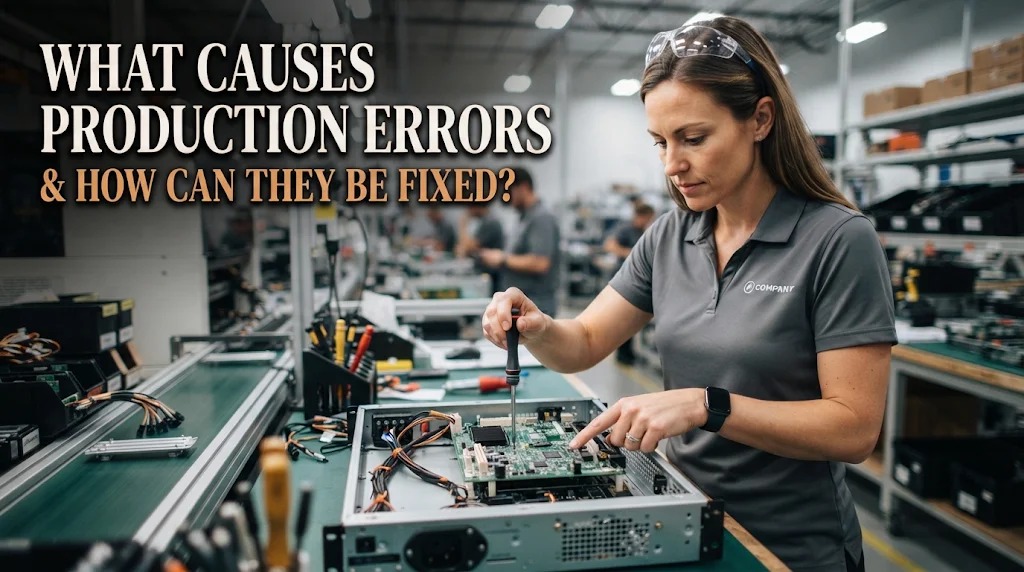
Production errors are problems that occur during the manufacturing process and can affect product quality, work efficiency, and company performance. These errors may result from human mistakes, machine malfunctions, unsuitable raw materials, or incorrect production procedures. If they are not handled properly, production errors can lead to wasted resources, delayed orders, and customer complaints. Therefore, companies need to identify the causes of production problems and apply effective solutions to prevent them from happening again.
HUMAN ERRORS AND LACK OF TRAINING
Human errors are among the common causes of production problems. Employees may make mistakes when measuring materials, operating machines, assembling components, or following work instructions. These mistakes can happen because of fatigue, lack of concentration, limited experience, or insufficient training.
Companies can reduce human errors by providing regular training and clear work instructions. Supervisors should ensure that employees understand their responsibilities before starting production activities. Workers should also be encouraged to ask questions when they do not understand a procedure. Proper training helps employees improve their skills and perform tasks more accurately.
MACHINE MALFUNCTIONS AND EQUIPMENT DAMAGE
Production machines are essential for maintaining manufacturing operations. However, equipment can experience technical problems because of excessive use, poor maintenance, or worn-out components. Machine malfunctions may cause production delays, inconsistent product quality, and unexpected operational costs.
To prevent these problems, companies should implement regular machine inspections and preventive maintenance schedules. Employees need to monitor equipment performance and report unusual conditions immediately. Damaged machines should be repaired by qualified technicians before being used again. Proper maintenance helps extend equipment life and maintain stable production.
POOR QUALITY OF RAW MATERIALS
Raw materials have a direct influence on the quality of finished products. Materials that are damaged, contaminated, expired, or inconsistent with required specifications can create production errors. Even when manufacturing procedures are followed correctly, unsuitable materials may still result in defective products.
Companies should inspect raw materials before they enter the production process. Employees need to check material conditions, quantities, labels, and expiration dates when relevant. Businesses should also work with reliable suppliers who can provide materials that meet established quality standards. These steps help prevent defects and reduce unnecessary waste.
INCORRECT PRODUCTION PROCEDURES
Production errors can occur when employees do not follow standard operating procedures correctly. Incorrect measurements, improper machine settings, or skipped manufacturing steps may affect the final product. Sometimes, problems also happen because work instructions are unclear or outdated.
Companies should provide detailed and easy-to-understand operating procedures for every production activity. Supervisors must ensure that employees follow the correct instructions and understand any changes in manufacturing methods. Procedures should also be reviewed regularly to identify weaknesses and improve efficiency. Clear guidelines help create more consistent production results.
POOR COMMUNICATION BETWEEN EMPLOYEES
Communication problems can create misunderstandings between production staff, supervisors, and other departments. For example, employees may receive incomplete information about production targets, material requirements, or product specifications. This can result in incorrect work, duplicated tasks, and unnecessary delays.
To solve this problem, companies should establish clear communication channels and provide accurate information before production begins. Regular team discussions can help employees understand their responsibilities and share important updates. Workers should also report problems as soon as they discover them. Effective communication improves coordination and reduces avoidable mistakes.
INADEQUATE QUALITY CONTROL
Quality control is necessary to identify product defects during and after manufacturing. Without proper inspections, errors may remain undetected until finished goods are packaged or delivered to customers. This can increase replacement costs and damage the company's reputation.
Companies should establish quality inspection procedures at important stages of production. Employees need to check product measurements, appearance, functionality, and packaging according to established standards. Defective products should be separated and documented for further evaluation. Consistent quality control helps companies detect problems earlier and maintain customer satisfaction.
POOR WORKPLACE CONDITIONS
Workplace conditions can also influence production performance. Inadequate lighting, excessive noise, poor ventilation, and disorganized work areas may reduce employee concentration and increase the risk of mistakes. Unsafe conditions can also cause accidents that interrupt manufacturing activities.
Companies should maintain clean, organized, and comfortable production areas. Proper lighting, suitable ventilation, and appropriate safety equipment can help employees work more effectively. Supervisors should regularly evaluate workplace conditions and address potential hazards. A well-maintained environment supports employee performance and production quality.
IMPLEMENTING CONTINUOUS IMPROVEMENT
Fixing production errors should not stop after the immediate problem has been resolved. Companies need to identify the root causes of recurring mistakes and develop preventive measures. This approach helps businesses improve manufacturing processes and avoid similar problems in the future.
One useful method is root cause analysis, which involves investigating why an error occurred instead of only correcting its visible effects. Companies can also evaluate production records, collect employee feedback, and monitor quality inspection results. By reviewing these findings regularly, businesses can make better decisions and improve overall production performance.
CONCLUSION
Production errors can be caused by human mistakes, machine malfunctions, poor raw materials, incorrect procedures, communication problems, and inadequate workplace conditions. These problems can be fixed through employee training, equipment maintenance, material inspections, clear instructions, and effective quality control. By identifying root causes and applying continuous improvement, companies can reduce production errors, maintain product quality, and achieve better manufacturing results.
Recent Posts

How Does Technology Make Daily Evaluation... 21.11.2026/56 View

Apa Strategi Menghadapi Kesenjangan antara Kompetensi... 21.11.2026/58 View

Mengapa Inventaris Aset Penting bagi Kelancaran... 21.11.2026/52 View

When Should Musicians Join a Record... 21.11.2026/53 View

Daily Evaluation or Daily Planning Which... 21.11.2026/60 View
