

What Causes Urban Flooding During Heavy Rainfall?
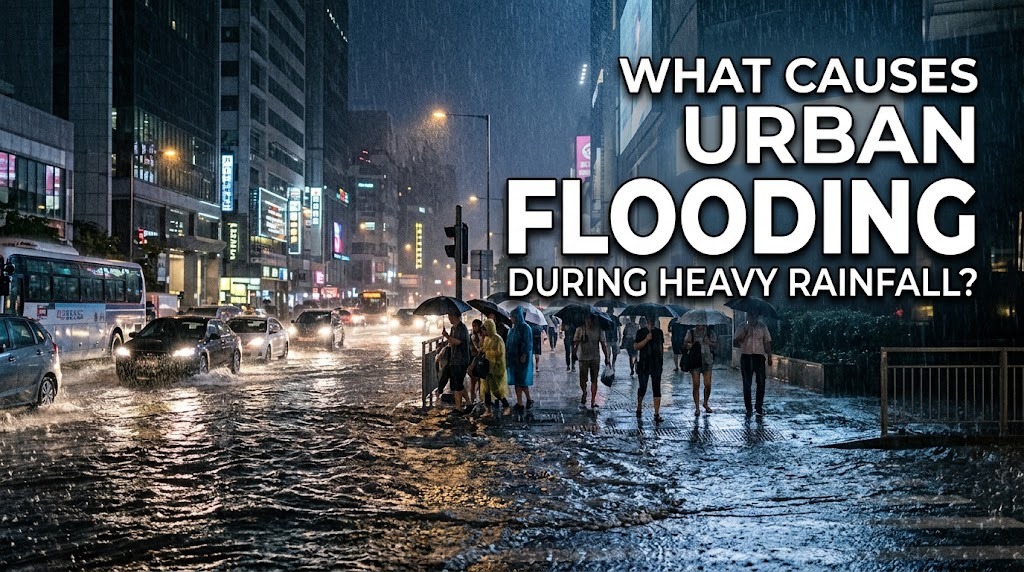
Urban flooding during heavy rainfall occurs when water accumulates faster than a city can absorb, drain, or transport it away. Unlike flooding in rural areas, urban flooding is strongly influenced by buildings, roads, drainage systems, and other forms of development. Heavy rainfall can quickly overwhelm drainage networks, especially when they are blocked, undersized, or poorly maintained. Understanding the causes of urban flooding is important because it helps communities improve drainage, manage land use, and reduce flood risks.
INTENSE AND PROLONGED RAINFALL
Heavy rainfall is one of the most direct causes of urban flooding. When rain falls at a very high intensity, drainage systems may not be able to carry the water away quickly enough. Prolonged rainfall can create an even greater problem because the ground and drainage channels become saturated over time.
Short periods of extremely heavy rain can therefore produce flooding even when total daily rainfall is not unusually high. When rainfall continues for several hours, water levels in rivers, canals, and drainage systems may also rise. The combination of intense rainfall and saturated infrastructure can cause water to accumulate rapidly across urban areas.
TOO MANY IMPERMEABLE SURFACES
Urban development replaces natural surfaces with roads, sidewalks, parking areas, rooftops, and other surfaces that do not allow much water to infiltrate into the soil. Instead of being absorbed naturally, rainfall flows across these surfaces toward drains and waterways.
As cities become more densely developed, the amount of runoff can increase significantly. When large volumes of water reach drainage systems at the same time, their capacity may be exceeded. This can cause water to collect on streets, residential areas, and other low-lying locations.
INADEQUATE DRAINAGE SYSTEMS
Drainage systems are designed to collect and transport stormwater away from developed areas. However, drains may be too small for current rainfall patterns or population growth. Older systems may have been designed for smaller urban populations and lower levels of development.
Poorly connected drainage channels can also prevent water from reaching rivers or other appropriate outlets. When drainage capacity is insufficient, rainfall can remain on the surface for extended periods. Regular maintenance and infrastructure upgrades are therefore important parts of flood management.
BLOCKED DRAINS AND WATERWAYS
Trash, sediment, vegetation, and other materials can obstruct drainage channels. Blocked drains reduce the amount of water that can pass through the system and may cause water to overflow onto nearby roads and properties.
Illegal dumping can make the problem worse by introducing large amounts of waste into drainage networks. Even relatively small blockages can become significant during intense rainfall because water needs to move through the system rapidly. Cleaning drains and waterways before periods of heavy rain can help maintain their capacity.
LOSS OF VEGETATION AND OPEN LAND
Vegetation helps slow rainfall and allows more water to infiltrate into the ground. Trees, grass, gardens, wetlands, and other natural areas can therefore reduce the amount and speed of surface runoff.
When these areas are replaced by buildings and paved surfaces, less water is absorbed naturally. Urban expansion can also reduce wetlands and other areas that previously stored excess water. Protecting green spaces and incorporating vegetation into urban design can help reduce the pressure on drainage systems.
POOR URBAN PLANNING
The way buildings, roads, and neighborhoods are arranged can influence flood risk. Construction in natural drainage paths, floodplains, riverbanks, or other low-lying areas can expose communities to greater danger.
Poorly planned development may also prevent water from following its natural flow. When natural waterways are narrowed, covered, or redirected without adequate alternatives, heavy rainfall can cause water to accumulate in unexpected locations. Effective land-use planning should consider local topography, drainage patterns, and historical flood risks.
RIVERS AND DRAINAGE CHANNELS OVERFLOW
Urban flooding can become more severe when nearby rivers, canals, or drainage channels exceed their capacity. Heavy rainfall across a large watershed can cause river levels to rise even if rainfall in the city itself is moderate.
When river levels become higher than surrounding land, water may flow into neighborhoods through overflow or drainage connections. Urban areas near rivers are particularly vulnerable when natural floodplains have been heavily developed. Maintaining waterways and protecting suitable flood storage areas can reduce some of these risks.
RAPID URBANIZATION
Rapid population growth often leads to extensive construction within a short period. New housing, commercial buildings, roads, and industrial areas increase the amount of impervious land while placing additional pressure on drainage infrastructure.
If infrastructure development does not keep pace with urban expansion, existing drainage systems may become overloaded. Rapid urbanization can therefore increase flood vulnerability even when rainfall patterns remain unchanged. Coordinating construction with stormwater management is essential for growing cities.
CLIMATE AND ENVIRONMENTAL CHANGES
Changes in climate and local environmental conditions can influence urban flood risks. In some locations, changing rainfall patterns may increase the frequency or intensity of extreme precipitation events. Rising sea levels can also make drainage more difficult in low-lying coastal cities, particularly when heavy rainfall occurs at the same time as high tides or coastal flooding.
Urban heat, land subsidence, and changes in surrounding watersheds can further affect how water moves through a city. These factors do not cause every urban flood, but they can increase vulnerability when combined with inadequate drainage and intensive development.
URBAN FLOODING IN INDONESIA
Many Indonesian cities face urban flooding because of a combination of intense rainfall, rapid development, limited drainage capacity, waste accumulation, and changes in land use. Cities located near rivers or coastal areas may face additional risks from river overflow, high tides, and coastal flooding.
Reducing these risks requires more than simply building larger drains. Cities can combine improved drainage maintenance with green spaces, retention areas, better waste management, flood-resistant infrastructure, and careful land-use planning. Community participation is also important because residents can help prevent waste from entering drainage systems and respond quickly when flooding occurs.
CONCLUSION
Urban flooding during heavy rainfall is caused by a combination of natural and human factors. Intense precipitation can overwhelm drainage systems, while paved surfaces, blocked waterways, insufficient infrastructure, vegetation loss, and poor land-use planning increase the amount of water that accumulates. River overflow and environmental changes can further intensify the problem. Reducing urban flood risks requires integrated planning that combines effective drainage, natural water management, responsible development, and community participation.
Recent Posts

Bagaimana Sistem SKS pada Program Kuliah... 22.11.2026/53 View

How Does Technology Make Daily Evaluation... 21.11.2026/82 View

Apa Strategi Menghadapi Kesenjangan antara Kompetensi... 21.11.2026/81 View

Mengapa Inventaris Aset Penting bagi Kelancaran... 21.11.2026/77 View

When Should Musicians Join a Record... 21.11.2026/82 View
