

What Challenges Affect the Preservation of Regional Accents Among Young People?
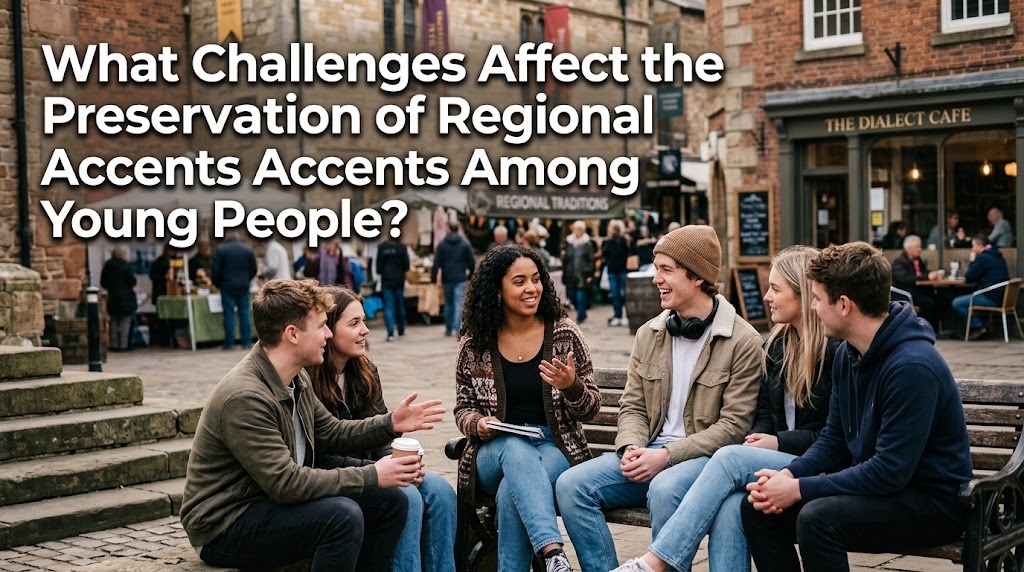
Regional accents are an important part of cultural identity because they reflect the history, traditions, and linguistic characteristics of local communities. However, preserving these accents among young people has become increasingly challenging as communication habits, education, technology, and social environments continue to change. Many young people are exposed to different accents through social media, entertainment, and interactions with people from other regions. Although these experiences can broaden their understanding of language, they may also reduce their everyday use of traditional speech patterns. Understanding these challenges is essential for finding effective ways to preserve regional accents while allowing younger generations to communicate comfortably in modern society.
THE INFLUENCE OF GLOBALIZATION ON REGIONAL ACCENTS
Globalization has increased contact between people from different countries and cultural backgrounds. Through international entertainment, online education, travel, and digital communication, young people regularly encounter accents that are different from those used in their local communities. Some may begin imitating popular pronunciation styles because they associate them with modern lifestyles, professional opportunities, or international communication. Over time, repeated exposure can influence their vocabulary, pronunciation, and speaking habits. This does not necessarily mean that they will lose their original accents, but it can change how frequently certain regional features appear in everyday conversations.
Another challenge is that widely recognized accents may receive more attention than less familiar regional varieties. Young people may feel that adopting a more internationally familiar accent helps them communicate with a broader audience. In some situations, they may also believe that their local accent is unsuitable for formal or professional settings. These attitudes can weaken their confidence in using regional speech. Encouraging respect for different accents can help young people understand that effective communication and cultural identity can exist together.
THE IMPACT OF SOCIAL MEDIA AND DIGITAL ENTERTAINMENT
Social media platforms such as TikTok, Instagram, and YouTube expose young people to a wide range of accents and speaking styles. Popular influencers, celebrities, and content creators often introduce expressions, pronunciation patterns, and intonation that their audiences imitate. When these features become common in online communities, young people may incorporate them into conversations with friends. This process can gradually influence their speaking habits, especially when they spend considerable time consuming similar content. However, the influence varies from person to person, and online exposure does not automatically cause regional accents to disappear.
Digital entertainment can also affect which accents young people consider desirable. If popular films, television programs, and online videos rarely feature their local accents positively, they may become less familiar with hearing those accents in respected or influential roles. Some young people might then choose to modify their pronunciation to fit the styles they encounter most often. On the other hand, social media can help preserve regional accents when local creators use them in entertaining and educational content. The challenge is to ensure that digital platforms provide opportunities for local voices to remain visible alongside popular global trends.
THE DECLINING USE OF REGIONAL LANGUAGES AT HOME
Families play an important role in passing regional languages and speech patterns from one generation to the next. Children often learn local pronunciation naturally by listening to parents, grandparents, relatives, and other community members. However, some families increasingly use a national or widely understood language in everyday communication. They may make this choice to support school learning, improve communication with people from different backgrounds, or prepare children for future opportunities. Although these reasons can be practical, reduced exposure to local speech may limit opportunities for children to develop familiarity with traditional accents.
The situation can become more challenging when young people rarely use regional languages outside occasional family gatherings or cultural celebrations. Without regular practice, they may understand local expressions but feel uncomfortable speaking them. Some may also become more familiar with the national language than with the language spoken by older generations. Families can help address this issue by incorporating regional speech into everyday activities, such as storytelling, conversations, songs, and discussions about local traditions. Regular, enjoyable communication makes regional accents more likely to remain a natural part of young people's lives.
ACCENT DISCRIMINATION AND NEGATIVE SOCIAL STEREOTYPES
Accent discrimination occurs when people are treated unfairly because of the way they pronounce words. Young people with regional accents may sometimes be teased, stereotyped, or judged as less educated or less professional than speakers with other accents. Such attitudes can discourage them from using their natural pronunciation in school, university, or the workplace. In response, some may try to hide their accents to avoid embarrassment or gain social acceptance. This can affect their confidence and weaken their connection with their linguistic background.
These stereotypes are harmful because an accent does not determine a person's intelligence, education, or communication ability. People can express complex ideas clearly while speaking with a strong regional accent. Schools, workplaces, and online communities can help by promoting respectful communication and challenging negative assumptions about pronunciation. Teachers should distinguish between helping students develop clear communication skills and requiring them to abandon their natural accents. Creating supportive environments allows young people to improve their language abilities without feeling ashamed of their cultural identity.
THE ROLE OF EDUCATION IN ACCENT PRESERVATION
Education can influence how young people understand regional accents and their cultural importance. In some educational environments, standard forms of a national or international language receive greater attention because they are useful for formal writing, examinations, and wider communication. While learning standard language forms is valuable, regional accents may receive limited discussion in the classroom. Students may therefore have fewer opportunities to understand how local pronunciation reflects historical experiences and cultural diversity. Without this knowledge, they may mistakenly assume that regional accents are less valuable than standardized speech.
Schools can help preserve regional accents by introducing lessons about local languages, oral traditions, and linguistic diversity. Students can interview older community members, record traditional stories, and compare pronunciation patterns across generations. These activities develop language awareness while encouraging respect for cultural heritage. Educational institutions can also explain that speaking a standard language and maintaining a regional accent are not mutually exclusive. By treating regional speech as a valuable subject of learning, schools can help young people appreciate their linguistic roots while developing broader communication skills.
URBANIZATION AND CHANGING SOCIAL ENVIRONMENTS
Urbanization can influence regional accents because young people increasingly study, work, and live in areas where people from many different regions interact. In cities, they may communicate with classmates, colleagues, and neighbors who speak different languages or accents. To make conversations easier, they may adopt more widely understood pronunciation patterns or adjust their speech to suit different situations. These changes are a normal part of language adaptation and do not always indicate a loss of regional identity. Nevertheless, frequent use of a shared language may reduce how often young people use distinctive local speech features.
Migration can also interrupt the regular transmission of regional accents between generations. Young people who move away from their hometowns may have fewer opportunities to speak with local friends and relatives. Their accents can gradually change as they adapt to a new linguistic environment, although some may retain their original pronunciation for many years. Maintaining contact with family members and local communities can help them preserve familiar expressions and speech patterns. Community events, cultural organizations, and online groups can provide additional opportunities to use regional languages even when people live far from their places of origin.
THE LACK OF REGIONAL ACCENTS IN MAINSTREAM MEDIA
Mainstream media can influence which accents are familiar and socially accepted. When television programs, films, advertisements, and educational materials mainly feature a limited range of accents, young audiences may have less exposure to other ways of speaking. Some regional accents may appear only in comedy roles or stereotypical portrayals, which can reinforce negative perceptions. If young people rarely hear their own accents represented positively, they may feel that those accents have little place in modern public life. This limited representation can contribute to the declining visibility of regional speech.
Including regional accents in a wider range of media can help address this problem. Films, podcasts, documentaries, online programs, and news content can feature speakers from different communities in meaningful and respectful roles. Local content creators can also produce videos about regional history, traditional expressions, and everyday experiences using their natural accents. Such representation helps audiences become familiar with linguistic differences and recognize their cultural value. When regional accents are heard in diverse contexts, they become more visible to younger generations and broader audiences.
WAYS TO ENCOURAGE YOUNG PEOPLE TO PRESERVE REGIONAL ACCENTS
Preserving regional accents requires cooperation between families, schools, communities, media creators, and young people themselves. Families can encourage regular conversations in regional languages, while schools can organize storytelling activities and projects documenting local pronunciation. Community groups can host cultural events where traditional songs, performances, and oral histories are shared in local speech. These activities help make regional accents relevant to everyday life rather than treating them as features of the past. They also create opportunities for different generations to learn from one another.
Technology can support these efforts through audio archives, podcasts, digital storytelling, and educational videos. Young people can record interviews with older speakers, document local expressions, and share content that celebrates their linguistic heritage. However, preservation efforts should remain voluntary and inclusive, allowing people to use different accents according to their preferences and circumstances. It is also important to avoid treating accent change as a personal failure because languages naturally evolve through social interaction. The main goal is to ensure that young people have opportunities to learn, use, and appreciate their regional accents without facing pressure or discrimination.
CONCLUSION
The preservation of regional accents among young people faces several challenges, including globalization, social media influence, reduced use of regional languages at home, accent discrimination, urbanization, and limited representation in mainstream media. These factors can change speaking habits and reduce opportunities for traditional accents to be passed between generations. However, regional accents can remain meaningful parts of cultural identity when families, schools, communities, and digital platforms actively support their use. Encouraging respectful attitudes, documenting local speech, and creating engaging regional content can help younger generations maintain connections with their linguistic heritage. Ultimately, preserving regional accents does not mean resisting change but ensuring that cultural diversity continues to be valued as language evolves.
Recent Posts

Bagaimana Sistem SKS pada Program Kuliah... 22.11.2026/54 View

How Does Technology Make Daily Evaluation... 21.11.2026/83 View

Apa Strategi Menghadapi Kesenjangan antara Kompetensi... 21.11.2026/82 View

Mengapa Inventaris Aset Penting bagi Kelancaran... 21.11.2026/78 View

When Should Musicians Join a Record... 21.11.2026/84 View
