

What Challenges Do Beginner Designers Commonly Face?
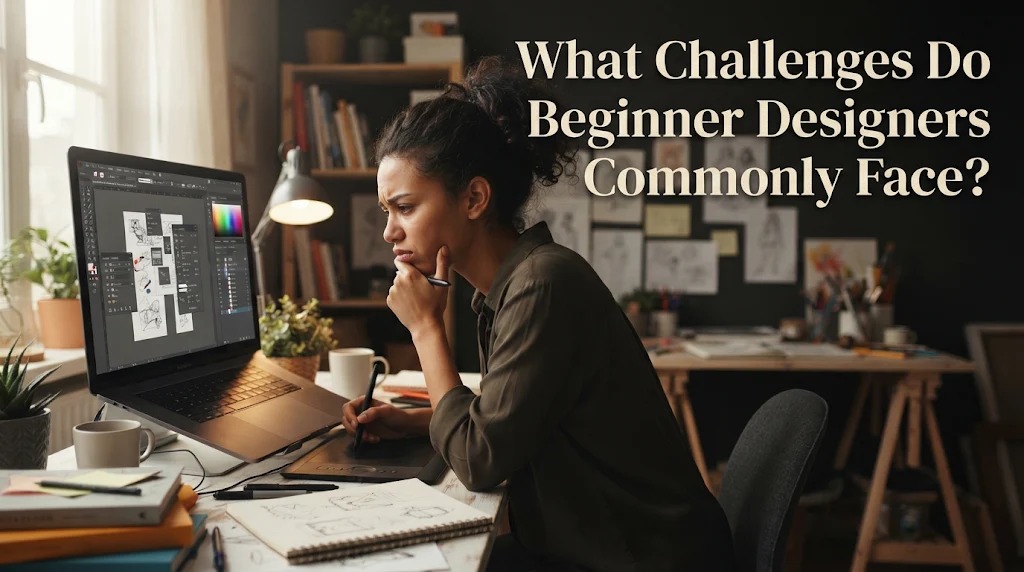
Starting a career in design can be exciting, especially for people who enjoy creativity and visual communication. However, becoming a designer is not always easy, particularly for beginners who are still developing their skills and gaining experience. They often face various challenges, such as limited technical knowledge, difficulty finding creative ideas, handling client expectations, and competing with experienced professionals. These obstacles can affect their confidence and slow down their professional development. Understanding the common challenges faced by beginner designers can help them prepare better strategies, improve their abilities, and build a successful career in the design industry.
LIMITED DESIGN KNOWLEDGE AND TECHNICAL SKILLS
One of the most common challenges for beginner designers is having limited knowledge of design principles and technical skills. They may understand basic visual concepts but still struggle to apply elements such as typography, color combinations, composition, contrast, and visual hierarchy. Without a strong foundation, their designs may look less organized or fail to communicate the intended message. Learning these principles requires time, practice, and a willingness to understand how different visual elements work together.
Beginners may also find it difficult to operate professional design software. Applications such as Adobe Photoshop, Adobe Illustrator, and Figma offer many features that can be confusing for new users. They need to understand the functions of different tools and learn how to use them efficiently. Following tutorials, joining online courses, and practicing with simple projects can help overcome these difficulties. As their technical knowledge improves, they will become more confident in handling complex design tasks.
DIFFICULTY FINDING CREATIVE IDEAS
Finding fresh and original ideas is another challenge that many beginner designers experience. Sometimes, they know what they want to create but struggle to turn their thoughts into an effective visual concept. This situation can happen when they have limited references, lack experience, or feel pressured to produce something impressive. As a result, they may spend too much time searching for inspiration without making significant progress.
To overcome this problem, beginners can explore different sources of inspiration, such as websites, advertisements, photography, architecture, and everyday surroundings. They can also create mind maps, collect visual references, and experiment with different design styles. However, inspiration should be used to develop original concepts rather than copy existing work. Developing a regular creative routine can help designers generate ideas more naturally and improve their ability to solve visual communication problems.
LACK OF EXPERIENCE AND PROFESSIONAL PORTFOLIO
Many beginner designers struggle to find professional opportunities because they do not have enough practical experience. Employers and clients often want to see examples of previous work before deciding to collaborate with someone. Unfortunately, beginners may not have completed real projects or worked with professional clients. This situation can make it difficult for them to prove their abilities and compete with more experienced designers.
Building a portfolio is an effective way to address this challenge. Beginners can include personal projects, fictional assignments, practice designs, and volunteer work to demonstrate their creativity and technical abilities. Each project should show the purpose of the design and explain the approach used to solve the visual problem. They can also participate in internships, competitions, and collaborative projects to gain practical experience. A well-organized portfolio can gradually increase their credibility and attract potential clients or employers.
HANDLING CLIENT FEEDBACK AND EXPECTATIONS
Working with clients can be challenging for beginners because every client has different preferences, expectations, and communication styles. Sometimes, clients request several revisions or provide feedback that is difficult to understand. Beginners may feel disappointed when their designs are rejected or changed significantly. However, feedback is a normal part of professional design work and should not always be considered a personal criticism.
To handle this situation, designers need to communicate clearly before starting a project. They should understand the client's objectives, target audience, budget, preferred style, and deadlines. Asking questions and presenting initial concepts can reduce misunderstandings during the design process. Beginners should also remain open to constructive criticism while explaining their creative decisions professionally. These communication skills can help build stronger relationships and improve the quality of their work.
COMPETITION AND MANAGING WORK PRESSURE
The design industry has many professionals with different levels of experience and creative abilities. Beginner designers may find it difficult to compete because they are still developing their skills and building professional reputations. Digital platforms also make it easier for clients to compare different designers based on their portfolios, services, and prices. This competition can create pressure, especially for beginners who are trying to find their first projects or establish a stable income.
In addition, designers often need to manage several tasks while meeting specific deadlines. They may experience stress when handling multiple revisions, balancing different projects, or dealing with demanding clients. Learning time management and setting realistic work schedules can help reduce these problems. Beginners should also focus on improving their unique strengths instead of constantly comparing themselves with experienced professionals. By maintaining consistency and delivering quality work, they can gradually build a stronger position in the design industry.
CONCLUSION
Beginner designers commonly face challenges involving limited technical skills, creative difficulties, lack of experience, client expectations, and professional competition. These obstacles are part of the learning process and should not discourage people who want to pursue a design career. Beginners can overcome them by practicing regularly, building a strong portfolio, improving communication, and learning to manage their time effectively. With patience, dedication, and continuous development, they can become more confident, improve their work quality, and create better opportunities in the professional design industry.
Recent Posts

How Does Technology Make Daily Evaluation... 21.11.2026/58 View

Apa Strategi Menghadapi Kesenjangan antara Kompetensi... 21.11.2026/60 View

Mengapa Inventaris Aset Penting bagi Kelancaran... 21.11.2026/56 View

When Should Musicians Join a Record... 21.11.2026/55 View

Daily Evaluation or Daily Planning Which... 21.11.2026/63 View
