

What Challenges Do Digital Libraries Face in Modern Education?
UNDERSTANDING DIGITAL LIBRARY CHALLENGES
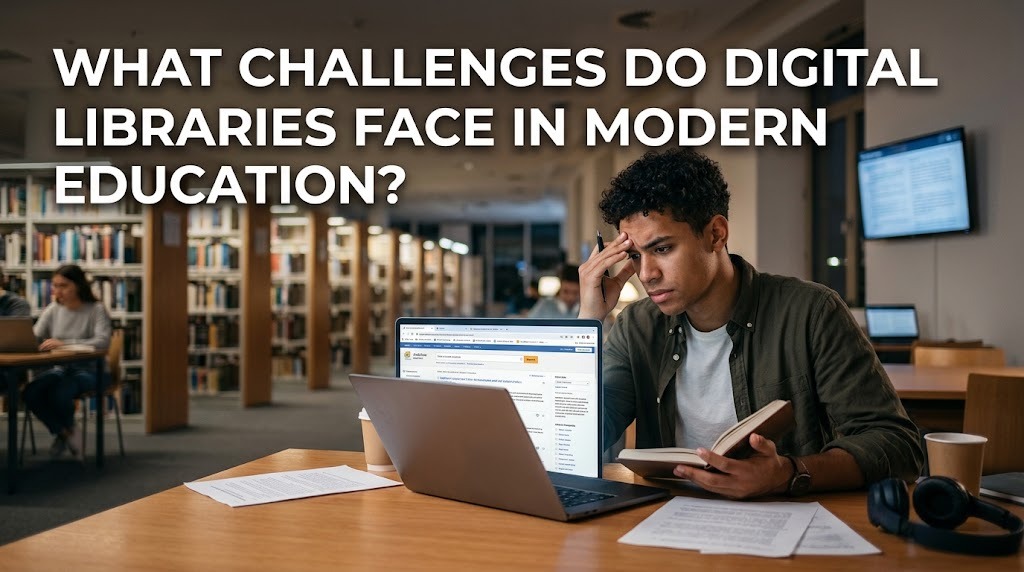
Digital libraries have become valuable tools in modern education because they provide electronic access to books, journals, research papers, and other educational resources. Students and teachers can use these materials without depending entirely on physical library collections. However, the development of digital library services also creates several challenges that educational institutions need to address. Understanding these challenges is important to ensure that digital libraries remain useful, accessible, and reliable.
The success of a digital library depends on more than simply placing books and documents online. Institutions need appropriate technology, reliable resources, secure systems, and users who understand how to use digital services effectively. Differences in infrastructure and digital skills can affect the experience of students and educators. For this reason, digital libraries require continuous development and proper management.
LIMITED INTERNET AND TECHNOLOGY ACCESS
One of the biggest challenges facing digital libraries is unequal access to internet connections and digital devices. Some students may have limited access to reliable internet services, computers, tablets, or smartphones. When digital resources require stable connectivity, students with technological limitations may have difficulty accessing learning materials. This can create differences in educational opportunities between users.
Educational institutions can help reduce this problem by improving campus internet infrastructure and providing suitable access facilities. Libraries may also offer computers or designated areas where students can use digital services. However, these solutions require financial investment and regular maintenance. Without adequate infrastructure, the benefits of digital libraries cannot be experienced equally by all learners.
COPYRIGHT AND ACCESS RESTRICTIONS
Digital libraries must carefully manage copyright and licensing requirements. Academic books, journals, and other publications are often protected by intellectual property rights. A library may need to purchase licenses or establish agreements before providing digital access to particular materials. These restrictions can affect which resources users are permitted to read, download, or share.
Access conditions may also vary between institutions and publications. Some resources may only be available to authorized students, lecturers, or researchers. Other materials may have restrictions on downloading or printing. Therefore, digital libraries need clear policies that balance convenient access to information with respect for copyright and intellectual property.
MAINTAINING RESOURCE QUALITY AND RELEVANCE
Another challenge is ensuring that digital collections contain accurate, relevant, and high quality information. The number of available digital resources can grow rapidly, but quantity alone does not guarantee educational value. Libraries need to select appropriate materials and regularly review their collections. Outdated or unsuitable resources can reduce the usefulness of a digital library.
Students also need the ability to evaluate information critically. A digital library may provide access to academic materials, but users should still consider the author's credibility, publication date, publisher, and relevance to their research. Librarians and educators can help students develop these skills. Strong information literacy is essential for making effective use of digital collections.
SECURITY AND TECHNICAL RELIABILITY
Digital libraries must protect user data, accounts, and institutional information from unauthorized access. Security risks can include weak passwords, compromised accounts, technical vulnerabilities, and other forms of digital threats. Institutions therefore need appropriate security measures and regular system maintenance. A secure platform can help users feel more confident when accessing academic resources.
Technical reliability is equally important because system failures can interrupt learning and research activities. Problems with servers, software, databases, or internet connectivity can prevent users from reaching important materials. Regular updates, backups, monitoring, and technical support can help reduce these disruptions. Reliable infrastructure is essential for maintaining a consistent digital learning environment.
DEVELOPING DIGITAL LITERACY AND USER SUPPORT
Not every student or educator has the same level of digital literacy. Some users may understand basic online searches but have difficulty using academic databases, advanced search filters, citation tools, or digital resource management features. Without adequate guidance, users may not take full advantage of the services available. This can limit the educational value of a digital library.
Libraries can address this challenge through training sessions, tutorials, user guides, and assistance from librarians. Simple instructions can help users learn how to search effectively, evaluate sources, and use resources responsibly. Ongoing support is especially important as digital platforms and technologies continue to change. Improving user skills can make digital library services more inclusive and effective.
CONCLUSION
Digital libraries face several challenges in modern education, including unequal technology access, copyright restrictions, resource quality concerns, security risks, technical problems, and differences in digital literacy. These challenges can affect how effectively students and educators use digital educational resources. Addressing them requires cooperation between educational institutions, librarians, technology providers, educators, and users. A well managed digital library must continuously adapt to changing academic and technological needs.
Despite these challenges, digital libraries remain valuable for modern learning and research. Investments in infrastructure, cybersecurity, quality collections, user training, and technical support can improve their effectiveness. Students also need to use digital resources responsibly and develop strong information evaluation skills. With the right strategies, digital libraries can overcome many limitations and continue supporting accessible, flexible, and technology based education.
Recent Posts

Bagaimana Sistem SKS pada Program Kuliah... 22.11.2026/35 View

How Does Technology Make Daily Evaluation... 21.11.2026/69 View

Apa Strategi Menghadapi Kesenjangan antara Kompetensi... 21.11.2026/70 View

Mengapa Inventaris Aset Penting bagi Kelancaran... 21.11.2026/67 View

When Should Musicians Join a Record... 21.11.2026/69 View
