

What Challenges Do Homeroom Teachers Commonly Face at School?
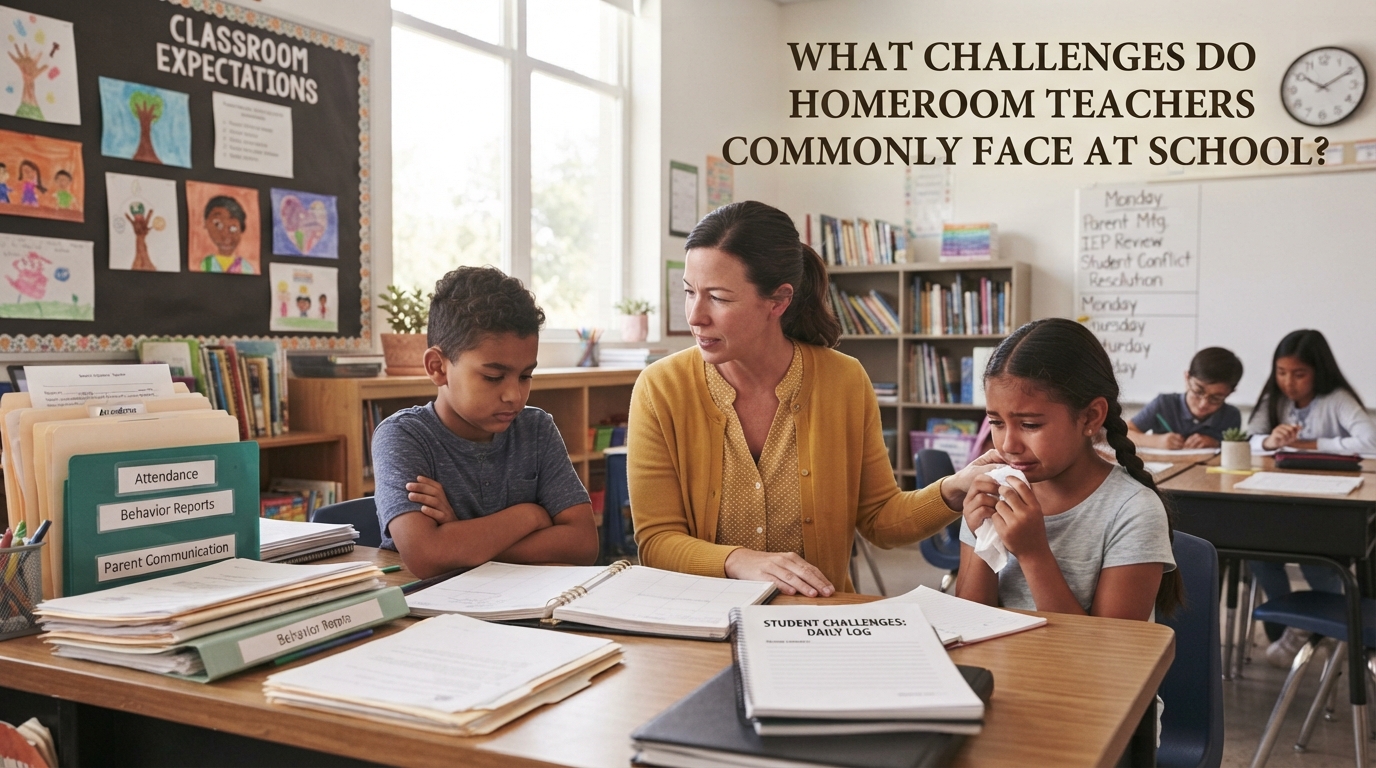
Homeroom teachers play an important role in supporting students' academic progress, personal development, and classroom behavior. Besides teaching or coordinating educational activities, they are often responsible for monitoring attendance, communicating with parents, and helping students overcome school-related problems. These responsibilities can be challenging because every student has different personalities, abilities, and family backgrounds. Homeroom teachers must also work with other teachers and school staff to maintain a positive learning environment. Understanding the common challenges faced by homeroom teachers can help schools provide better support and improve the quality of education.
MANAGING STUDENTS WITH DIFFERENT PERSONALITIES
One of the most common challenges for homeroom teachers is managing students with different personalities and behaviors. Some students are active, confident, and comfortable expressing their opinions, while others may be quiet, shy, or less interested in classroom activities. These differences require teachers to use flexible approaches when communicating and guiding students. A method that works well for one student may not be effective for another. Therefore, homeroom teachers need patience, empathy, and good communication skills to build positive relationships with the entire class.
HANDLING STUDENTS' DISCIPLINE PROBLEMS
Maintaining student discipline is another important responsibility that can be difficult to manage. Some students may frequently arrive late, ignore classroom rules, fail to complete assignments, or disturb their classmates during lessons. Homeroom teachers must address these behaviors fairly without embarrassing or discouraging students. They should explain classroom expectations, apply consistent consequences, and help students understand the importance of responsibility. Positive discipline is more effective when it focuses on correcting behavior and developing self-control rather than simply punishing mistakes.
DEALING WITH LOW LEARNING MOTIVATION
Not all students have the same enthusiasm for learning. Some may lose interest because they find certain subjects difficult, lack confidence, experience personal problems, or do not understand the importance of education. This situation can affect their participation, assignment completion, and academic performance. Homeroom teachers need to identify the possible causes of low motivation before deciding on appropriate support. They can provide encouragement, recognize small improvements, and help students establish realistic learning goals. Consistent motivation and individual guidance can gradually help students develop more positive learning habits.
COMMUNICATING WITH PARENTS AND FAMILIES
Communication with parents can become challenging when teachers need to discuss sensitive issues, such as poor academic performance, attendance problems, or inappropriate behavior. Some parents may have limited time to communicate because of work or family responsibilities. Others may have different opinions about how their children should be guided or disciplined. Homeroom teachers need to communicate information clearly, respectfully, and professionally while listening to parents' concerns. Strong cooperation between teachers and parents helps create consistent support for students at school and at home.
MONITORING STUDENTS' ACADEMIC AND PERSONAL DEVELOPMENT
Homeroom teachers often need to monitor more than students' academic results. They may also observe attendance, classroom participation, social relationships, emotional changes, and general behavior. Collecting and reviewing this information can be time-consuming, especially when a teacher is responsible for many students. Another challenge is recognizing early signs of difficulties without making unfair assumptions about a student's situation. Teachers should use reliable information, communicate with relevant subject teachers, and provide appropriate guidance. Continuous student monitoring helps schools respond to problems before they become more serious.
MANAGING ADMINISTRATIVE RESPONSIBILITIES
Administrative duties can take up a significant amount of a homeroom teacher's time. These responsibilities may include recording attendance, preparing student reports, updating personal information, documenting achievements, and completing school records. When administrative tasks increase, teachers may have less time to provide individual attention to students. Poorly organized records can also make it difficult to monitor student progress accurately. To manage these responsibilities, teachers need good time management, organized documentation, and effective use of digital tools when available. Support from school administration can also help reduce unnecessary workloads.
HANDLING CONFLICTS AND SOCIAL PROBLEMS AMONG STUDENTS
Conflicts between students can occur because of misunderstandings, differences of opinion, competition, or negative interactions. In some cases, problems may develop into bullying, social exclusion, or repeated disagreements. Homeroom teachers need to respond carefully by listening to the students involved and understanding the situation before taking action. They should encourage respectful communication, empathy, and peaceful conflict resolution. Serious cases, particularly those involving bullying or student safety, may require coordination with school counselors, parents, and school leadership. A safe and respectful classroom environment allows students to learn without fear or unnecessary pressure.
BALANCING TEACHING DUTIES AND STUDENT GUIDANCE
Homeroom teachers may have to balance their teaching responsibilities with classroom management, student counseling, administrative work, and communication with parents. These tasks can become demanding when several student problems occur at the same time. Teachers may also face limited time, resources, or institutional support. Without proper planning, the workload can affect their ability to provide effective guidance. Schools should encourage teamwork, distribute responsibilities fairly, and provide access to professional development or counseling support. A balanced workload and supportive school environment help teachers perform their responsibilities more effectively.
CONCLUSION
Homeroom teachers commonly face challenges related to student behavior, learning motivation, parent communication, academic monitoring, administrative duties, and social conflicts. Each challenge requires patience, professionalism, empathy, and effective problem-solving skills. Teachers cannot solve every problem independently, so cooperation with parents, subject teachers, counselors, and school leaders is also essential. With appropriate support and clear responsibilities, homeroom teachers can manage their duties more effectively. Ultimately, overcoming these challenges helps create a safe, supportive, and productive learning environment where students can develop academically and personally.
Recent Posts

How Does Technology Make Daily Evaluation... 21.11.2026/56 View

Apa Strategi Menghadapi Kesenjangan antara Kompetensi... 21.11.2026/58 View

Mengapa Inventaris Aset Penting bagi Kelancaran... 21.11.2026/52 View

When Should Musicians Join a Record... 21.11.2026/53 View

Daily Evaluation or Daily Planning Which... 21.11.2026/60 View
