

What Challenges Do Production Staff Face at Work?
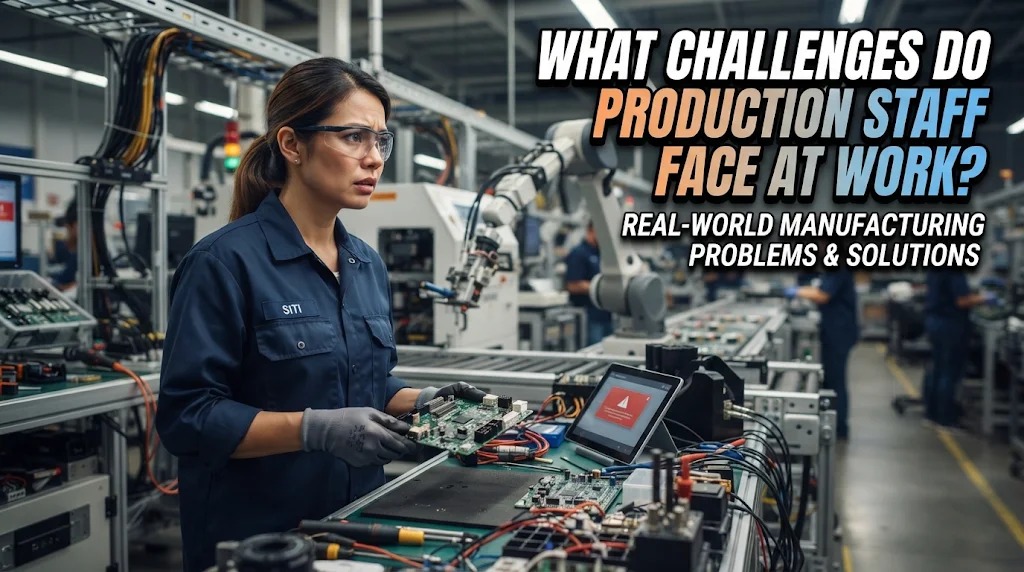
Production staff play an important role in ensuring that manufacturing activities run smoothly and meet company targets. Their responsibilities involve monitoring production processes, coordinating with other departments, maintaining product quality, and managing daily operational tasks. However, working in a manufacturing environment can involve various difficulties that affect productivity and employee performance. Understanding these challenges can help production staff prepare better solutions and perform their responsibilities more effectively.
MEETING DAILY PRODUCTION TARGETS
One of the most common challenges production staff face is meeting daily production targets. Companies often establish specific output goals that must be achieved within a limited period. Production staff need to monitor work progress and ensure that manufacturing activities follow the planned schedule. Unexpected delays, equipment problems, or material shortages can make these targets difficult to achieve.
Meeting production targets also requires effective coordination between employees and departments. Production staff must identify factors that slow down the workflow and communicate them to supervisors. They may need to adjust schedules or help organize resources to maintain production performance. Good planning and regular monitoring can reduce the risk of missing important deadlines.
HANDLING MACHINE BREAKDOWNS AND EQUIPMENT PROBLEMS
Machine breakdowns can interrupt manufacturing activities and reduce overall productivity. Production staff must respond quickly when equipment stops working or does not operate according to expectations. Although technical repairs are generally handled by maintenance personnel, production staff still need to report problems and coordinate the necessary response. Delayed communication can increase downtime and affect production schedules.
Preventing equipment problems also requires regular monitoring and proper maintenance procedures. Production staff should understand basic equipment requirements and recognize signs of unusual operation. They must ensure that operators follow work instructions and report technical issues immediately. Effective cooperation with maintenance teams helps minimize interruptions and maintain a stable production process.
MAINTAINING PRODUCT QUALITY
Maintaining consistent product quality is another major challenge in manufacturing. Every product must meet established specifications before being distributed to customers. Production staff need to monitor production results, review inspection information, and coordinate with quality control teams. Even small errors can lead to defective products, customer complaints, or additional production costs.
Quality problems may occur because of incorrect procedures, unsuitable materials, equipment conditions, or human error. Production staff must identify possible causes and help ensure that corrective actions are implemented. They should also encourage employees to follow quality standards at every stage of production. Consistent monitoring helps companies reduce defects and maintain customer satisfaction.
DEALING WITH MATERIAL SHORTAGES
Material shortages can prevent production activities from continuing according to schedule. Manufacturing companies depend on the availability of raw materials, components, and packaging supplies to complete their products. When necessary materials arrive late or are unavailable, production staff may struggle to maintain planned output levels. This situation can also affect delivery schedules and customer expectations.
To address this challenge, production staff need to communicate with warehouse and purchasing departments. They should monitor material requirements, check inventory information, and report shortages before supplies are completely exhausted. Accurate stock records can help companies prepare materials more effectively. Better coordination between departments reduces the possibility of production interruptions.
MANAGING WORKPLACE COMMUNICATION
Effective communication is essential because production staff interact with different employees throughout the working day. They may need to exchange information with operators, supervisors, warehouse personnel, maintenance teams, and quality control employees. Miscommunication can cause incorrect instructions, duplicated work, and unnecessary delays. These problems may become more serious when production activities involve several departments.
Production staff should provide clear information and confirm that important instructions are understood. They also need to listen to feedback from coworkers and report operational problems accurately. Regular communication helps employees understand their responsibilities and respond to changes more quickly. Strong teamwork can create a more organized and productive working environment.
ADAPTING TO CHANGES IN PRODUCTION SCHEDULES
Production schedules can change because of customer orders, material availability, machine conditions, or company priorities. These changes may require production staff to reorganize tasks and communicate new instructions to other employees. Adjusting to sudden changes can be difficult, especially when several activities are already in progress. Without proper coordination, schedule changes may create confusion and reduce efficiency.
To manage this situation, production staff should remain flexible and understand the priorities established by supervisors. They must update relevant information and ensure that affected departments receive the latest instructions. Maintaining accurate production records can also help employees track changes more easily. Adaptability allows production staff to respond effectively to unexpected operational demands.
FOLLOWING WORKPLACE SAFETY REQUIREMENTS
Manufacturing environments may involve heavy machinery, electrical equipment, chemicals, and materials that require careful handling. Production staff must understand workplace safety regulations and ensure that daily activities follow established procedures. Ignoring safety requirements can lead to accidents, injuries, and operational disruptions. Maintaining a safe working environment is therefore an important part of their responsibilities.
Production staff should support safety practices by checking work conditions, reporting potential hazards, and reminding employees to follow company regulations. They must also ensure that operators use appropriate personal protective equipment when required. Regular safety training can improve employee awareness and reduce workplace risks. A strong safety culture protects workers while supporting consistent production activities.
HANDLING WORK PRESSURE AND DEADLINES
Production staff may experience pressure when they must complete several responsibilities within limited working hours. Monitoring production progress, preparing reports, coordinating departments, and handling unexpected problems can make their workload demanding. Tight deadlines may also create stress, especially when production targets are difficult to achieve. Without proper workload management, employees may lose concentration and make mistakes.
Managing work pressure requires effective time management and clear priorities. Production staff should organize tasks, communicate difficulties to supervisors, and avoid handling every problem without assistance. Teamwork can help distribute responsibilities more effectively. Maintaining a professional attitude and staying focused on practical solutions can improve performance under pressure.
CONCLUSION
Production staff face various workplace challenges, including production target demands, equipment problems, quality control issues, material shortages, and communication difficulties. They must also adapt to schedule changes, follow safety requirements, and manage work pressure. These challenges require strong communication, problem-solving abilities, discipline, and teamwork. By developing these skills and following effective work procedures, production staff can overcome daily difficulties and support better manufacturing performance.
Recent Posts

How Does Technology Make Daily Evaluation... 21.11.2026/56 View

Apa Strategi Menghadapi Kesenjangan antara Kompetensi... 21.11.2026/58 View

Mengapa Inventaris Aset Penting bagi Kelancaran... 21.11.2026/52 View

When Should Musicians Join a Record... 21.11.2026/53 View

Daily Evaluation or Daily Planning Which... 21.11.2026/60 View
