

What Challenges Do Professional Accountants Face in the Age of AI?
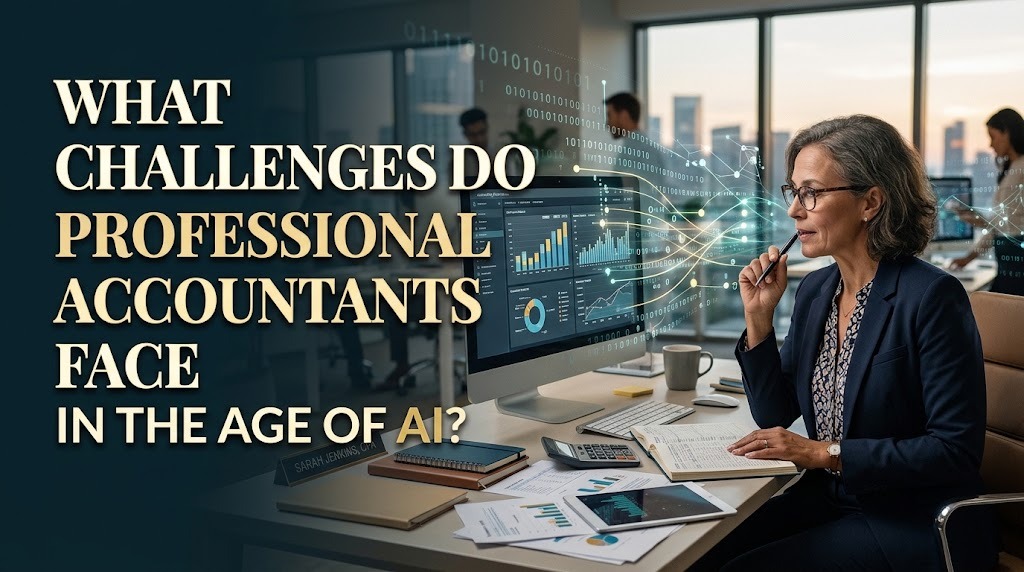
The rapid integration of artificial intelligence and machine learning into corporate finance introduces a complex wave of both unprecedented opportunities and operational challenges for every professional accountant. While advanced algorithms successfully automate repetitive data entry and accelerate reporting cycles, they also disrupt traditional career paths and operational models. Practitioners must confront the anxiety of job displacement by actively transforming their skill sets to remain competitive in a tech-driven marketplace. Embracing technological evolution is no longer optional for those wishing to thrive in modern corporate finance. Navigating these digital currents requires resilience, adaptability, and an ongoing commitment to professional growth.
Furthermore, relying heavily on automated software without understanding underlying systemic logic creates new forms of operational and compliance vulnerability. Accountants can no longer rely solely on mechanical bookkeeping competence; they must develop critical oversight capabilities to evaluate machine-generated outputs. As software takes over routine tasks, the entire professional landscape shifts toward high-level advisory and analytical responsibilities. Understanding how to work alongside smart technology defines the benchmark for contemporary financial leadership. Overcoming these initial challenges paves the way for a more strategic, rewarding career trajectory.
HOW DOES AUTOMATION DISRUPT ENTRY-LEVEL ACCOUNTING ROLES?
The most immediate professional challenge triggered by artificial intelligence is the rapid transformation and reduction of traditional entry-level bookkeeping duties. Historically, young graduates entering the workforce spent their early years performing manual transaction coding, invoice matching, and basic bank reconciliation tasks. Today, intelligent algorithms handle these repetitive operational workflows in seconds with near-perfect accuracy. While this efficiency boosts corporate productivity, it threatens to eliminate the traditional foundational training ground where junior staff learned core accounting mechanics. Restructuring entry-level professional development is an urgent priority for modern accounting firms.
Additionally, firms must design innovative mentorship frameworks that train young professionals to become effective supervisors of automated systems rather than manual data processors. Junior accountants are now expected to master data analytics, prompt engineering, and exception-handling procedures much earlier in their careers. This accelerated transition demands higher critical thinking skills from fresh graduates on day one of employment. Bridging the gap between automated tools and human oversight prevents a future shortage of experienced senior leadership. Adapting training models guarantees a steady pipeline of capable financial experts.
WHAT ARE THE CRITICAL DATA SECURITY AND PRIVACY RISKS?
As accounting practices and corporate finance departments migrate completely to cloud servers and AI-driven platforms, cybersecurity and data privacy emerge as paramount concerns. Financial databases contain exceptionally sensitive information, including proprietary earnings forecasts, corporate tax files, and employee banking credentials. Cybercriminals frequently target these interconnected networks with sophisticated ransomware attacks, phishing schemes, and unauthorized data breaches. Accountants bear the ethical and legal responsibility of ensuring that their software vendors maintain impenetrable data encryption standards. Safeguarding digital assets preserves commercial trust and regulatory standing.
Moreover, utilizing external artificial intelligence models for data analysis or report drafting exposes organizations to accidental leaks of confidential financial figures. Accountants must establish strict internal governance protocols that dictate which categories of corporate data can be processed through public software applications. Regular vulnerability assessments and employee cybersecurity training sessions are mandatory to defend against evolving digital threats. Maintaining an uncompromised digital perimeter protects the organization from catastrophic financial and reputational damage. Uncompromising security is the ultimate shield in the digital age.
WHY IS THE WIDENING SKILLS GAP A MAJOR CONCERN?
The rapid pace of technological innovation has created a significant skills gap between traditional financial practitioners and digitally fluent market leaders. Many veteran accountants who built their careers on manual ledgers and desktop spreadsheets struggle to adapt to cloud ecosystems and predictive analytics tools. Conversely, tech-savvy professionals often lack the deep regulatory knowledge and ethical grounding required to interpret complex financial accounting standards accurately. Bridging this dual-sided competency gap requires continuous professional development and comprehensive corporate training investments. Closing the skills divide is vital for overall industry resilience.
Furthermore, educational institutions and professional bodies face immense pressure to overhaul their curriculum to emphasize data science alongside traditional accounting principles. Professionals who fail to update their technical competencies risk professional obsolescence as employers increasingly prioritize tech-enabled candidates. Cultivating a growth mindset allows practitioners to view software advancements as empowering tools rather than professional threats. Lifelong learning transforms potential obsolescence into lasting career marketability. Educational agility guarantees long-term professional relevance.
HOW DO ACCURACY AND ALGORITHMIC BIAS THREATEN COMPLIANCE?
A common misconception among business owners is that artificial intelligence and automated software are completely infallible, leading to dangerous over-reliance on unverified outputs. If an AI model trains on flawed historical datasets or misinterprets complex tax codes, it can generate systemic errors across corporate financial statements. Furthermore, automated tools may struggle to apply nuanced professional judgment when evaluating ambiguous commercial transactions or unusual audit exceptions. Accountants must maintain rigorous skepticism and verify every machine-generated calculation before finalizing official reports. Human oversight remains the ultimate safeguard against algorithmic failure.
Additionally, maintaining absolute adherence to statutory tax compliance mandates requires up-to-date legal interpretation that automated systems cannot always navigate independently. When tax laws change or local revenue authorities issue new regulations, human accountants must manually update internal compliance parameters. Blindly trusting software without expert supervision invites aggressive tax penalties and regulatory audits. Professional judgment acts as an indispensable filter between raw computational power and defensible financial reporting. Accuracy relies on harmonious collaboration between human insight and machine speed.
WHAT ETHICAL DILEMMAS ARISE FROM THE USE OF ARTIFICIAL INTELLIGENCE?
The integration of artificial intelligence into financial decision-making introduces complex ethical dilemmas that challenge traditional codes of professional conduct. For instance, predictive analytics models used to forecast cash flows or assess credit risks can inadvertently perpetuate historical biases embedded in training data. Accountants must ensure that automated advisory tools operate fairly, transparently, and in strict alignment with professional ethics. Furthermore, determining legal liability when an AI-driven financial model produces a catastrophic calculation error remains an unresolved grey area in corporate law. Ethical governance must evolve alongside technological capabilities.
Moreover, as automation reduces the time required for routine tasks, accountants face pressure to maximize billable hours through increased client volume rather than deep strategic analysis. Upholding professional integrity requires practitioners to prioritize quality control, thorough data verification, and honest client communication over hasty digital turnaround times. Credentialed experts bound by strict codes of conduct must lead the charge in establishing ethical boundaries for AI usage. Preserving public trust in financial reporting is the ultimate ethical duty of every accountant. Unwavering integrity protects the soul of the profession.
CONCLUSION
Navigating the age of artificial intelligence requires a professional accountant to balance advanced technology with rigorous financial accounting, maintain strict tax compliance, oversee accurate financial statements, and leverage certified public accountant judgment to guide strategic growth.
Recent Posts

Bagaimana Sistem SKS pada Program Kuliah... 22.11.2026/53 View

How Does Technology Make Daily Evaluation... 21.11.2026/82 View

Apa Strategi Menghadapi Kesenjangan antara Kompetensi... 21.11.2026/81 View

Mengapa Inventaris Aset Penting bagi Kelancaran... 21.11.2026/77 View

When Should Musicians Join a Record... 21.11.2026/82 View
