

What Challenges Do Radio Announcers Face in the Digital Era?
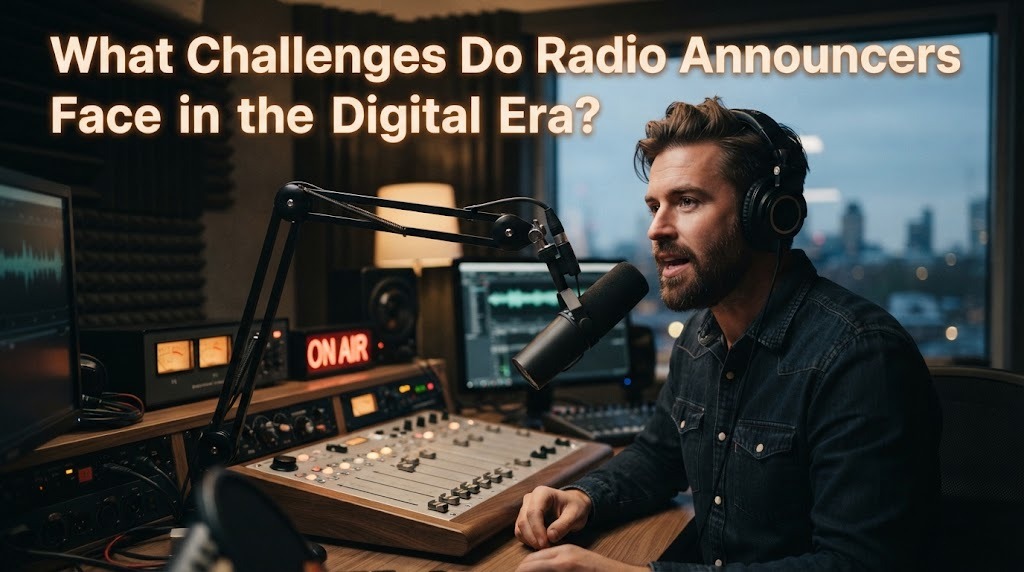
Radio announcers continue to play an important role in the media industry, but their profession has changed significantly because of digital technology. Listeners can now access entertainment and information through streaming platforms, podcasts, social media, and video services. This development gives radio announcers new opportunities to reach audiences, but it also creates several challenges. They must compete for attention in an environment where people have many choices for consuming content. At the same time, they need to maintain the unique qualities that make traditional radio attractive.
The digital era also requires radio announcers to develop skills beyond speaking on air. They may need to understand social media, digital content production, audience analytics, and online communication. Their work can involve creating content for several platforms instead of focusing only on a radio broadcast. Adaptability has therefore become an important part of building a sustainable career in radio broadcasting.
COMPETITION FROM DIGITAL MEDIA PLATFORMS
One of the biggest challenges for radio announcers is competition from the growing number of digital media platforms. Audiences can choose from podcasts, music streaming services, online videos, social media, and other forms of entertainment. These platforms allow people to select content based on their personal interests and preferred schedules. Traditional radio, which usually follows a fixed broadcast schedule, must compete with this flexibility. Radio announcers need to create content that gives listeners a reason to continue tuning in.
This competition also affects the way audiences discover media personalities. In the past, a radio announcer could become familiar to listeners mainly through regular broadcasts. Today, audiences may discover a host through short videos, social media posts, podcasts, or online interviews. Announcers therefore need to build a recognizable presence across different channels. A strong personal identity can help them maintain audience loyalty in a crowded digital environment.
CHANGING LISTENER HABITS
Digital technology has changed how people consume audio content. Many listeners now expect to access content whenever they want rather than waiting for a particular broadcast time. Podcasts and on demand audio allow audiences to choose specific topics and listen at their convenience. This change can make it more difficult for traditional radio programs to maintain consistent attention. Radio announcers need to understand these changing habits when developing program content.
Younger audiences in particular may spend significant amounts of time on social media and video platforms. This means radio programs need to find creative ways to connect with audiences who may not regularly listen to conventional broadcasts. Announcers can support this effort by creating short digital content from their programs and encouraging listeners to interact online. Understanding audience behavior can help radio stations make their content more relevant.
THE NEED TO MASTER DIGITAL SKILLS
Radio announcers increasingly need digital skills to remain competitive. Traditional broadcasting skills are still important, but announcers may also need to understand social media management, basic audio editing, video content, and online audience engagement. They may be expected to contribute to digital campaigns or produce additional content outside regular broadcasts. Learning these skills can require significant time and continuous practice.
Digital tools also change quickly, so announcers need to keep learning. A platform that is popular today may become less important as audience preferences change. New content formats can also require different presentation techniques. Radio professionals who are willing to learn and adapt can use technology as an opportunity rather than simply seeing it as a threat.
PRESSURE TO PRODUCE CONTENT CONSISTENTLY
The digital environment creates pressure to produce content regularly. Social media audiences often expect frequent updates, while radio programs already require careful preparation before going on air. An announcer may need to prepare broadcast material and create additional content for several digital platforms. Managing these responsibilities can become demanding, especially when programs are broadcast daily.
Consistent content production also requires creativity. Repeating the same ideas across different platforms can make audiences lose interest. Announcers need to adapt one topic into different formats while keeping the central message consistent. Good planning and cooperation with producers and digital teams can help reduce this pressure.
MAINTAINING AUTHENTICITY IN A FAST MEDIA ENVIRONMENT
Another challenge is maintaining authenticity while adapting to digital trends. Social media often rewards content that is short, entertaining, and highly engaging. Radio announcers may feel pressure to follow popular trends even when those trends do not match their personality or professional identity. If content feels forced, audiences may find it less trustworthy or relatable.
An effective announcer should therefore balance trends with authenticity. Their communication style should remain natural while adapting to the expectations of different platforms. A consistent personality can help audiences recognize and trust an announcer across radio and digital channels. Authentic communication is particularly valuable because digital audiences have many alternatives.
DEALING WITH MISINFORMATION AND CONTENT ACCURACY
The speed of digital communication creates another important challenge involving information accuracy. Online information can spread rapidly before its reliability has been properly checked. Radio announcers who discuss trending topics have a responsibility to verify information before presenting it to listeners. Sharing inaccurate information can damage audience trust and the reputation of the radio station.
Fact checking is therefore an essential part of modern broadcasting. Announcers should rely on credible sources and distinguish verified information from rumors or unconfirmed claims. This is especially important when discussing sensitive issues, breaking news, public events, or information that could affect people's decisions. Accuracy should remain a priority even when there is pressure to respond quickly to a trending topic.
INTERACTING WITH AUDIENCES ACROSS MULTIPLE PLATFORMS
Audience interaction has become more complex because listeners can communicate through many channels. A radio announcer may receive messages through social media, chat applications, comments, phone calls, or other online platforms. Managing these interactions while presenting a live program requires concentration and good time management. Announcers must also respond professionally because digital conversations can be visible to a much larger audience.
Online interaction can nevertheless be a valuable advantage. It allows announcers to understand what listeners enjoy, ask questions directly, and develop stronger relationships with their audience. Feedback can also provide ideas for future programs. When handled professionally, digital engagement can strengthen the connection between a radio station and its listeners.
MANAGING PERFORMANCE PRESSURE AND WORKLOAD
The combination of broadcasting and digital responsibilities can increase workload for radio announcers. They may need to prepare scripts, research topics, record programs, conduct interviews, interact with listeners, and create social media content. Live broadcasting also requires constant concentration because mistakes can happen in real time. Managing these responsibilities requires organization and good preparation.
Performance pressure can also increase because audience reactions are visible online. A radio segment may receive immediate comments, positive feedback, or criticism on social media. Announcers need to handle feedback professionally without allowing negative comments to affect their performance. Developing emotional resilience and maintaining healthy work habits can help them manage the demands of the profession.
ADAPTING TO NEW BROADCASTING TECHNOLOGY
Technology continues to influence how radio programs are produced and distributed. Internet radio, digital broadcasting, streaming services, podcasts, and other technologies have expanded the ways audiences can access audio content. Radio announcers need to understand how these technologies affect their work. They may also need to become familiar with new studio equipment and digital production systems.
Adapting to technology does not mean abandoning traditional radio skills. Clear speech, storytelling, interviewing, timing, and audience engagement remain essential. Instead, technology provides additional tools for delivering these skills to wider audiences. Announcers who combine strong broadcasting fundamentals with technological adaptability can remain valuable in the changing media industry.
CONCLUSION
Radio announcers face several challenges in the digital era, including competition from streaming services, changing listener habits, increasing content demands, and the need to develop digital skills. They also have to maintain accuracy, authenticity, and professionalism while interacting with audiences across multiple platforms. These challenges require continuous learning and the ability to adapt to changes in technology and audience behavior.
Despite these difficulties, the digital era also creates new opportunities for radio announcers. They can expand their reach through podcasts, social media, streaming platforms, and other forms of digital content. By combining traditional broadcasting expertise with modern digital skills, radio announcers can build stronger connections with audiences and remain relevant in the evolving media industry.
Recent Posts

Bagaimana Sistem SKS pada Program Kuliah... 22.11.2026/35 View

How Does Technology Make Daily Evaluation... 21.11.2026/69 View

Apa Strategi Menghadapi Kesenjangan antara Kompetensi... 21.11.2026/69 View

Mengapa Inventaris Aset Penting bagi Kelancaran... 21.11.2026/67 View

When Should Musicians Join a Record... 21.11.2026/68 View
