

What Challenges Do Regional Government Owned Enterprises Face in Business Development?
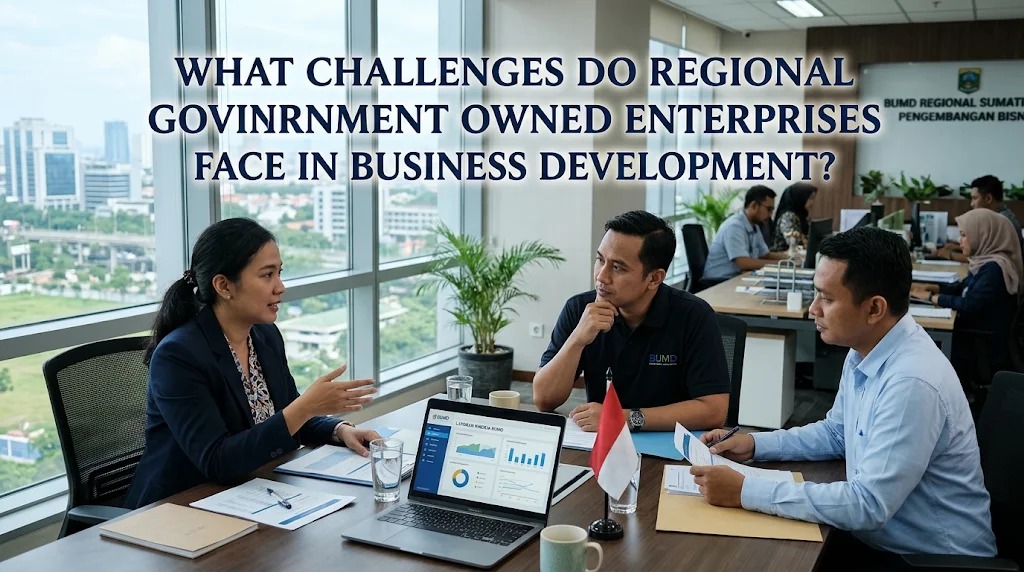
Regional Government Owned Enterprises, commonly known as BUMD (Badan Usaha Milik Daerah) in Indonesia, play an important role in supporting local economic development. These enterprises operate in various sectors, including banking, transportation, drinking water, tourism, energy, and food distribution. Their main responsibilities include providing public services, managing regional business opportunities, creating employment, and generating revenue for local governments.
Despite their important role, Regional Government Owned Enterprises face various challenges when developing their businesses. These challenges can affect financial performance, operational efficiency, competitiveness, and the quality of services provided to communities. Understanding these difficulties is important for identifying effective solutions and improving the long-term performance of BUMD.
LIMITED CAPITAL AND FINANCIAL RESOURCES
One of the main challenges faced by Regional Government Owned Enterprises is limited capital. Business development often requires significant investment in infrastructure, technology, equipment, employee training, and operational improvements. However, not all BUMD have sufficient financial resources to support these requirements.
Limited capital can make it difficult for companies to expand their services, introduce new products, or enter new markets. Some enterprises may also experience financial pressure when operational costs increase while revenue remains relatively stable. This situation can reduce their ability to compete with private companies that have greater access to investment and financing.
To address this challenge, BUMD need to improve financial planning and identify sustainable funding sources. They can also evaluate investment opportunities, control unnecessary expenditures, and develop partnerships with other businesses when permitted by applicable regulations. Proper financial management can help enterprises use available resources more effectively.
WEAK MANAGEMENT AND HUMAN RESOURCE QUALITY
Management quality is another important factor that influences business development. Regional Government Owned Enterprises need professional leaders who understand business strategies, financial management, operational planning, and market conditions. Without effective leadership, companies may struggle to establish clear objectives and make appropriate business decisions.
Human resource quality also affects company performance. Some enterprises may face difficulties in recruiting employees with the necessary technical knowledge, digital skills, and professional experience. Limited training opportunities can make it harder for employees to adapt to technological developments and changing customer expectations.
Improving management and employee capabilities requires continuous professional development. Companies need transparent recruitment processes, relevant training programs, clear performance evaluations, and leadership based on professional qualifications. These improvements can strengthen organizational performance and support more effective business operations.
BUREAUCRACY AND COMPLEX DECISION MAKING
Regional Government Owned Enterprises may face administrative challenges because their activities involve government ownership, business responsibilities, and regulatory requirements. Certain business decisions may require additional procedures, coordination, or approvals depending on the company's legal structure and applicable regulations.
Complex decision-making processes can slow down business development, particularly when companies need to respond quickly to market changes. Delays in investment decisions, procurement, or operational improvements may reduce business opportunities and affect competitiveness.
To overcome these difficulties, BUMD need clear organizational structures and efficient decision-making procedures. Responsibilities between management, shareholders, and supervisory bodies should be properly defined. Applying good corporate governance can help ensure that business decisions remain transparent, accountable, and consistent with applicable laws.
COMPETITION WITH PRIVATE COMPANIES
Competition is another significant challenge in developing Regional Government Owned Enterprises. In many industries, BUMD must compete with private companies that offer similar products and services. Private businesses may have more flexible operations, stronger marketing strategies, or greater access to investment and technology.
For example, regional banks compete with national banks and digital financial service providers. Transportation companies must also respond to changing customer preferences and competition from other transportation services. If BUMD cannot maintain service quality and operational efficiency, customers may choose alternative providers.
To remain competitive, regional enterprises need to understand customer needs and improve their products and services. They should also adopt appropriate technology, develop effective marketing strategies, and evaluate market trends regularly. Innovation and customer satisfaction are essential for maintaining business sustainability.
TECHNOLOGICAL DEVELOPMENT AND DIGITAL TRANSFORMATION
Technology has become an important part of modern business operations. Regional Government Owned Enterprises need digital systems to improve efficiency, manage information, serve customers, and maintain accurate financial records. However, implementing new technology can be difficult for companies with limited budgets and technical resources.
Some enterprises may continue using traditional administrative systems that require more time and manual work. This can increase operational costs, create reporting difficulties, and reduce service efficiency. In addition, limited cybersecurity knowledge and inadequate digital infrastructure can expose companies to data security risks.
Digital transformation requires more than purchasing new software or equipment. Companies must also prepare employees, improve internal procedures, and establish appropriate information security systems. By adopting technology gradually and according to their financial capacity, BUMD can improve operational performance and provide more convenient services.
FINANCIAL TRANSPARENCY AND BUSINESS ACCOUNTABILITY
Financial transparency and accountability are essential for maintaining public trust in Regional Government Owned Enterprises. Since regional governments invest public resources in these businesses, their financial activities must be managed responsibly and reported according to applicable standards.
However, some enterprises may face difficulties in maintaining accurate financial records, controlling expenditures, and implementing effective internal supervision. Weak internal controls can increase the risk of financial irregularities, inefficient spending, and poor investment decisions. These problems may affect profitability and reduce confidence among stakeholders.
To improve accountability, BUMD need reliable financial reporting systems, regular internal evaluations, and appropriate independent audits. Management should also ensure that business activities follow legal requirements and good corporate governance principles. Strong transparency can help identify problems earlier and support better decision-making.
CONCLUSION
Regional Government Owned Enterprises face several challenges in business development, including limited capital, weak management, bureaucratic procedures, market competition, technological changes, and financial accountability. These difficulties can affect their ability to expand operations, improve services, and generate sustainable revenue.
Overcoming these challenges requires professional leadership, effective financial management, continuous innovation, skilled employees, and transparent supervision. By improving business strategies and adapting to changing market conditions, Regional Government Owned Enterprises can strengthen their competitiveness and contribute more effectively to regional economic development.
Recent Posts

Bagaimana Sistem SKS pada Program Kuliah... 22.11.2026/35 View

How Does Technology Make Daily Evaluation... 21.11.2026/69 View

Apa Strategi Menghadapi Kesenjangan antara Kompetensi... 21.11.2026/70 View

Mengapa Inventaris Aset Penting bagi Kelancaran... 21.11.2026/67 View

When Should Musicians Join a Record... 21.11.2026/69 View
