

What Challenges Do School Operators Face When Using the Dapodik System?
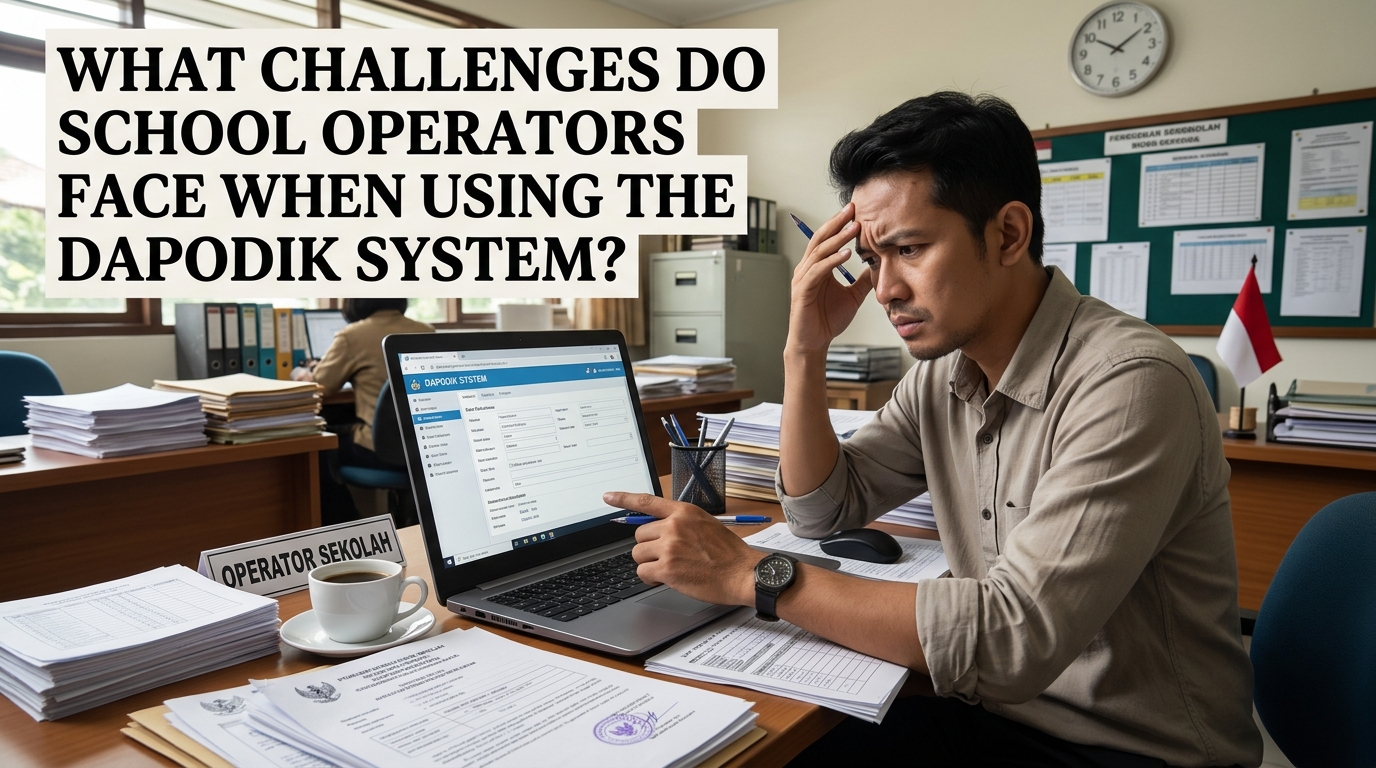
The Dapodik system, short for Data Pokok Pendidikan, is an important education data platform used by schools in Indonesia. It helps schools record and manage information about students, teachers, education staff, school facilities, and other educational activities. School operators play a key role in ensuring that this information is accurate, complete, and updated according to official requirements. However, managing Dapodik data is not always easy because operators may face technical problems, changing regulations, limited resources, and tight reporting deadlines. Understanding these challenges can help schools improve data management and ensure that information submitted through Dapodik remains reliable.
UNDERSTANDING THE ROLE OF SCHOOL OPERATORS IN DAPODIK
School operators are responsible for managing school information in the Dapodik system according to the procedures established by education authorities. Their tasks may include entering student data, updating teacher information, recording school facilities, checking data consistency, and completing synchronization. They also need to coordinate with principals, teachers, administrative staff, and other relevant parties to obtain accurate information. Because Dapodik supports education planning and administration, errors in the data can affect the quality of information available to decision-makers. Accurate data management is one of the most important responsibilities of a school operator.
In many schools, operators must handle these responsibilities alongside other administrative duties. The amount of work can increase during data collection periods, verification processes, and official reporting deadlines. Operators also need to understand the current application features and follow instructions from the relevant education authorities. Without sufficient time and support, completing every task accurately can become difficult. Clear responsibilities, adequate training, and support from school leadership can help operators perform their work more effectively.
TECHNICAL PROBLEMS AND SYSTEM ACCESS
One challenge school operators may encounter is difficulty accessing or using the Dapodik application. Problems can arise from unstable internet connections, incompatible computer specifications, outdated software, or errors during application updates. In some situations, operators may also experience difficulties when accessing online services or completing data synchronization. These issues can interrupt their work and make it harder to meet reporting deadlines. Reliable equipment, internet access, and proper technical preparation are essential for smooth Dapodik operations.
Operators can reduce some technical difficulties by checking the official system requirements and following the latest installation instructions. They should also keep their computers in good condition and ensure that necessary files are backed up according to applicable data protection procedures. When an error occurs, operators should record the message and follow official troubleshooting guidance instead of making unsupported changes. If the problem continues, they can contact the appropriate technical support service or education office. Using official troubleshooting procedures helps prevent additional errors and protects school data.
ENSURING DATA ACCURACY AND COMPLETENESS
Maintaining accurate data is another major challenge for school operators. Student names, identification numbers, dates of birth, teacher qualifications, employment details, and school facility records must match the relevant supporting documents. Even small mistakes can create inconsistencies between Dapodik and other official records. Operators may need to contact teachers, students, parents, or administrative staff to confirm information before making updates. Careful verification is necessary to maintain reliable and consistent education records.
Data collection can become more complicated when documents are incomplete, information is outdated, or different records contain conflicting details. Operators should not guess missing information or change official data without an appropriate basis. Instead, they should request clarification and supporting documents from the responsible individuals. They should also review entries before synchronization to identify possible errors. Verifying information at the source helps reduce corrections and repeated administrative work.
KEEPING UP WITH SYSTEM UPDATES AND REGULATIONS
The Dapodik application and its administrative procedures may change as education authorities introduce updates, new data requirements, or revised reporting instructions. School operators need to understand these changes to ensure that their work follows the current rules. They may have to learn new application features, adjust data entry procedures, or review previously entered information. If operators miss important announcements, they may use outdated procedures or submit incomplete information. Staying informed about official updates is essential for maintaining compliance with current requirements.
Operators can manage this challenge by checking announcements from the Ministry of Primary and Secondary Education and relevant local education offices. They should review official technical guides and participate in training or information sessions when available. Sharing verified updates with school leadership and relevant staff can also help prevent misunderstandings. Regular learning and communication make it easier to adapt to changes in the Dapodik system.
MEETING DEADLINES AND MANAGING WORKLOADS
School operators often need to complete data entry, validation, corrections, and synchronization within specified reporting periods. When several tasks must be completed at the same time, managing the workload can become difficult. The pressure increases when supporting documents arrive late or technical problems interrupt the process. Rushing through data entry may also increase the risk of mistakes. Effective time management helps operators balance reporting deadlines with data accuracy.
A practical solution is to create a work schedule based on official deadlines and the complexity of each task. Operators can collect documents early, check records regularly, and prioritize information that requires verification. They should also communicate with teachers and school administrators about the information needed and the dates by which it must be provided. School leaders can help by allocating sufficient time and avoiding unnecessary additional duties during critical reporting periods. Early preparation and shared responsibility can reduce last-minute pressure.
LIMITED TRAINING AND TECHNICAL SUPPORT
Not every school operator has the same level of technical knowledge or experience with data management applications. New operators may need time to understand Dapodik procedures, while experienced operators must continue learning when features and requirements change. Limited access to training can make it difficult to resolve complicated data problems independently. In smaller or less well-equipped schools, access to technical assistance may also be limited. Practical training and accessible support are important for improving operator confidence and accuracy.
Schools can address this challenge by encouraging operators to attend official training sessions and use the latest technical documentation. Experienced operators may also share practical knowledge with colleagues through appropriate professional networks. When a problem cannot be resolved locally, operators should seek assistance from the authorized education office or official support channel. Continuous learning helps operators solve problems more efficiently and adapt to changes in the system.
COORDINATING WITH TEACHERS AND SCHOOL ADMINISTRATORS
Dapodik data management depends on cooperation between the operator and other school personnel. Operators cannot always verify every detail independently because some information must come from teachers, students, parents, or administrative departments. Delayed responses, incomplete documents, or misunderstandings about responsibilities can slow down the correction process. These difficulties may become more serious when the reporting deadline is approaching. Good communication is essential for collecting accurate information on time.
Schools can improve coordination by establishing clear procedures for submitting documents and reporting changes. Teachers should inform the responsible staff when relevant personal or employment information changes, while administrators should help confirm school-level records. Operators can maintain a checklist of missing documents and follow up with the appropriate individuals. Shared responsibility makes data collection more organized and reduces avoidable delays.
PROTECTING DATA SECURITY AND CONFIDENTIALITY
Dapodik contains personal and institutional information that must be handled responsibly. School operators need to protect login credentials, prevent unauthorized access, and avoid sharing sensitive data through insecure channels. Poor security practices can expose personal information or allow unauthorized changes to school records. Operators should also be careful when storing supporting documents and transferring files between devices. Data accuracy must be supported by strong privacy and security practices.
To reduce security risks, operators should use authorized accounts, create strong passwords, and never share login details with unauthorized individuals. They should follow official instructions for backups, access management, and the handling of personal documents. Suspicious access or potential data exposure should be reported through the appropriate school or official support channels. Protecting confidential information is a shared responsibility that helps maintain trust in school administration.
CONCLUSION
School operators face several challenges when using the Dapodik system, including technical problems, data inaccuracies, changing requirements, tight deadlines, limited training, coordination difficulties, and data security risks. These challenges can be managed through regular training, reliable technical resources, careful data verification, and effective communication among school personnel. School leaders should also provide appropriate support and help operators manage their responsibilities realistically. Operators, meanwhile, should follow official guidance and protect confidential information throughout the process. With adequate support and consistent procedures, schools can improve Dapodik data quality and make education administration more efficient.
Recent Posts

Bagaimana Sistem SKS pada Program Kuliah... 22.11.2026/50 View

How Does Technology Make Daily Evaluation... 21.11.2026/79 View

Apa Strategi Menghadapi Kesenjangan antara Kompetensi... 21.11.2026/79 View

Mengapa Inventaris Aset Penting bagi Kelancaran... 21.11.2026/75 View

When Should Musicians Join a Record... 21.11.2026/80 View
