

What Challenges Does a Vice Principal of Curriculum Face in Managing Education?
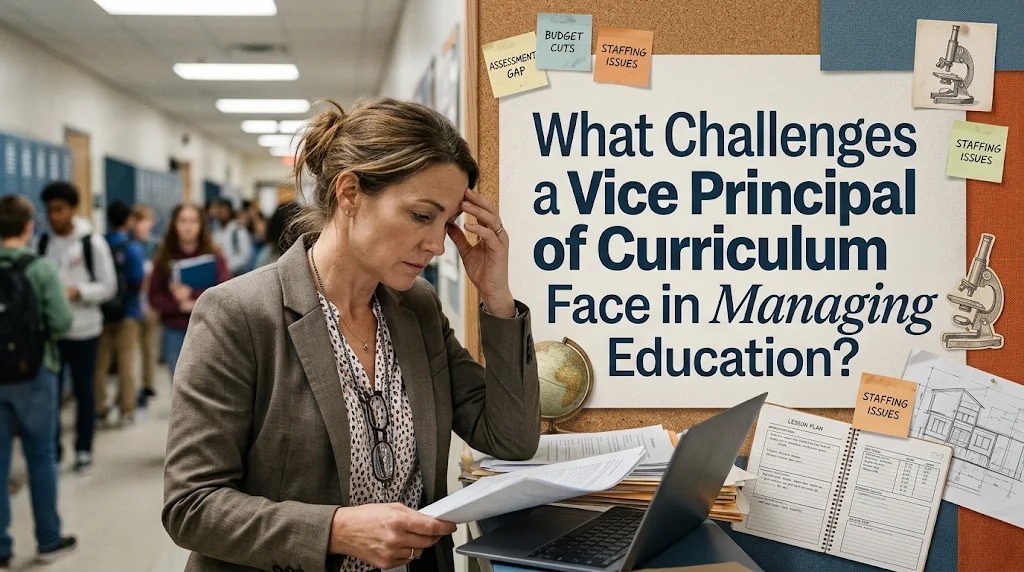
Managing educational activities in a school requires careful planning, effective coordination, and continuous evaluation. The Vice Principal of Curriculum has an important responsibility in ensuring that teaching and learning activities run according to the established curriculum and school objectives. This position involves working with teachers, school leaders, administrative staff, and other educational stakeholders to maintain the quality of academic programs.
However, managing education is not always straightforward. A Vice Principal of Curriculum may encounter challenges involving teacher readiness, curriculum changes, scheduling conflicts, limited learning resources, and differences in student needs. Understanding these challenges is important because it helps school leaders develop appropriate solutions and maintain an effective learning environment.
ADAPTING TO CURRICULUM CHANGES AND EDUCATIONAL POLICIES
One of the main challenges is keeping up with changes in educational policies and curriculum guidelines. Education systems may introduce new learning standards, assessment approaches, or instructional requirements that schools must understand and implement. These changes can require adjustments to academic programs, teaching documents, and classroom activities.
The Vice Principal of Curriculum needs to study relevant policies and communicate their implications to teachers. This process can be challenging when educators have different levels of understanding or need additional time to adapt. Schools may also need to revise existing programs to ensure that their practices remain consistent with current regulations.
To address this challenge, the Vice Principal of Curriculum can organize information sessions, coordinate teacher discussions, and provide access to relevant learning resources. Regular communication helps reduce misunderstandings and allows teachers to prepare for changes more effectively. Curriculum adaptability is essential for maintaining relevant and organized educational programs.
MANAGING TEACHER WORKLOADS AND DIFFERENCES IN COMPETENCE
Teachers have different educational backgrounds, teaching experiences, and professional development needs. Managing these differences can be challenging because the Vice Principal of Curriculum must coordinate teaching assignments while considering each educator's qualifications and responsibilities. An uneven distribution of teaching hours may also affect the effectiveness of academic activities.
Another difficulty involves ensuring that teachers have the skills needed to implement the curriculum. Some educators may be comfortable using digital learning tools or student-centered approaches, while others may require additional guidance and training. These differences can influence how consistently learning programs are implemented across classes.
The Vice Principal of Curriculum can respond by reviewing teacher assignments, distributing workloads appropriately, and coordinating professional development activities. Workshops, discussions, and teacher learning communities can help educators exchange experiences and improve their instructional skills. Teacher workload management and professional development are important for supporting a balanced and effective teaching environment.
RESOLVING CLASS SCHEDULING AND ACADEMIC COORDINATION PROBLEMS
Preparing an effective class schedule requires consideration of teacher availability, subject requirements, classroom capacity, and the school's academic calendar. Scheduling conflicts may occur when teachers are assigned to multiple classes at the same time or when several subjects need to use the same specialized facilities. These problems can disrupt teaching activities if they are not resolved promptly.
The Vice Principal of Curriculum must coordinate with teachers and administrative staff to identify conflicts and determine suitable adjustments. Schedule changes also need to be communicated clearly so that teachers and students receive accurate information. Even small adjustments should be reviewed carefully because changing one lesson period may affect other classes.
Using digital scheduling tools can help organize information and identify overlapping assignments. However, technology alone cannot solve every problem, so the Vice Principal of Curriculum still needs to consider the school's actual conditions. Effective academic coordination helps prevent unnecessary disruptions and keeps teaching activities organized.
ADDRESSING LIMITED LEARNING RESOURCES AND FACILITIES
Schools do not always have sufficient learning resources to support every academic program. Limited classrooms, laboratory equipment, computers, internet access, and teaching materials can make it difficult to carry out certain learning activities. These limitations may require the Vice Principal of Curriculum to adjust plans according to available facilities.
For example, several classes may need to use the same computer laboratory or science equipment. Without proper coordination, students may not receive equal opportunities to participate in practical learning activities. Teachers may also need alternative materials or instructional methods when certain resources are unavailable.
The Vice Principal of Curriculum can work with the principal and relevant school departments to identify priority needs and organize the use of existing resources. Schools may also consider digital learning materials or alternative classroom activities when appropriate. Learning resource management helps ensure that available facilities are used efficiently and support the school's academic objectives.
MAINTAINING STUDENT LEARNING QUALITY AND EVALUATING ACADEMIC PROGRESS
Another important challenge is ensuring that students receive effective learning experiences despite differences in their abilities, interests, and learning needs. Some students may understand particular subjects quickly, while others require additional explanation, practice, or support. The Vice Principal of Curriculum must help coordinate academic programs that allow teachers to respond to these differences.
Monitoring student progress also requires reliable information from various assessment activities. Examination results alone may not provide a complete picture of student development, so teachers may need to consider assignments, projects, classroom participation, and other forms of assessment. Collecting and reviewing this information can require considerable coordination.
The Vice Principal of Curriculum can work with teachers to review assessment results, identify learning difficulties, and plan appropriate follow-up activities. Regular evaluation also helps determine whether teaching strategies and academic programs need adjustment. Student learning quality and academic evaluation should remain important priorities in school management.
CONCLUSION
A Vice Principal of Curriculum faces several challenges in managing education, including adapting to curriculum changes, coordinating teacher workloads, resolving scheduling conflicts, managing limited resources, and maintaining student learning quality. Each challenge requires careful planning, effective communication, and cooperation with teachers and other school personnel.
These responsibilities cannot be handled through administrative procedures alone. The Vice Principal of Curriculum also needs to understand classroom conditions, recognize teachers' professional needs, and use evaluation results to guide improvements. Through effective educational management and continuous coordination, schools can address academic challenges more systematically and create a learning environment that supports both teachers and students.
Recent Posts

Bagaimana Sistem SKS pada Program Kuliah... 22.11.2026/7 View

How Does Technology Make Daily Evaluation... 21.11.2026/63 View

Apa Strategi Menghadapi Kesenjangan antara Kompetensi... 21.11.2026/64 View

Mengapa Inventaris Aset Penting bagi Kelancaran... 21.11.2026/61 View

When Should Musicians Join a Record... 21.11.2026/59 View
