

What Challenges Does a Vice Principal of Public Relations Commonly Face?
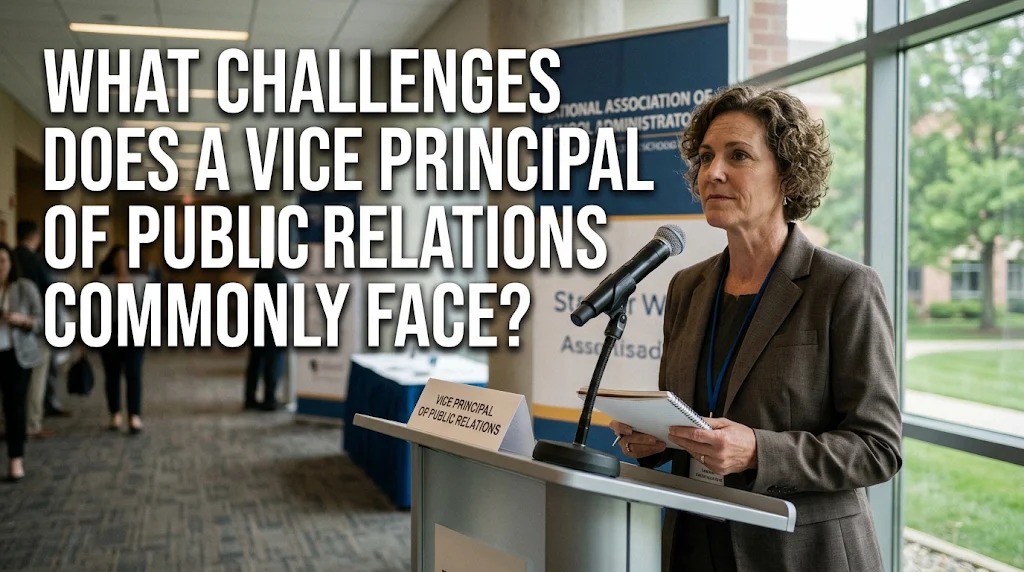
A Vice Principal of Public Relations plays an important role in maintaining communication and building relationships between schools and the wider community. This position requires the ability to manage information, coordinate partnerships, respond to public concerns, and maintain a positive school image. Although these responsibilities support school development, carrying them out is not always easy. Various challenges can arise from communication problems, different expectations, limited resources, and unexpected situations.
Understanding these challenges is important because public relations activities directly influence how people view an educational institution. A Vice Principal of Public Relations must be prepared to handle different situations professionally while maintaining trust and cooperation. By recognizing common obstacles, schools can develop better strategies to improve communication and strengthen relationships with stakeholders.
MANAGING COMMUNICATION WITH DIFFERENT STAKEHOLDERS
One of the most common challenges is communicating with different groups that have different needs and expectations. Parents may want detailed information about student development, while teachers need clear coordination regarding school programs. Community organizations and external partners may have different interests when establishing cooperation with the school. The Vice Principal of Public Relations must understand these differences and adjust communication methods accordingly. This requires strong interpersonal skills and the ability to deliver information clearly to various audiences.
Miscommunication can also occur when information is incomplete, delayed, or delivered through inappropriate channels. A simple misunderstanding about school policies or activities may create unnecessary concerns among parents and community members. To prevent these situations, the Vice Principal of Public Relations needs to establish reliable communication procedures. Important announcements should be accurate, consistent, and easy to understand. Maintaining regular communication can help reduce confusion and strengthen relationships with stakeholders.
HANDLING COMPLAINTS AND PUBLIC CRITICISM
Another major challenge is responding to complaints and criticism from parents, students, or community members. People may express dissatisfaction with school facilities, administrative services, educational programs, or school policies. Some complaints may require immediate attention, while others need further investigation before a response can be provided. The Vice Principal of Public Relations must remain professional and avoid responding emotionally. Listening carefully and understanding the actual problem are important first steps in handling public concerns.
Public criticism can become more difficult when information spreads quickly through social media or online communication platforms. An unresolved complaint may develop into a wider discussion that affects the school's reputation. Therefore, the Vice Principal of Public Relations must coordinate with the principal and relevant departments before communicating an official response. Information should be verified, and personal details must remain protected. A responsible response can help reduce misunderstandings and demonstrate that the school takes feedback seriously.
MAINTAINING A POSITIVE SCHOOL IMAGE
Maintaining a positive school image requires continuous effort and consistent communication. The Vice Principal of Public Relations must introduce school programs, achievements, educational activities, and institutional developments to the public. However, promoting a school should not involve exaggerating achievements or sharing information that has not been verified. The challenge is to communicate the school's strengths while remaining honest and realistic. This balance is essential for building a reputation based on credibility rather than temporary publicity.
Another difficulty arises when the school experiences problems that attract public attention. Issues involving student discipline, administrative mistakes, or disagreements may influence public perceptions. The Vice Principal of Public Relations needs to coordinate with school leaders to ensure that information is handled carefully and responsibly. They must also understand when a matter requires an official explanation and when privacy considerations limit what can be shared. Maintaining public confidence during difficult situations requires honesty, consistency, and accountability.
LIMITED RESOURCES AND WORKLOAD PRESSURE
Public relations activities often require financial support, communication equipment, trained staff, and sufficient time. However, not every school has the resources needed to manage these activities effectively. Some Vice Principals of Public Relations must handle several responsibilities with limited administrative assistance. This situation can make it difficult to organize events, maintain digital platforms, prepare reports, and coordinate external partnerships simultaneously. Careful planning and prioritization are therefore necessary to ensure that important tasks are completed properly.
Workload pressure can also increase when several school activities take place at the same time. The Vice Principal of Public Relations may need to coordinate meetings, respond to public inquiries, prepare announcements, and manage unexpected situations. Without effective time management, communication quality may decrease and important information may be delayed. Delegating suitable tasks to team members and creating a clear work schedule can help reduce these difficulties. Schools should also provide appropriate training and resources to support the effectiveness of public relations activities.
BUILDING AND MAINTAINING EXTERNAL PARTNERSHIPS
Developing partnerships with universities, businesses, government institutions, and community organizations is another important responsibility. However, establishing cooperation can be challenging because each institution has different goals, procedures, and expectations. Some partnerships require lengthy discussions, formal agreements, and administrative approval before activities can begin. The Vice Principal of Public Relations must communicate clearly and understand the interests of each potential partner. Building professional relationships requires patience, consistency, and mutual respect.
Maintaining existing partnerships can be equally difficult. Cooperation may weaken when communication becomes irregular or when agreed activities are not implemented as planned. Differences in schedules, available resources, and organizational priorities can also affect partnership programs. To address these challenges, the Vice Principal of Public Relations should maintain regular contact and evaluate the results of collaborative activities. Strong partnerships depend on shared benefits, clear responsibilities, and continuous communication.
CONCLUSION
A Vice Principal of Public Relations commonly faces challenges involving stakeholder communication, public complaints, school reputation, limited resources, workload pressure, and external partnerships. Each challenge requires professional communication, careful planning, problem-solving abilities, and cooperation with other school leaders. Although these responsibilities can be demanding, they are essential for maintaining public trust and supporting school development. By improving communication procedures, using resources effectively, and responding to concerns responsibly, a Vice Principal of Public Relations can manage these obstacles more successfully. Ultimately, overcoming these challenges helps create stronger relationships between schools and their communities.
Recent Posts

How Does Technology Make Daily Evaluation... 21.11.2026/63 View

Apa Strategi Menghadapi Kesenjangan antara Kompetensi... 21.11.2026/64 View

Mengapa Inventaris Aset Penting bagi Kelancaran... 21.11.2026/60 View

When Should Musicians Join a Record... 21.11.2026/59 View

Daily Evaluation or Daily Planning Which... 21.11.2026/67 View
