

What Challenges Does Indonesia Face in Adapting to Industry 4.0?
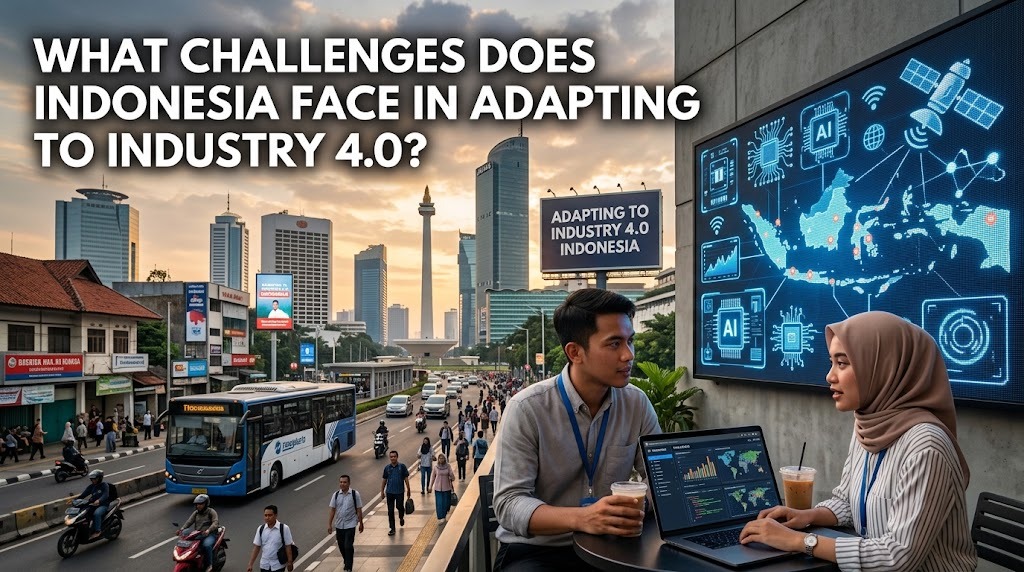
Industry 4.0 is transforming industries through the integration of digital technology, automation, artificial intelligence, and connected devices. These innovations allow businesses to improve productivity, manage resources more efficiently, and respond to changing market demands. For Indonesia, adopting Industry 4.0 offers opportunities to strengthen manufacturing, attract investment, expand digital businesses, and improve international competitiveness. However, the transition also presents significant challenges that require cooperation between the government, businesses, educational institutions, and workers.
Indonesia has a large population, a growing digital economy, and diverse industrial sectors that could benefit from technological development. Nevertheless, differences in infrastructure, workforce skills, financial resources, and access to technology can slow the adoption of modern industrial systems. Businesses must also address cybersecurity risks, regulatory concerns, and the potential effects of automation on employment. Understanding these challenges is important for developing practical strategies that help Indonesia benefit from Industry 4.0 while supporting inclusive and sustainable economic growth.
UNEQUAL DIGITAL INFRASTRUCTURE AND INTERNET ACCESS
One of Indonesia's major challenges in adopting Industry 4.0 is the unequal availability of digital infrastructure. As an archipelago consisting of thousands of islands, Indonesia faces geographical difficulties in providing reliable internet access, electricity, and telecommunications services to every region. Large cities and established industrial areas generally have better access to digital facilities than some remote and rural communities. These differences can affect how easily businesses introduce connected machines, cloud-based systems, and digital production technologies.
Reliable infrastructure is essential because Industry 4.0 depends on the continuous exchange of information between equipment, software, and business systems. Factories may struggle to implement real-time monitoring when internet connections are unreliable or electricity supplies are inconsistent. Small businesses in less connected regions may also find it difficult to participate in online markets and digital supply chains. To address these problems, Indonesia needs continued investment in broadband networks, dependable electricity, and telecommunications infrastructure. Improving access across regions can help more businesses participate in industrial modernization and reduce the digital divide.
LIMITED DIGITAL SKILLS AND WORKFORCE READINESS
Another important challenge is the need to improve digital skills and workforce readiness. Industry 4.0 requires workers who can operate modern equipment, understand digital information, and work with automated systems. Some occupations increasingly require knowledge of data analysis, software, robotics, and cybersecurity. However, access to relevant education and technical training can vary between regions, institutions, and groups of workers.
The transition may be particularly difficult for employees whose jobs involve repetitive tasks that can be automated. Without adequate training, these workers may struggle to move into new roles created by technological development. Educational institutions and employers therefore need to strengthen vocational programs, practical learning, and industry-based training. Universities and technical schools can cooperate with businesses to ensure that students develop skills relevant to real workplace requirements. Lifelong learning and reskilling can also help existing workers adapt to new technologies and improve their employment opportunities.
HIGH IMPLEMENTATION COSTS FOR BUSINESSES
Adopting Industry 4.0 can require substantial financial investment. Businesses may need to purchase automated machinery, install sensors, develop software systems, upgrade networks, and train employees. They may also need to modify existing facilities to support modern production technologies. For large companies, these investments may be easier to finance, but small and medium-sized enterprises (SMEs) can face greater difficulties because they often operate with limited budgets.
High initial costs may discourage smaller businesses from adopting technologies even when those tools could improve productivity in the long term. Some companies may also be uncertain about which technologies are appropriate for their operations or how quickly their investments will produce benefits. Practical solutions include affordable digital services, accessible financing, technology assistance, and training programs for business owners. Companies can begin with smaller improvements, such as digital inventory management or automated accounting, before investing in more complex systems. A gradual and well-planned approach can help businesses manage costs while building their technological capabilities.
CYBERSECURITY AND DATA PROTECTION RISKS
As Indonesian businesses become more digitally connected, cybersecurity and data protection become increasingly important. Industry 4.0 systems often connect machines, production networks, customer databases, and business applications. Although this connectivity improves coordination, it can also create opportunities for cyberattacks, unauthorized access, and data theft. A successful attack on an industrial system could interrupt production, damage equipment, or expose sensitive company information.
Businesses may be particularly vulnerable when they use outdated software, weak passwords, or poorly protected networks. Employees who lack cybersecurity awareness may also unintentionally expose organizations to digital threats. Companies should therefore implement strong authentication, regular software updates, secure backups, access controls, and employee training. They should also establish procedures for detecting and responding to security incidents. Government agencies and industry organizations can support these efforts through cybersecurity guidance and appropriate standards. Building trust in digital systems is essential for encouraging businesses to adopt Industry 4.0 safely and responsibly.
INDUSTRIAL TRANSFORMATION AND EMPLOYMENT CHANGES
The adoption of Industry 4.0 can change employment patterns across Indonesia. Automation and artificial intelligence allow machines and software to perform certain repetitive activities more quickly and consistently. In manufacturing, automated equipment can handle some assembly, inspection, packaging, and material-handling tasks. These improvements can increase productivity, but they may also reduce demand for specific types of routine labor.
At the same time, technological development can create opportunities in software development, industrial maintenance, data analysis, robotics, and digital business services. The overall effect on employment depends on how quickly businesses adopt new technologies and how effectively workers can develop the required skills. Indonesia needs policies that support workforce transitions rather than treating automation only as a threat. Vocational education, reskilling programs, career guidance, and cooperation between employers and educational institutions can help workers prepare for changing job requirements. By investing in people alongside technology, the country can increase the chances that industrial modernization creates broader economic benefits.
REGULATORY CHALLENGES AND COORDINATION BETWEEN INDUSTRIES
Successful Industry 4.0 adoption also requires clear regulations and effective coordination. Businesses need reliable guidance on data protection, cybersecurity, electronic transactions, intellectual property, and the responsible use of artificial intelligence. When requirements are unclear or difficult to implement, companies may hesitate to invest in new technologies. Differences in technical capabilities between businesses can also make it harder to connect equipment and exchange information across supply chains.
Coordination is important because industrial transformation involves many stakeholders, including government agencies, manufacturers, technology providers, educational institutions, and financial organizations. Businesses need compatible systems and reliable standards to exchange data and work efficiently with suppliers and customers. The government can support adoption by improving policy coordination, encouraging research, providing practical guidance, and expanding access to technical assistance. Companies should also evaluate new technologies according to their operational needs, security requirements, and expected benefits. With clearer policies and stronger cooperation, Indonesia can create a more supportive environment for industrial innovation.
CONCLUSION
Indonesia faces several challenges in adapting to Industry 4.0, including unequal digital infrastructure, limited workforce skills, high implementation costs, cybersecurity risks, employment changes, and regulatory complexity. These obstacles can slow the adoption of automation, artificial intelligence, and connected industrial systems. However, addressing them can create opportunities to improve productivity, strengthen manufacturing, and expand participation in the digital economy.
To move forward, Indonesia needs to invest in reliable infrastructure, accessible technical education, business support, and effective cybersecurity. Companies should adopt technology gradually and ensure that employees receive appropriate training. Government agencies, educational institutions, and private businesses must also cooperate to make industrial transformation more inclusive. By combining technological innovation with workforce development and responsible policies, Indonesia can strengthen its competitiveness and prepare for the future of industrial development.
Recent Posts

Bagaimana Sistem SKS pada Program Kuliah... 22.11.2026/51 View

How Does Technology Make Daily Evaluation... 21.11.2026/81 View

Apa Strategi Menghadapi Kesenjangan antara Kompetensi... 21.11.2026/81 View

Mengapa Inventaris Aset Penting bagi Kelancaran... 21.11.2026/77 View

When Should Musicians Join a Record... 21.11.2026/82 View
