

What Challenges Does Indonesia Face In Addressing Climate Change?
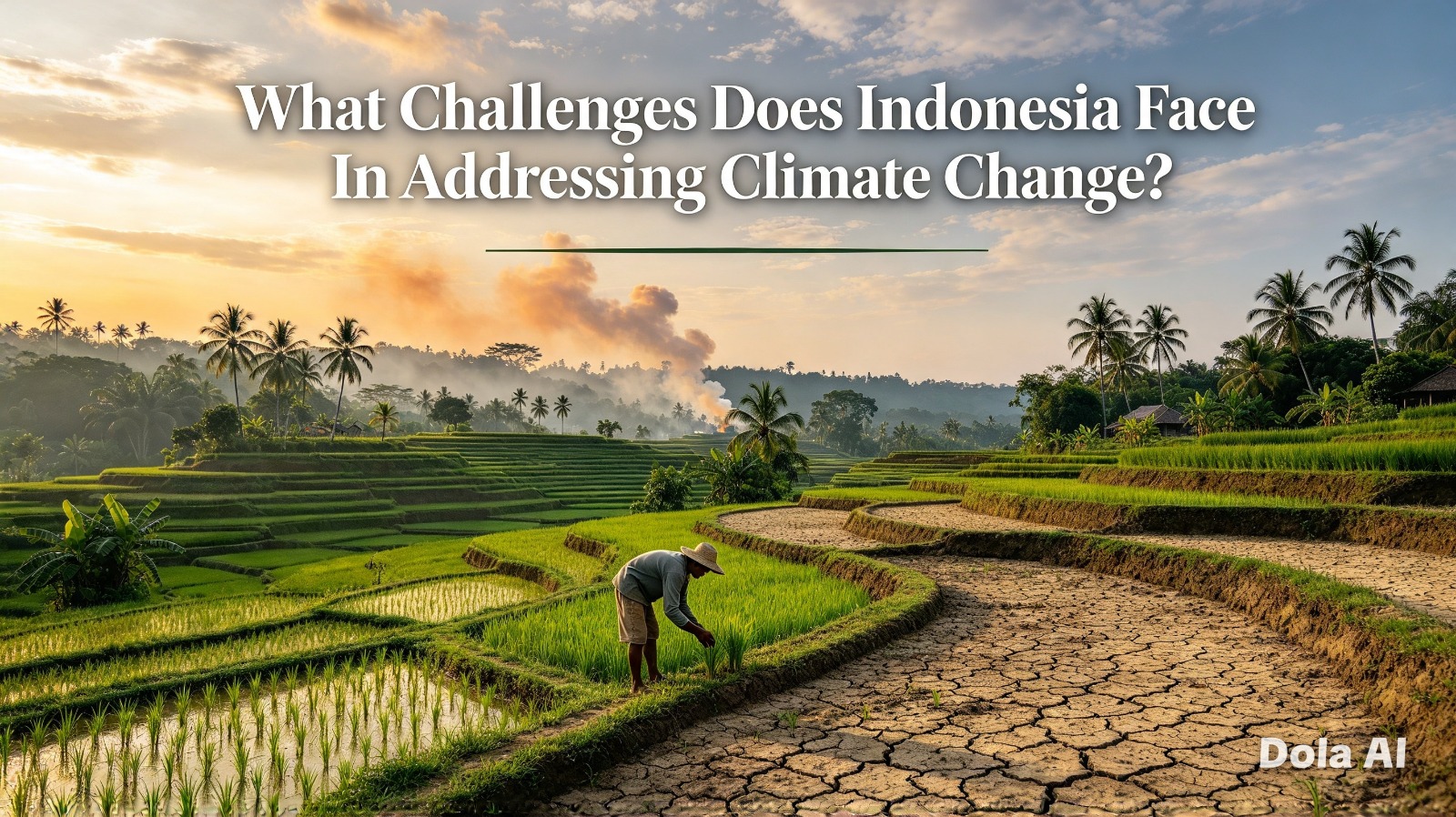
Indonesia faces several major challenges in addressing climate change because of its geography, economic structure, and dependence on natural resources. As an archipelagic country with thousands of islands and a long coastline, Indonesia is vulnerable to rising sea levels, floods, droughts, and extreme weather. Climate change also affects agriculture, fisheries, forests, public health, and the livelihoods of millions of people. Although Indonesia has introduced climate policies and invested in renewable energy, putting these plans into practice remains difficult. Addressing climate change requires coordinated action, sufficient funding, reliable technology, and cooperation between the government, businesses, and local communities.
GEOGRAPHICAL VULNERABILITY AND NATURAL DISASTERS
Indonesia's location between the Indian and Pacific Oceans makes many communities vulnerable to climate-related hazards. Rising sea levels threaten low-lying coastal areas, while heavy rainfall can increase the risk of flooding and landslides. Changes in rainfall patterns can also cause droughts that affect water supplies and agricultural production. Coastal communities, small islands, and people living in disaster-prone areas face particular risks because their homes, infrastructure, and livelihoods may be exposed to several hazards at once.
Indonesia's geography also makes climate adaptation challenging. Many communities are spread across different islands, so providing infrastructure, emergency services, and climate information can be expensive and complicated. Local conditions vary widely, meaning that a solution suitable for one region may not work in another. Effective climate planning must consider regional differences and prioritize communities with the greatest exposure and fewest resources.
DEFORESTATION AND FOREST FIRES
Deforestation is another major challenge in Indonesia's efforts to address climate change. Forests store carbon and help regulate the climate, but clearing them releases stored carbon dioxide and reduces the amount of carbon that can be absorbed in the future. Land conversion for agriculture, plantations, mining, and infrastructure can contribute to forest loss when it is poorly managed or occurs illegally. Protecting forests is essential for reducing emissions while preserving biodiversity and the livelihoods of forest-dependent communities.
Forest and peatland fires create additional problems, particularly during prolonged dry periods. Peatlands contain large amounts of stored carbon, and draining or burning them can release substantial greenhouse gas emissions. Fires can also produce harmful smoke that affects public health, transportation, and economic activity. Strengthening forest protection, restoring damaged peatlands, improving land management, and enforcing environmental regulations are important steps toward reducing these risks.
DEPENDENCE ON FOSSIL FUELS
Indonesia still relies significantly on coal, oil, and natural gas to meet its energy needs. Coal is an important source of electricity, while petroleum fuels much of the country's transportation system. Burning these fossil fuels releases greenhouse gases that contribute to global warming. Reducing fossil fuel dependence while maintaining a reliable and affordable energy supply is one of Indonesia's major climate challenges.
Transitioning to cleaner energy requires investment in renewable power plants, electricity networks, energy storage, and supporting infrastructure. Some regions also face technical and financial difficulties when connecting renewable energy projects to existing grids. Workers and communities that depend on fossil fuel industries may need support and opportunities to develop new skills. A fair energy transition should reduce emissions while protecting workers, supporting affected communities, and keeping energy accessible.
FINANCIAL AND INVESTMENT LIMITATIONS
Addressing climate change requires substantial funding for clean energy, public transportation, flood protection, forest conservation, and disaster preparedness. Indonesia must balance these investments with other development priorities, including education, healthcare, housing, and infrastructure. Local governments may also have limited budgets or technical resources for implementing climate programs. Insufficient and inconsistent funding can slow the implementation of climate policies and adaptation projects.
International climate finance and private investment can help support Indonesia's climate goals. However, accessing these resources may involve complex requirements, project preparation, and transparent reporting. Investors also need clear regulations and predictable policies to assess the risks of long-term projects. Improving financial planning, strengthening institutions, and ensuring that climate funding reaches vulnerable communities can help make climate programs more effective.
CHALLENGES IN RENEWABLE ENERGY DEVELOPMENT
Indonesia has considerable renewable energy potential, including solar, geothermal, hydropower, wind, and bioenergy. However, turning this potential into widely available electricity remains challenging. Some renewable projects require high initial investment, specialized technology, and lengthy development processes. Regulatory uncertainty, infrastructure limitations, and difficulties securing project financing can delay renewable energy development.
Indonesia's island geography creates additional difficulties because electricity demand and generation resources are spread across many separate locations. Expanding transmission networks and improving connections between energy sources and consumers can require significant investment. Renewable energy projects must also consider land use, biodiversity, and the rights of local communities. Clear policies, stronger infrastructure, and careful project planning can help Indonesia expand clean energy more efficiently.
PUBLIC AWARENESS AND COMMUNITY PARTICIPATION
Public understanding of climate change varies across communities, partly because people have different access to education, reliable information, and environmental resources. Some people may recognize climate-related problems through floods, heat, or changing farming conditions without fully understanding their causes. Climate education helps people understand environmental risks and identify practical ways to reduce emissions and prepare for climate impacts. Schools, universities, community organizations, and local media can play important roles in sharing accurate information.
Community participation is equally important because climate policies often affect people's homes, jobs, and access to natural resources. Environmental projects may face resistance when residents are not consulted or do not receive clear information about their benefits and potential costs. Involving local communities in planning can improve trust and help ensure that solutions fit local needs. Climate action is more sustainable when communities are treated as partners rather than simply as recipients of government programs.
COORDINATION AND ENFORCEMENT OF CLIMATE POLICIES
Indonesia has national climate commitments and environmental regulations, but implementing them consistently across the country can be difficult. Responsibilities are shared among national ministries, provincial governments, local authorities, and other institutions. Weak coordination, limited monitoring, and inconsistent enforcement can reduce the effectiveness of climate policies. For example, forest protection and land-use management require cooperation between environmental authorities, businesses, and local communities.
Strong governance is necessary to ensure that climate plans produce measurable results. Governments need reliable emissions data, clear targets, transparent reporting, and regular assessments of progress. Environmental regulations must also be enforced fairly to discourage illegal land clearing and other harmful activities. Better coordination and accountability can help Indonesia turn its climate commitments into practical action.
THE IMPACT ON AGRICULTURE AND FOOD SECURITY
Agriculture is vulnerable to changes in rainfall, rising temperatures, droughts, floods, and shifting growing seasons. These conditions can damage crops, reduce harvests, and make farming more difficult to plan. Farmers who depend heavily on rainfall may face particular challenges when dry periods become longer or rainfall becomes less predictable. Climate change can threaten food security, rural incomes, and the stability of agricultural production.
Helping farmers adapt requires better access to weather information, suitable crop varieties, efficient irrigation, and agricultural training. Governments and agricultural organizations can support water conservation, soil protection, and farming methods suited to local climate conditions. Early warning systems can also help farmers prepare for droughts, floods, and other extreme weather events. Combining climate adaptation with sustainable farming practices can strengthen the resilience of Indonesia's food system.
PROTECTING COASTAL AREAS AND SMALL ISLANDS
Indonesia's extensive coastline and numerous small islands make sea-level rise an important climate concern. Coastal flooding, erosion, and saltwater intrusion can damage settlements, reduce usable land, and threaten freshwater supplies. Fishing communities may also face changing marine conditions that affect their catches and incomes. Coastal populations with limited infrastructure and financial resources may have fewer options for responding to climate risks.
Indonesia can reduce these risks by restoring mangroves, improving coastal planning, protecting freshwater resources, and strengthening early warning systems. In some locations, infrastructure improvements may be necessary, while areas facing severe long-term risks may require carefully planned relocation. Local communities should be involved in choosing suitable adaptation measures. Combining ecosystem protection with resilient infrastructure can help safeguard coastal livelihoods and reduce future damage.
WAYS INDONESIA CAN OVERCOME THESE CHALLENGES
Indonesia can strengthen its response to climate change by improving cooperation between government institutions, businesses, researchers, and communities. Expanding renewable energy, improving energy efficiency, and reducing deforestation can help lower greenhouse gas emissions. At the same time, investments in resilient infrastructure, disaster preparedness, and sustainable agriculture can help communities adapt to climate impacts that are already occurring. Climate policies should also include clear targets, transparent monitoring, and consistent enforcement.
Education, research, and technology can support these efforts by improving climate forecasts, monitoring forests, and helping communities manage water and energy more efficiently. Indonesia can also strengthen access to climate finance and encourage responsible private investment. Support should be directed toward vulnerable groups, including low-income households, small farmers, fishers, and communities exposed to natural hazards. A successful climate strategy must combine emissions reduction, adaptation, fair financing, and long-term public participation.
CONCLUSION
Indonesia faces multiple challenges in addressing climate change, including deforestation, fossil fuel dependence, limited funding, renewable energy barriers, and uneven implementation of environmental policies. Its geography also exposes coastal communities, farmers, and small islands to serious climate risks. Overcoming these challenges requires strong governance, sustainable investment, clean energy development, forest protection, and community participation. The government, private sector, educational institutions, and citizens all have important roles in supporting climate action. With consistent policies and long-term cooperation, Indonesia can reduce emissions, strengthen climate resilience, and build a more sustainable future.
Recent Posts

Bagaimana Sistem SKS pada Program Kuliah... 22.11.2026/49 View

How Does Technology Make Daily Evaluation... 21.11.2026/77 View

Apa Strategi Menghadapi Kesenjangan antara Kompetensi... 21.11.2026/78 View

Mengapa Inventaris Aset Penting bagi Kelancaran... 21.11.2026/74 View

When Should Musicians Join a Record... 21.11.2026/79 View
