

What Challenges Does the General Elections Commission Face During Elections?
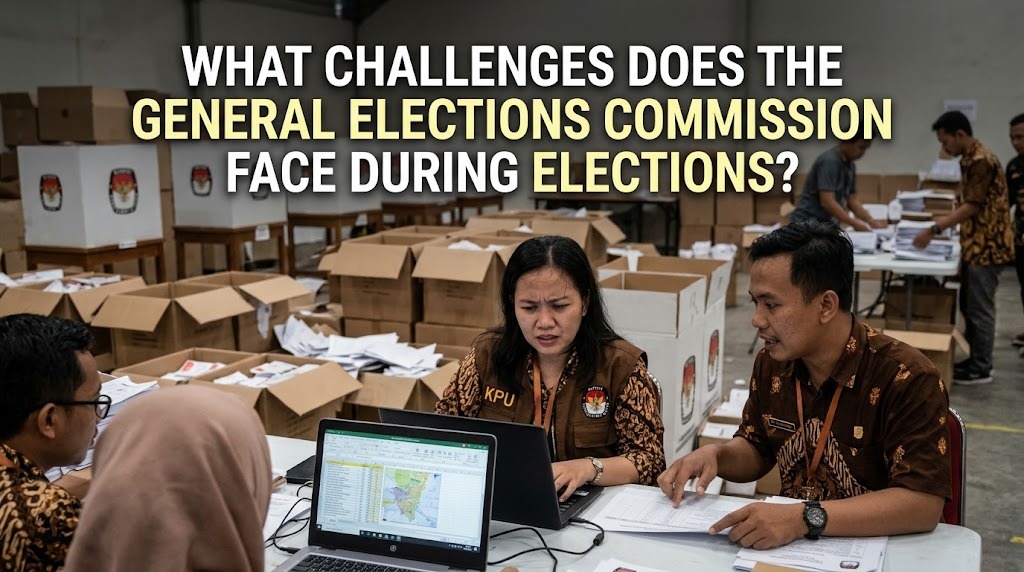
The General Elections Commission (KPU) plays an essential role in organizing general elections in Indonesia. As an institution responsible for managing the electoral process, the KPU must ensure that every stage runs according to applicable laws, democratic principles, and established procedures. Its responsibilities include preparing election schedules, managing voter registration, verifying election participants, distributing voting materials, and announcing official results. However, organizing elections in a country as geographically diverse as Indonesia involves many complicated challenges.
Indonesia has thousands of islands, different population characteristics, and various social and political conditions that influence election implementation. These circumstances require the KPU to prepare effective strategies and coordinate with numerous institutions. Challenges can arise from logistical difficulties, inaccurate voter data, limited infrastructure, political pressure, and the spread of misleading information. Understanding these obstacles is important because effective election management directly influences public participation, election transparency, and the quality of democracy in Indonesia.
GEOGRAPHICAL AND LOGISTICAL CHALLENGES
One of the biggest challenges faced by the General Elections Commission is distributing election logistics across Indonesia. The country consists of thousands of islands, including remote areas that are difficult to reach through ordinary transportation. The KPU must ensure that every polling station receives the necessary materials, such as ballot papers, ballot boxes, voting booths, and administrative documents. Delivering these materials requires careful planning, sufficient transportation resources, and coordination with local authorities. Any delay could affect the preparation and implementation of voting activities.
Weather conditions and limited infrastructure can make the distribution process even more difficult. Heavy rain, floods, rough seas, and damaged roads may prevent election materials from reaching certain locations on schedule. In some remote communities, transportation requires additional time and financial resources. The KPU must therefore prepare alternative distribution strategies and identify potential logistical risks before election day. Effective logistics management is essential to ensure that all eligible citizens have an equal opportunity to participate in elections.
ACCURACY OF VOTER REGISTRATION DATA
Maintaining accurate voter registration information is another important challenge for the KPU. Indonesia has a large and constantly changing population, meaning that voter records must be updated regularly. Changes such as population movement, new eligible voters, deaths, and changes in residential information can affect the accuracy of voter data. If these changes are not properly recorded, eligible citizens may be excluded from the voter list or incorrect records may remain in the system. Such problems can create difficulties during election implementation.
To address these issues, the KPU conducts voter data verification and updating processes in coordination with relevant government institutions. The commission must check citizens' eligibility and ensure that voter information is consistent with available population records. Public participation is also important because citizens can help verify their registration information and report inaccurate records through official channels. Accurate voter data helps prevent administrative problems and supports a more inclusive electoral process. Reliable registration information is therefore essential for protecting citizens' voting rights.
SPREAD OF HOAXES AND ELECTION MISINFORMATION
The development of digital technology has made election information easier to distribute, but it has also increased the risk of hoaxes and misinformation. False information about candidates, political parties, election procedures, and vote-counting results can spread rapidly through social media and messaging applications. Such information may influence public opinion and create misunderstandings among voters. In some situations, misleading content can increase political tensions and reduce confidence in election institutions. This makes information management an important responsibility during election periods.
The KPU must provide accurate and accessible information to help citizens distinguish official announcements from misleading content. It can use websites, social media accounts, public education campaigns, and other communication channels to explain election procedures. The commission also needs to coordinate with relevant institutions to address election-related misinformation according to their respective responsibilities. Citizens should be encouraged to check information through reliable sources before sharing it with others. Digital literacy and public awareness are important tools for reducing the negative effects of misinformation during elections.
MAINTAINING NEUTRALITY AND PUBLIC TRUST
Maintaining neutrality is another significant challenge for the General Elections Commission. As an institution responsible for organizing elections, the KPU must treat all political parties and candidates fairly. Its decisions must be based on applicable regulations rather than personal interests or political pressure. Any indication of favoritism could damage the credibility of the commission and create dissatisfaction among election participants. Therefore, election organizers must demonstrate professionalism and integrity throughout the electoral process.
Public trust also depends on how transparently the commission performs its responsibilities. Citizens need confidence that voter registration, voting procedures, and vote counting are conducted according to established rules. The KPU must communicate important information clearly and provide opportunities for public oversight through authorized mechanisms. It must also cooperate with Bawaslu, which has the responsibility to supervise election implementation and address violations within its authority. Institutional neutrality and transparency are essential for maintaining public confidence in election administration.
HUMAN RESOURCES AND TECHNOLOGICAL LIMITATIONS
Organizing elections requires a large number of trained personnel who understand election procedures and administrative responsibilities. The KPU must coordinate with election officers at different administrative levels, including personnel working at polling stations. However, differences in experience, training, and technical knowledge can create challenges during election implementation. Some officers may face difficulties understanding complicated procedures or managing unexpected situations. These problems can affect administrative accuracy and the smooth operation of polling stations.
Technology also creates both opportunities and challenges for election management. Digital systems can help manage voter information, publish election updates, and support administrative processes. However, technical problems, unstable internet connections, cybersecurity threats, and limited digital infrastructure may affect their effectiveness. The KPU must ensure that digital systems are reliable and supported by adequate technical assistance. Human resource development and technological readiness are important for improving election administration and reducing operational risks.
MANAGING ELECTION DISPUTES AND ADMINISTRATIVE PROBLEMS
Election disputes and administrative problems are additional challenges that the KPU must address during elections. Disagreements may arise from candidate registration, voter lists, campaign administration, vote counting, or the interpretation of election regulations. These situations can create tension between political participants and raise questions about the fairness of the electoral process. The commission must therefore ensure that its administrative decisions are based on clear legal provisions and properly documented procedures. Accurate records are important when decisions need to be reviewed by authorized institutions.
The KPU must also respond to relevant recommendations and decisions issued by election supervisory institutions and follow the applicable legal mechanisms. Coordination with Bawaslu and other authorized institutions helps ensure that election-related problems are handled according to their respective responsibilities. In addition, clear communication can reduce misunderstandings between election organizers, political participants, and the public. Effective dispute management helps protect election credibility and maintain public confidence in democratic institutions. A professional response to administrative problems is essential for ensuring that elections remain orderly and accountable.
CONCLUSION
The General Elections Commission faces various challenges when organizing elections in Indonesia, including geographical and logistical difficulties, inaccurate voter data, misinformation, neutrality concerns, limited human resources, technological problems, and election disputes. Each challenge requires careful planning, effective coordination, and professional administration. The KPU must continue improving its systems, strengthening the capabilities of election officers, and providing transparent information to the public. Cooperation with supervisory institutions and active citizen participation is also necessary to support successful elections. By addressing these challenges effectively, the KPU can strengthen election integrity, public trust, and the quality of Indonesian democracy.
Recent Posts

Bagaimana Sistem SKS pada Program Kuliah... 22.11.2026/47 View

How Does Technology Make Daily Evaluation... 21.11.2026/74 View

Apa Strategi Menghadapi Kesenjangan antara Kompetensi... 21.11.2026/75 View

Mengapa Inventaris Aset Penting bagi Kelancaran... 21.11.2026/72 View

When Should Musicians Join a Record... 21.11.2026/75 View
