

What Challenges Limit Construction Waste Recycling Programs?
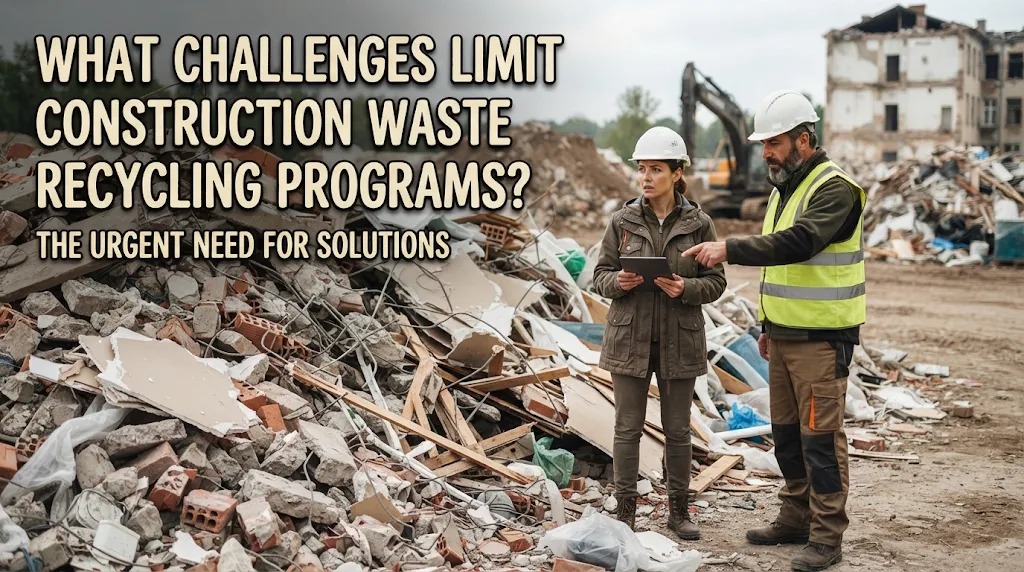
Construction waste recycling programs play an important role in reducing landfill waste, conserving natural resources, and supporting sustainable building practices. However, implementing these programs is not always easy. Many construction companies face obstacles that prevent waste materials from being collected, processed, and reused effectively. Understanding these challenges can help businesses develop better recycling strategies and improve waste management across construction projects.
HIGH RECYCLING AND PROCESSING COSTS
One of the main challenges is the cost of collecting, transporting, sorting, and processing construction waste. Recycling facilities require specialized equipment, trained workers, and sufficient storage space. For small construction companies, these expenses can become a significant financial burden.
In some situations, purchasing new materials is cheaper and more convenient than using recycled alternatives. This makes companies less interested in investing in recycling programs, especially when project budgets are limited.
LIMITED RECYCLING FACILITIES
Not every region has access to suitable construction waste recycling facilities. Some areas lack processing centers that can handle materials such as concrete, bricks, wood, metal, and plastic. As a result, construction companies may need to transport waste over long distances.
Long transportation routes increase operational expenses, fuel consumption, and project delays. Limited infrastructure also makes recycling programs difficult to implement consistently.
POOR WASTE SORTING PRACTICES
Construction waste often consists of different materials that require separate treatment. Concrete, metal, wood, glass, and plastic cannot always be processed using the same recycling methods.
When workers mix different types of waste, separating them becomes more complicated and expensive. Contaminated materials may also lose their recycling value. Without proper sorting procedures at construction sites, recycling programs cannot operate efficiently.
LACK OF AWARENESS AND TRAINING
Some construction workers and contractors do not fully understand the benefits of recycling or the correct methods for handling waste materials. Without adequate training, workers may dispose of reusable materials together with general rubbish.
A lack of awareness can also reduce participation in recycling initiatives. Construction companies need to provide clear instructions, practical training, and regular supervision to encourage responsible waste management.
INCONSISTENT GOVERNMENT REGULATIONS
Different regions may have different requirements for construction waste management. Inconsistent regulations can create confusion for contractors working across multiple locations.
Weak enforcement may also allow companies to ignore recycling responsibilities. Clear regulations, practical guidelines, and effective monitoring are necessary to encourage construction businesses to follow proper recycling practices.
LIMITED DEMAND FOR RECYCLED MATERIALS
Another obstacle is the lack of demand for recycled construction products. Some developers and property owners prefer new materials because they believe these products offer better quality or reliability.
Concerns about durability, safety, and product standards can make buyers hesitant to use recycled materials. Without sufficient market demand, recycling businesses may struggle to sell their products and maintain profitable operations.
QUALITY AND CONTAMINATION PROBLEMS
Construction waste does not always meet the quality requirements needed for recycling. Materials may contain paint, chemicals, adhesives, soil, or other contaminants that affect their usability.
Recycled materials also need proper testing to ensure they meet relevant construction standards. If their quality cannot be guaranteed, contractors may avoid using them in building projects.
LACK OF COOPERATION BETWEEN STAKEHOLDERS
Successful recycling programs require cooperation among contractors, workers, suppliers, recycling companies, and local authorities. However, poor communication and unclear responsibilities can interrupt the recycling process.
For example, contractors may fail to coordinate waste collection schedules with recycling facilities. Suppliers may also lack systems for taking back unused materials or packaging. Strong collaboration is essential to make recycling programs more organized and effective.
CONCLUSION
Construction waste recycling programs face several challenges, including high operating costs, limited facilities, poor waste sorting, insufficient awareness, and weak market demand. Quality concerns and limited cooperation can also reduce recycling effectiveness. Overcoming these obstacles requires better infrastructure, worker training, consistent regulations, and stronger collaboration among construction industry stakeholders. With the right strategies, recycling programs can become more practical, affordable, and sustainable.
Recent Posts

How Does Technology Make Daily Evaluation... 21.11.2026/58 View

Apa Strategi Menghadapi Kesenjangan antara Kompetensi... 21.11.2026/60 View

Mengapa Inventaris Aset Penting bagi Kelancaran... 21.11.2026/56 View

When Should Musicians Join a Record... 21.11.2026/55 View

Daily Evaluation or Daily Planning Which... 21.11.2026/63 View
