

What Character Values Are Important For Students?
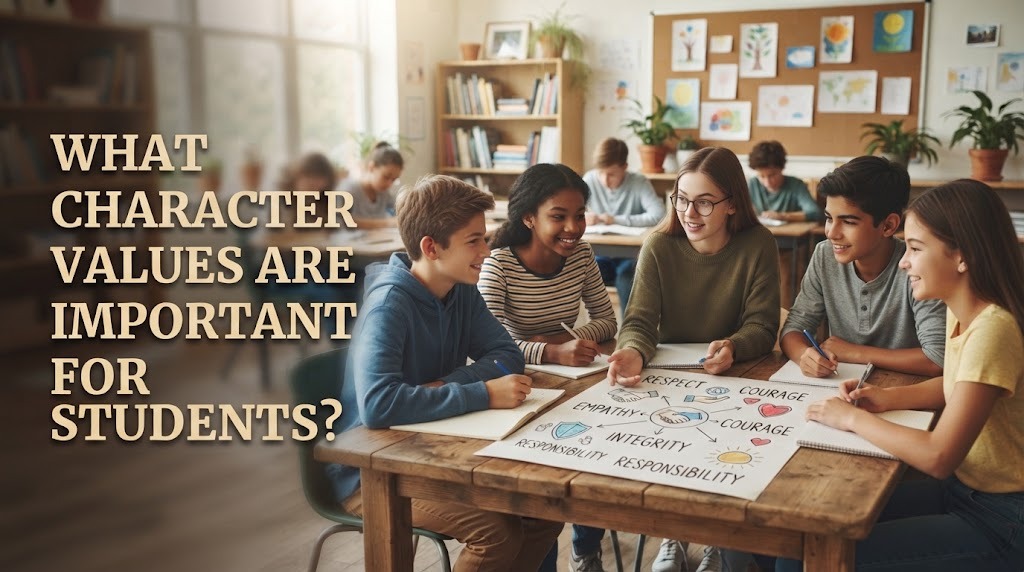
Character values are important for students because education should develop more than academic knowledge. Students also need positive attitudes that help them behave responsibly, build healthy relationships, and make good decisions. Values such as honesty, responsibility, discipline, respect, empathy, and integrity can guide students in different situations. These values are developed through daily practice, positive examples, and consistent guidance from adults. Strong character can help students become more prepared for school, future careers, and life in society.
HONESTY AND INTEGRITY
Honesty is one of the most important character values for students. It teaches them to tell the truth, admit mistakes, and avoid dishonest actions. In school, honesty can be shown by completing assignments independently, avoiding cheating, and giving accurate information to teachers. Students who practice honesty can build stronger trust with classmates, teachers, and family members. This value can also help them develop a strong sense of right and wrong.
Integrity is closely connected to honesty because it means trying to do the right thing even when nobody is watching. Students with integrity understand that good behavior should not depend only on rewards or punishment. They can learn to keep promises, respect other people's work, and follow ethical principles. These habits can become valuable when students enter higher education or the workplace. Therefore, honesty and integrity provide an important foundation for responsible behavior.
RESPONSIBILITY
Responsibility teaches students to understand their duties and accept the results of their choices. Students can practice responsibility by completing assignments, taking care of school property, following instructions, and helping with classroom activities. These simple actions can teach them that their behavior has consequences. When students take responsibility for mistakes, they can focus on finding solutions instead of blaming others. This can gradually build maturity and independence.
Teachers can provide students with opportunities to practice responsibility through individual and group activities. Giving students appropriate tasks allows them to experience what it means to be accountable. Taking ownership of actions can also increase students' confidence because they learn that they can manage their responsibilities. Parents can reinforce these habits through age-appropriate responsibilities at home. Consistent practice can make responsibility a natural part of students' daily lives.
DISCIPLINE
Discipline helps students manage their time, behavior, and responsibilities effectively. It can be practiced by arriving at school on time, following classroom rules, completing assignments, and maintaining regular study habits. Discipline does not mean being controlled by strict rules all the time. Instead, it involves learning how to make appropriate choices even when there are distractions or difficulties. This ability can support both academic progress and personal development.
Students who develop discipline can become more organized and consistent in their activities. Teachers can support this value by creating clear routines and reasonable expectations. Students should also understand why certain rules are necessary rather than following them only because they fear punishment. When students understand the purpose of discipline, they can gradually develop self-control. These habits can remain useful throughout their education and future careers.
RESPECT
Respect teaches students to treat other people with dignity regardless of differences in opinions, personalities, abilities, or backgrounds. Students can demonstrate respect by listening when others speak, using polite language, and avoiding harmful behavior. Respect is especially important during disagreements because students need to understand that different opinions do not justify insults or aggression. A respectful classroom can make students feel safer and more comfortable participating in learning activities. It can also strengthen relationships between classmates and teachers.
Respect should also apply to the environment and shared resources. Students can learn to take care of school facilities, classroom materials, and other people's belongings. These actions show that respect is not only about communication but also about behavior. Teachers can demonstrate respect by listening to students and treating them fairly. When students experience respectful treatment, they can better understand how to practice it toward others.
EMPATHY
Empathy is the ability to understand or consider another person's feelings and perspective. This value helps students recognize that classmates may experience situations differently from them. Students can practice empathy by listening to friends, offering support, and thinking carefully before making comments that could hurt someone. Empathy can also help students respond more appropriately when another person is struggling. These behaviors can create stronger and healthier relationships.
Empathy is particularly useful in preventing bullying and unnecessary conflicts. When students understand how their actions may affect others, they may become more careful with their words and behavior. Teachers can develop empathy through stories, group discussions, role-playing, and cooperative activities. These experiences can encourage students to consider different perspectives. Over time, empathy can become an important part of their social and emotional development.
FAIRNESS
Fairness teaches students to treat people equally and make decisions based on reasonable principles. Students may encounter situations where they need to share resources, divide group responsibilities, or resolve disagreements. Learning fairness helps them understand that everyone deserves appropriate opportunities and respectful treatment. It can also discourage favoritism and unfair behavior. This value is useful for building trust within the classroom.
Teachers can encourage fairness by applying classroom rules consistently and transparently. Students can also be invited to discuss how responsibilities should be divided during group projects. These activities help them understand that fairness sometimes requires considering different needs and circumstances. Learning to be fair can improve cooperation and reduce unnecessary conflicts. It also prepares students to become responsible members of society.
COMPASSION AND KINDNESS
Kindness and compassion encourage students to care about other people's needs and well-being. Simple actions such as helping a classmate, sharing materials, or offering encouragement can demonstrate these values. Students can learn that small acts of kindness can make a positive difference in someone's day. Compassion also encourages them to notice when another person may need support. These habits can contribute to a more welcoming school environment.
Kindness should not be limited to close friends. Students can learn to treat all members of the school community with consideration, including classmates, teachers, and staff. Adults can encourage this behavior by recognizing helpful actions and demonstrating kindness themselves. When kindness becomes part of the classroom culture, students may feel more comfortable supporting one another. This can strengthen cooperation and a sense of community.
SELF CONTROL
Self-control helps students manage their emotions, reactions, and impulses. Students may experience anger, frustration, disappointment, or excitement during their school years. Learning to pause and think before reacting can prevent unnecessary conflicts and poor decisions. Self-control does not mean hiding emotions, but learning to express them in appropriate ways. This skill can help students handle difficult situations more calmly.
Teachers can help students practice self-control through reflection, calm communication, and problem-solving activities. Students can learn to identify what they are feeling and consider different ways to respond. With repeated practice, they can become better at managing emotional reactions. Self-control can also support concentration when students need to complete challenging academic tasks. As a result, it is an important character value for both learning and everyday life.
CONCLUSION
Several character values are important for students, including honesty, integrity, responsibility, discipline, respect, empathy, fairness, kindness, and self-control. These values help students make better decisions, develop positive relationships, and manage their responsibilities effectively. Character development requires consistent practice and positive examples from teachers, parents, and the surrounding community. Academic knowledge is valuable, but strong character helps students use their knowledge responsibly and ethically. By developing these values from an early age, students can become responsible, respectful, confident, and well-prepared individuals for their future.
Recent Posts

Bagaimana Sistem SKS pada Program Kuliah... 22.11.2026/35 View

How Does Technology Make Daily Evaluation... 21.11.2026/69 View

Apa Strategi Menghadapi Kesenjangan antara Kompetensi... 21.11.2026/69 View

Mengapa Inventaris Aset Penting bagi Kelancaran... 21.11.2026/67 View

When Should Musicians Join a Record... 21.11.2026/68 View
