

What Common Mistakes Occur During Leadership Handover Ceremonies?
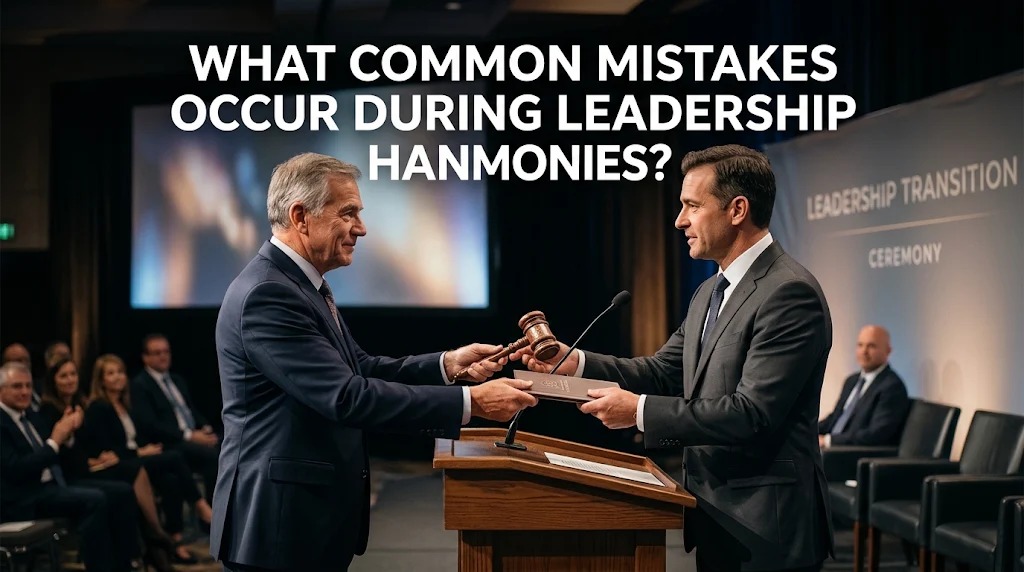
A leadership handover ceremony is an important organizational event that marks the formal transfer of responsibilities from an outgoing leader to a new one. It provides an opportunity to recognize previous contributions, introduce the incoming leader, and communicate the beginning of a new leadership period. Although the event may appear straightforward, several details must be carefully managed to ensure everything runs smoothly.
Mistakes during a handover ceremony can affect its formality, organization, and overall impression. Problems such as incomplete documents, unclear schedules, poor coordination, and insufficient preparation may create confusion among participants. Understanding these common mistakes helps organizations prepare a more professional and meaningful ceremony.
INADEQUATE PREPARATION
One common mistake is preparing for the ceremony without a clear plan. Organizers may overlook important details, including the event schedule, venue arrangements, equipment, and required documents. As a result, the ceremony may experience delays or unexpected problems.
Proper preparation should begin well before the event. Organizers need to establish a timeline, assign responsibilities, confirm participant attendance, and prepare all necessary materials. A preparation checklist can help ensure that every important requirement is addressed.
UNCLEAR EVENT SCHEDULE
An unclear schedule can make a leadership handover ceremony difficult to manage. Participants may not understand when the event begins, how long each session takes, or when important activities will occur. This can lead to unnecessary waiting and interruptions.
The event schedule should clearly describe each activity, such as the opening, speeches, presentation of documents, signing process, and closing. Sharing the schedule with the organizing team and relevant participants helps everyone understand their responsibilities.
INCOMPLETE HANDOVER DOCUMENTS
Another frequent mistake is failing to prepare complete and accurate handover documents. These documents may include official reports, responsibility statements, financial records, inventories, and other information related to the leadership position.
Missing information can create uncertainty about the responsibilities being transferred. It may also make it difficult for the incoming leader to understand the organization's current situation. Therefore, documents should be reviewed, verified, and organized before the ceremony takes place.
POOR COORDINATION AMONG ORGANIZERS
A successful ceremony requires cooperation between different organizing teams. Problems can occur when committee members do not communicate effectively or misunderstand their assigned duties. For example, the documentation team may not be ready when the event coordinator needs official records.
To prevent these issues, organizers should distribute tasks clearly and hold coordination meetings before the event. Each committee member should understand their responsibilities and know whom to contact when unexpected problems arise.
NEGLECTING THE FORMALITY OF THE EVENT
Leadership handover ceremonies often represent an official organizational process. Ignoring proper procedures, dress codes, or institutional protocols can reduce the formality of the occasion. This may create an impression that the event has not been handled seriously.
Organizers should understand the organization's rules and follow the appropriate ceremony procedures. Formal clothing, respectful language, proper introductions, and orderly activities help maintain the dignity of the event.
INSUFFICIENT COMMUNICATION WITH PARTICIPANTS
Poor communication can cause confusion among invited guests, outgoing leaders, incoming leaders, and other participants. Some people may not receive accurate information about the event location, starting time, required documents, or expected participation.
Organizers should distribute invitations and relevant information in advance. They can use official communication channels, such as email, messaging groups, or written announcements, to provide consistent updates. Any changes to the schedule should also be communicated promptly.
TECHNICAL AND EQUIPMENT PROBLEMS
Technical problems can interrupt the ceremony and affect its overall flow. Common examples include malfunctioning microphones, presentation equipment, projectors, speakers, or lighting systems. These issues may become more disruptive when organizers do not prepare alternative equipment.
A technical inspection should be conducted before participants arrive. Organizers should test all equipment, prepare backup materials, and assign someone to handle technical requirements throughout the event.
OVERLOOKING THE CONTRIBUTIONS OF THE OUTGOING LEADER
A handover ceremony should recognize the work and contributions of the outgoing leader. Focusing entirely on the incoming leader may make the previous leader's achievements seem unimportant. This can also reduce the emotional significance of the transition.
Organizations should provide an appropriate opportunity to express appreciation for the outgoing leader. A short speech, acknowledgment, or presentation of appreciation can recognize their efforts while maintaining a respectful atmosphere.
LACK OF CLARITY ABOUT THE TRANSFERRED RESPONSIBILITIES
A ceremony may be completed successfully but still leave uncertainty about the responsibilities being transferred. This can happen when the outgoing and incoming leaders do not clearly communicate the status of ongoing programs, organizational resources, or pending tasks.
Before the event, both leaders should review the responsibilities and information involved in the transition. Important matters should be documented so the incoming leader understands what needs to be continued, evaluated, or completed after the ceremony.
FAILING TO EVALUATE THE CEREMONY
Another mistake is treating the handover ceremony as complete immediately after the event ends. Without an evaluation, organizers may overlook problems that occurred and repeat the same mistakes in future activities.
A brief evaluation can help identify which arrangements worked well and which areas need improvement. Feedback from committee members and participants can also provide useful information for improving future organizational events.
CONCLUSION
Common mistakes during leadership handover ceremonies include inadequate preparation, unclear schedules, incomplete documents, poor coordination, and technical problems. Other issues, such as weak communication and unclear responsibility transfers, can also affect the quality of the event.
Organizations can prevent these problems through careful planning, clear task distribution, accurate documentation, and effective communication. By paying attention to both formal procedures and practical arrangements, a leadership handover ceremony can become an orderly and meaningful transition between leadership periods.
Recent Posts

Bagaimana Sistem SKS pada Program Kuliah... 22.11.2026/30 View

How Does Technology Make Daily Evaluation... 21.11.2026/66 View

Apa Strategi Menghadapi Kesenjangan antara Kompetensi... 21.11.2026/65 View

Mengapa Inventaris Aset Penting bagi Kelancaran... 21.11.2026/64 View

When Should Musicians Join a Record... 21.11.2026/64 View
