

What Common Mistakes Occur in Standard Language Writing?
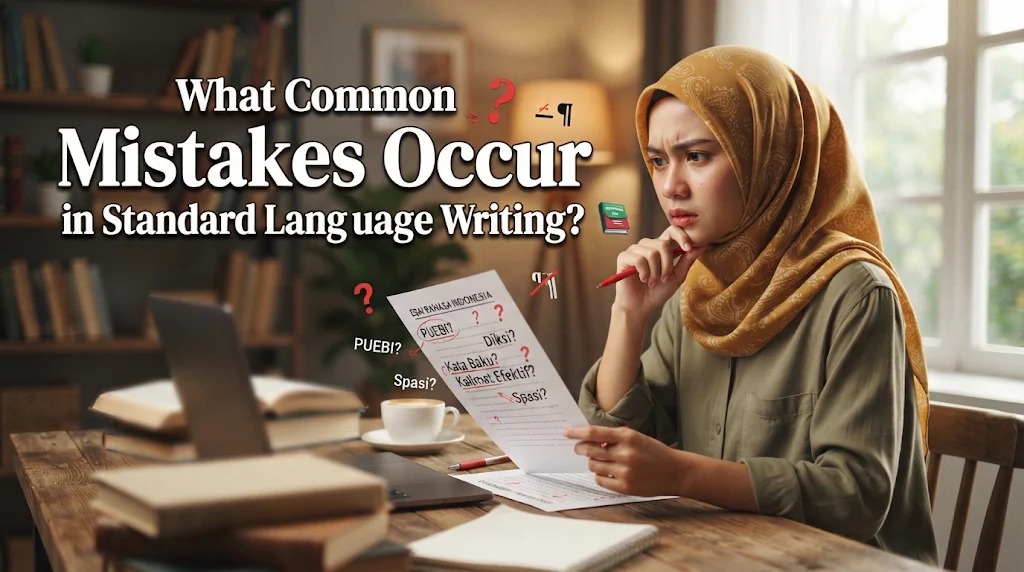
Standard language writing requires the use of appropriate spelling, grammar, vocabulary, punctuation, and sentence structures. These elements help writers communicate information clearly and ensure that their messages are easy to understand. In academic, professional, and official documents, following standard language conventions is particularly important because written communication often represents the writer's knowledge and attention to detail.
However, many people still make mistakes when writing in standard language. These errors can occur because of limited vocabulary, unfamiliarity with language rules, informal communication habits, or insufficient proofreading. Understanding common writing mistakes can help students and other writers improve their accuracy and produce more effective written materials.
INCORRECT SPELLING
Spelling mistakes are among the most common problems in standard language writing. Writers may use incorrect letter combinations, omit certain letters, or confuse words that have similar pronunciations.
These errors can make sentences difficult to read and sometimes change the intended meaning. To avoid them, writers should consult reliable dictionaries and review unfamiliar words before completing their documents. Developing regular reading habits can also improve familiarity with correct spelling.
INAPPROPRIATE WORD CHOICES
Choosing words that do not match the communication context can reduce the quality of written messages. Some writers use slang, regional expressions, or overly casual vocabulary in academic assignments and official documents.
Although these expressions may be appropriate in everyday conversations, formal writing generally requires vocabulary that follows recognized language conventions. Writers should consider their audience and purpose before selecting particular words. Using precise and appropriate vocabulary helps make information clearer.
GRAMMATICAL ERRORS
Grammar mistakes occur when writers do not follow appropriate sentence construction and language rules. Common examples include incorrect verb forms, subject-verb disagreement, inconsistent tenses, and improperly structured sentences.
These errors can make written information confusing or difficult to interpret. Writers should review grammatical relationships within each sentence and ensure that the words are arranged logically. Practicing grammar exercises and reading well-written materials can help reduce these problems.
INCORRECT PUNCTUATION
Punctuation marks help organize sentences and clarify the relationship between different ideas. However, some writers misuse commas, periods, quotation marks, and other punctuation symbols.
Incorrect punctuation can change the meaning of a sentence or interrupt the reading process. For example, missing periods may create unnecessarily long sentences, while excessive commas can make sentence structures confusing. Understanding punctuation rules helps writers present information in a more organized way.
USING INFORMAL ABBREVIATIONS
Abbreviations are common in text messages and social media conversations because they make communication faster. However, using excessive informal abbreviations in formal documents can make writing appear inconsistent and less professional.
Academic assignments, business reports, and official letters should generally use complete and appropriate word forms. Technical abbreviations may still be used when they are relevant and properly introduced. Writers should distinguish between accepted abbreviations and casual shortcuts.
INCOMPLETE SENTENCE STRUCTURES
Another common mistake is writing incomplete sentences that do not express a complete idea. This may happen when writers omit essential sentence elements or separate supporting information incorrectly.
Incomplete sentences can make paragraphs difficult to understand because readers may not recognize the intended relationship between ideas. Writers should check whether each sentence communicates a complete thought and connects logically with the surrounding sentences.
REPETITIVE VOCABULARY
Repeatedly using the same words can make writing less engaging and reduce the precision of explanations. This problem often occurs when writers have limited vocabulary or do not explore alternative expressions.
Using suitable synonyms and more specific terms can improve sentence variety. However, writers should not replace words with unfamiliar expressions simply to avoid repetition. Every vocabulary choice should maintain the intended meaning and fit the context.
INCONSISTENT LANGUAGE STYLE
Inconsistent writing occurs when formal and informal expressions are mixed without a clear purpose. For example, an academic paragraph may begin with formal vocabulary but suddenly include slang or casual abbreviations.
This inconsistency can affect the overall presentation of a document. Writers should maintain a suitable style throughout their work while adjusting their tone when the communication purpose requires it. Consistency helps readers follow the discussion more comfortably.
POOR PARAGRAPH ORGANIZATION
Standard language writing is not only about correct individual words and sentences. Ideas also need to be arranged into paragraphs with clear topics and logical connections.
Poor paragraph organization may cause writers to combine unrelated information or present supporting details without explaining their relevance. Each paragraph should focus on a central idea supported by appropriate explanations or examples. Using transitions between paragraphs can also make the discussion flow more naturally.
LACK OF PROOFREADING
Some writing mistakes remain in documents because writers submit their work without reviewing it carefully. Even people who understand standard language rules can make typing errors, overlook missing punctuation, or use inappropriate vocabulary.
Proofreading allows writers to identify and correct these problems before their documents are shared or submitted. Reading the text again, checking spelling, and reviewing sentence structures can significantly improve writing quality. Using dictionaries and grammar references can provide additional support when uncertain about particular expressions.
CONCLUSION
Common mistakes in standard language writing include incorrect spelling, inappropriate vocabulary, grammatical errors, punctuation problems, informal abbreviations, and incomplete sentence structures. Repetitive words, inconsistent styles, poor paragraph organization, and insufficient proofreading can also reduce writing quality. By understanding these mistakes and practicing proper language conventions, writers can produce clearer, more organized, and more professional written communication.
Recent Posts

How Does Technology Make Daily Evaluation... 21.11.2026/62 View

Apa Strategi Menghadapi Kesenjangan antara Kompetensi... 21.11.2026/63 View

Mengapa Inventaris Aset Penting bagi Kelancaran... 21.11.2026/59 View

When Should Musicians Join a Record... 21.11.2026/58 View

Daily Evaluation or Daily Planning Which... 21.11.2026/66 View
