

What Connected Kingdoms With the Origins of Cities?
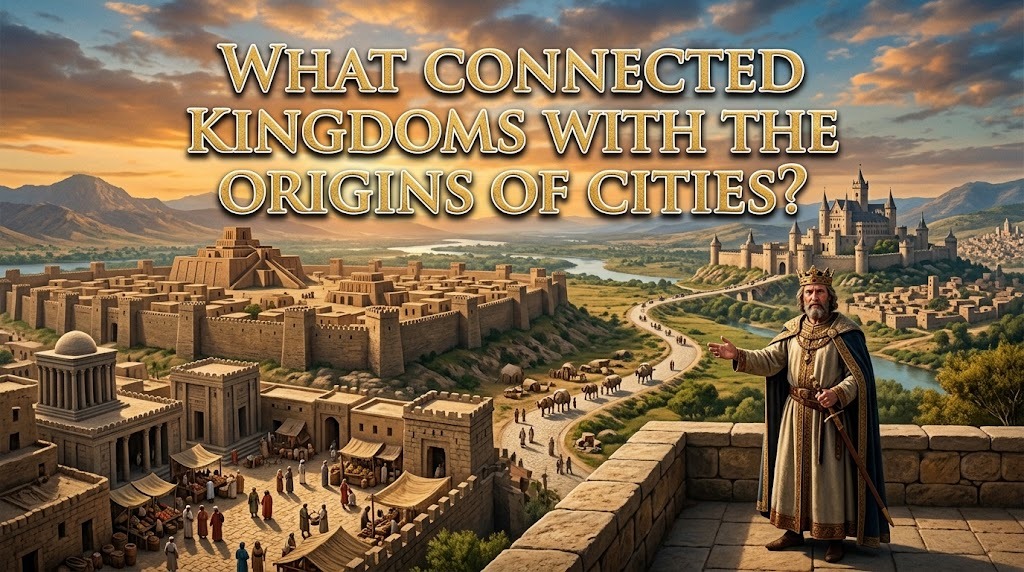
The origins of cities are closely connected to the development of kingdoms throughout history. As kingdoms expanded their territories, they needed organized centers for government, trade, defense, and cultural activities. These needs encouraged settlements to grow into larger and more complex urban communities. Cities became important places where rulers managed their territories, merchants exchanged goods, and people gathered to develop shared traditions. Understanding this relationship helps explain how early cities emerged and why many historic urban centers became influential.
THE ROLE OF KINGDOMS IN EARLY CITY DEVELOPMENT
Kingdoms played an important role in the formation of early cities by establishing administrative centers where rulers could manage political affairs. These centers often included royal palaces, government buildings, religious structures, and spaces for public gatherings. As the population increased around these institutions, settlements gradually developed into organized urban areas. Rulers also encouraged construction projects that improved infrastructure and supported daily activities. Over time, these developments helped transform small communities into important political and economic centers.
TRADE NETWORKS CONNECTED KINGDOMS AND CITIES
Trade was one of the strongest links between kingdoms and the growth of cities. Kingdoms needed resources such as food, metals, textiles, and other valuable goods to support their populations and maintain their power. Cities provided marketplaces where local producers and foreign merchants could exchange these resources. Roads, rivers, and maritime routes connected urban centers across different regions, allowing commercial activities to expand. As trade increased, cities attracted more merchants, workers, and craftspeople, contributing to population growth and economic development.
ROYAL AUTHORITY SHAPED URBAN PLANNING
The authority of kings and other rulers influenced how early cities were designed and organized. Important buildings were often positioned near the center of power, while residential areas, markets, and workshops developed around them. Defensive walls, gates, and strategic roads helped rulers protect their territories and control movement. In some kingdoms, urban planning also reflected social hierarchies, with royal families and officials occupying privileged areas. These arrangements demonstrate how political power influenced the physical structure of early cities.
RELIGION AND CULTURE STRENGTHENED URBAN CENTERS
Religion and cultural traditions helped connect kingdoms with the development of cities. Rulers frequently supported temples, monasteries, mosques, or other religious institutions to strengthen their legitimacy and demonstrate their authority. These places attracted worshippers, scholars, artists, and visitors from surrounding communities. Religious ceremonies and cultural festivals also encouraged people to gather in urban centers. As a result, cities became places where political authority, spiritual beliefs, education, and artistic expression developed together.
AGRICULTURE SUPPORTED THE GROWTH OF CITIES
Agricultural production provided the resources necessary for kingdoms and cities to survive. Farming communities produced food that supported royal courts, soldiers, traders, craftspeople, and other urban residents. In several early civilizations, rulers organized irrigation systems, maintained agricultural land, and collected taxes from farmers. Reliable food supplies allowed some people to work in occupations other than farming, encouraging the development of specialized industries and services. This relationship between agriculture and urban life made it possible for cities to grow beyond small rural settlements.
DEFENSE AND STRATEGIC LOCATIONS ENCOURAGED URBAN GROWTH
Many early cities emerged in locations that offered protection or strategic advantages. Hills, river crossings, coastal harbors, and fertile plains could provide access to resources while helping rulers defend their territories. Kingdoms sometimes established fortified settlements near borders or important trade routes to monitor movement and protect valuable goods. These settlements attracted soldiers, administrators, merchants, and local residents. Their strategic importance often helped them develop into permanent urban centers.
INDONESIAN KINGDOMS CONTRIBUTED TO HISTORIC CITY FORMATION
The history of Indonesia provides several examples of the relationship between kingdoms and cities. Ancient and medieval kingdoms, including Majapahit and Mataram, established political centers that supported administration, trade, religious life, and cultural activities. In Java, settlements around royal courts often developed distinctive relationships with surrounding agricultural communities and religious institutions. Coastal trading centers also grew through connections with regional and international maritime networks. These historical developments contributed to the cultural and spatial foundations of several Indonesian urban areas, although modern cities have also been shaped by later colonial and post-independence changes.
HOW KINGDOMS INFLUENCED MODERN CITIES
The influence of historical kingdoms can still be seen in many modern cities. Former palace districts, ancient roads, religious monuments, and traditional marketplaces may remain important parts of urban landscapes. Some historic centers continue to serve as administrative, cultural, or tourism destinations. Their layouts and architectural features can reveal how earlier rulers organized political power and public life. Preserving these historical areas helps communities understand their heritage while managing the challenges of modern urban development.
CONCLUSION
Kingdoms and the origins of cities were closely connected through political administration, trade, agriculture, religion, and defense. Rulers needed organized centers to govern their territories, while growing settlements benefited from royal protection, infrastructure, and economic opportunities. These connections encouraged populations to expand and created specialized urban activities. Although cities developed differently across regions, the relationship between political power and settlement growth played a significant role in shaping early urban civilization.
Recent Posts

Bagaimana Sistem SKS pada Program Kuliah... 22.11.2026/50 View

How Does Technology Make Daily Evaluation... 21.11.2026/79 View

Apa Strategi Menghadapi Kesenjangan antara Kompetensi... 21.11.2026/79 View

Mengapa Inventaris Aset Penting bagi Kelancaran... 21.11.2026/75 View

When Should Musicians Join a Record... 21.11.2026/80 View
