

What Daily Habits Can Make Global Warming Worse?
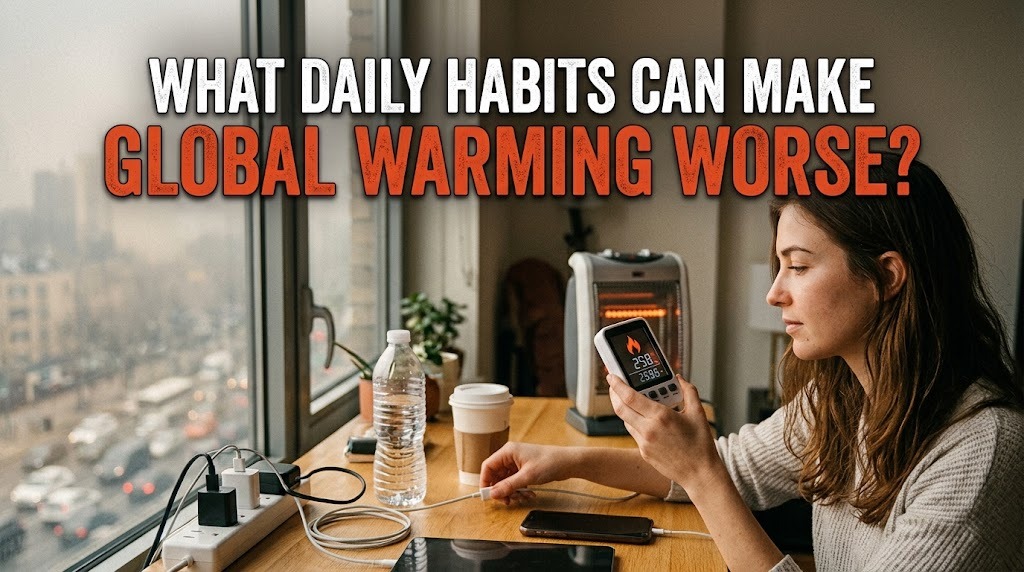
Daily habits may seem insignificant, but the choices people make at home, at school, at work, and while traveling can contribute to global warming. Activities such as using electricity from fossil fuels, driving private vehicles, wasting food, and buying unnecessary products can increase greenhouse gas emissions. When these habits are repeated by many people, their combined environmental impact can become substantial.
Understanding which everyday activities contribute to rising global temperatures can help people make more responsible decisions. Although individual actions alone cannot solve global warming, changing daily habits can reduce personal emissions and support broader efforts to protect the environment.
EXCESSIVE ELECTRICITY USE INCREASES GREENHOUSE GAS EMISSIONS
Using electricity unnecessarily is one daily habit that can contribute to global warming. In areas where electricity is generated by burning coal, oil, or natural gas, higher electricity consumption can lead to greater greenhouse gas emissions. Leaving lights, televisions, computers, and other appliances running when they are not needed can therefore increase energy demand.
Air conditioners and other energy-intensive appliances can also contribute to emissions when they rely on electricity generated from fossil fuels. However, the environmental impact depends on the electricity source and the efficiency of the equipment. People can help reduce unnecessary energy consumption by switching off unused devices, choosing energy-efficient appliances, and setting air conditioners at reasonable temperatures. These small adjustments can support energy conservation when practiced consistently.
USING PRIVATE VEHICLES FOR EVERY SHORT JOURNEY
Frequent use of cars and motorcycles can increase carbon dioxide emissions, particularly when the vehicles run on petrol or diesel. Driving alone for short distances, even when walking or cycling would be practical, can add to fuel consumption and air pollution. Repeated journeys also contribute to traffic congestion, which may increase fuel use when vehicles spend long periods moving slowly or idling.
Transportation is an important source of greenhouse gas emissions in many countries. The impact of a journey depends on factors such as distance, vehicle efficiency, passenger numbers, and the type of energy used. Whenever practical and safe, people can consider walking, cycling, using public transportation, or sharing rides. Choosing sustainable transportation can help reduce fuel consumption while supporting cleaner and more efficient travel.
WASTING FOOD AND THROWING AWAY USABLE PRODUCTS
Food waste is another everyday habit that can worsen global warming. Producing food requires land, water, energy, transportation, and other resources. When food is discarded, the emissions associated with its production and distribution are also wasted. Organic waste that decomposes in landfills can release methane, a greenhouse gas that contributes to global warming.
Buying more food than necessary, forgetting stored ingredients, and throwing away edible leftovers can increase this problem. People can reduce food waste by planning meals, checking food supplies before shopping, storing ingredients properly, and using leftovers safely. Similar principles apply to clothing, electronics, and household items. Repairing products, reusing materials, and purchasing only what is needed can reduce demand for resource-intensive production and help lower consumption-related emissions.
BUYING TOO MANY NEW PRODUCTS AND USING SINGLE-USE ITEMS
Frequent unnecessary shopping can contribute to greenhouse gas emissions because manufacturing products requires energy and raw materials. Clothing, electronics, furniture, and other consumer goods may generate emissions during production, packaging, and transportation. Replacing usable items simply because newer versions are available can increase demand for additional manufacturing.
Single-use products, including disposable bags, cups, and food containers, can also create environmental problems. Their production requires resources, while waste management can consume energy and contribute to pollution. The climate impact varies according to the materials used, how products are manufactured, and how they are disposed of. Choosing durable products, carrying reusable bags and bottles, and avoiding unnecessary purchases can support a more sustainable lifestyle. The goal is not to stop buying essential goods but to use resources more thoughtfully.
IGNORING WASTE MANAGEMENT AND ENVIRONMENTAL RESPONSIBILITY
Poor waste management can contribute to environmental damage and, in some cases, global warming. When organic waste is sent to landfills, it may produce methane as it decomposes without sufficient oxygen. Burning waste can also release carbon dioxide and other pollutants, depending on the materials being burned. In addition, discarded materials may require new resources and energy when reusable or recyclable products are lost from circulation.
People can help by separating waste according to local recycling rules, composting suitable organic materials where practical, and avoiding open burning. However, recycling is not a complete solution because collection and processing also require resources. Reducing consumption and reusing products can often prevent waste before it is created. These habits become more effective when supported by community waste management, accessible recycling facilities, and environmental policies.
CONCLUSION
Several daily habits can make global warming worse, including excessive electricity use, frequent reliance on private vehicles, food waste, unnecessary shopping, and poor waste management. These activities can increase greenhouse gas emissions through energy consumption, fossil fuel use, resource extraction, manufacturing, and the decomposition or disposal of waste.
Changing these habits can help reduce personal environmental impacts. Saving electricity, choosing lower-emission transportation, planning meals, reusing products, and managing waste responsibly are practical steps people can take in everyday life. Although individual actions must be supported by changes from businesses and governments, consistent choices across households and communities can contribute to broader climate change mitigation.
Recent Posts

Bagaimana Sistem SKS pada Program Kuliah... 22.11.2026/49 View

How Does Technology Make Daily Evaluation... 21.11.2026/76 View

Apa Strategi Menghadapi Kesenjangan antara Kompetensi... 21.11.2026/78 View

Mengapa Inventaris Aset Penting bagi Kelancaran... 21.11.2026/74 View

When Should Musicians Join a Record... 21.11.2026/78 View
