

What Distinguishes Short-Term Fund Allocation From Long-Term Planning?
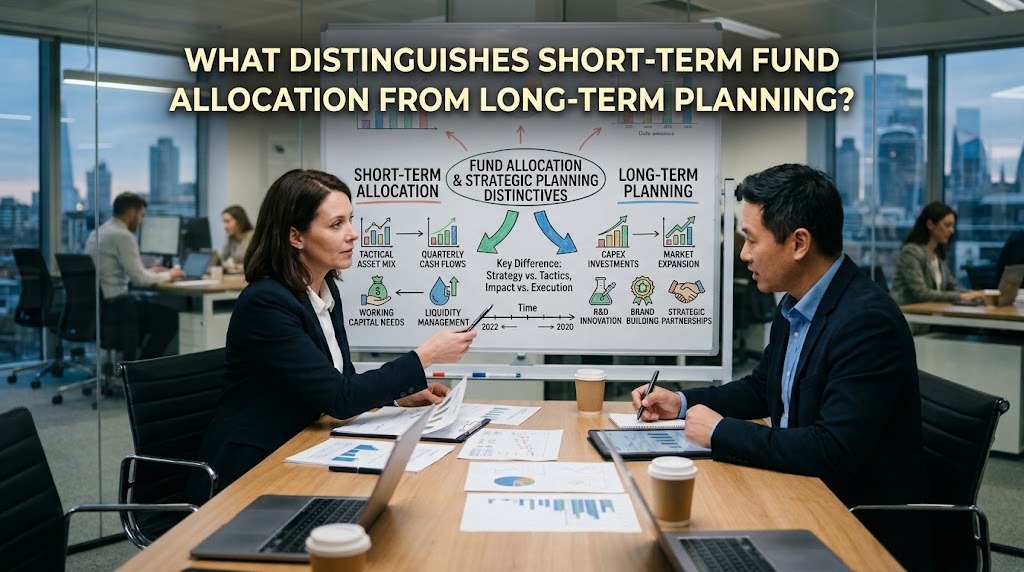
Financial management requires individuals and businesses to make decisions about how money should be distributed over different periods. Some financial needs must be addressed immediately, while others require preparation and consistent funding over several years. Understanding these differences helps organizations maintain daily operations without neglecting future objectives.
Short-term fund allocation and long-term financial planning are two approaches that support effective resource management. Although both involve distributing financial resources, they differ in their time horizons, priorities, and expected outcomes. Understanding how each approach works can help businesses create balanced budgets and maintain financial stability.
UNDERSTANDING SHORT-TERM FUND ALLOCATION
Short-term fund allocation focuses on financial needs that must be addressed within a relatively brief period, often covering daily, monthly, or annual expenses. Its primary purpose is to ensure that sufficient money is available for immediate responsibilities.
Businesses commonly allocate short-term funds for employee salaries, utility payments, inventory purchases, transportation, and routine maintenance. Individuals may use this approach to manage household expenses, monthly bills, and short-term savings goals. Careful allocation helps prevent cash shortages and keeps essential activities running smoothly.
UNDERSTANDING LONG-TERM FINANCIAL PLANNING
Long-term financial planning focuses on financial objectives that require preparation over several years. Instead of concentrating mainly on immediate expenses, this approach considers future needs, potential opportunities, and financial sustainability.
Businesses may allocate long-term funds for infrastructure development, technology investments, market expansion, and employee development. Individuals may plan for retirement, property ownership, education, or long-term investment goals. These plans require consistent financial contributions and regular evaluations to remain achievable.
DIFFERENCES IN TIME HORIZONS
The most noticeable difference between short-term allocation and long-term planning is the period each approach covers. Short-term allocation addresses immediate or near-future financial obligations, while long-term planning considers objectives that may take several years to achieve.
For example, a company may allocate monthly funds to purchase raw materials and pay employee salaries. At the same time, it may establish a five-year plan to expand production facilities. Both activities require funding, but their schedules and financial priorities are different.
DIFFERENCES IN FINANCIAL PRIORITIES
Short-term allocation generally prioritizes liquidity and the ability to meet immediate obligations. Businesses need enough available cash to maintain daily operations, pay suppliers, and respond to routine expenses.
Long-term planning places greater emphasis on future development and financial sustainability. Companies may prioritize investments that improve productivity, increase market opportunities, or strengthen their competitive position. Balancing these priorities helps prevent organizations from sacrificing current stability for future growth or ignoring important development opportunities.
DIFFERENCES IN BUDGETING METHODS
Short-term budgets are often prepared using current income, expected expenses, payment schedules, and immediate operational requirements. These budgets may be reviewed monthly or quarterly to identify differences between planned and actual spending.
Long-term budgets usually involve financial projections, investment evaluations, growth targets, and risk assessments. Since future conditions can change, businesses need to review their assumptions regularly. Long-term budgeting provides direction while allowing adjustments when financial circumstances develop differently than expected.
DIFFERENCES IN RISK MANAGEMENT
Short-term fund allocation focuses on managing immediate financial risks, such as unexpected bills, delayed customer payments, inventory shortages, and operational disruptions. Maintaining sufficient cash reserves can help businesses respond to these situations.
Long-term financial planning considers broader risks, including economic changes, market competition, investment performance, and future operating costs. Businesses need to evaluate different scenarios and prepare strategies that protect their financial position over time. Both approaches are important because short-term problems can affect long-term objectives.
DIFFERENCES IN FINANCIAL PERFORMANCE MEASUREMENT
Short-term allocation is commonly evaluated through indicators such as cash flow, monthly expenses, budget differences, and working capital. These measurements help businesses determine whether they can meet immediate financial responsibilities.
Long-term planning is assessed through broader indicators, including investment returns, business growth, debt sustainability, and progress toward strategic objectives. These measurements help management understand whether financial decisions are contributing to future development.
HOW BOTH APPROACHES WORK TOGETHER
Short-term fund allocation and long-term planning should not operate separately. Businesses need to maintain enough money for current responsibilities while setting aside resources for future investments.
For example, a company may establish a monthly budget for salaries, inventory, and utilities while also saving funds for new production equipment. This approach supports daily operations and prepares the company for expansion. Regular financial reviews help management maintain an appropriate balance between immediate needs and future priorities.
CONCLUSION
Short-term fund allocation focuses on immediate financial responsibilities, while long-term financial planning supports objectives that require preparation over several years. Their differences involve time horizons, spending priorities, budgeting methods, risk management, and performance measurements.
Both approaches are necessary for effective financial management. By combining short-term budget control with long-term planning, businesses can maintain operational stability, manage financial risks, and create opportunities for sustainable development.
Recent Posts

Bagaimana Sistem SKS pada Program Kuliah... 22.11.2026/45 View

How Does Technology Make Daily Evaluation... 21.11.2026/73 View

Apa Strategi Menghadapi Kesenjangan antara Kompetensi... 21.11.2026/75 View

Mengapa Inventaris Aset Penting bagi Kelancaran... 21.11.2026/71 View

When Should Musicians Join a Record... 21.11.2026/75 View
