

What Distinguishes Structural and Nonstructural Disaster Mitigation?
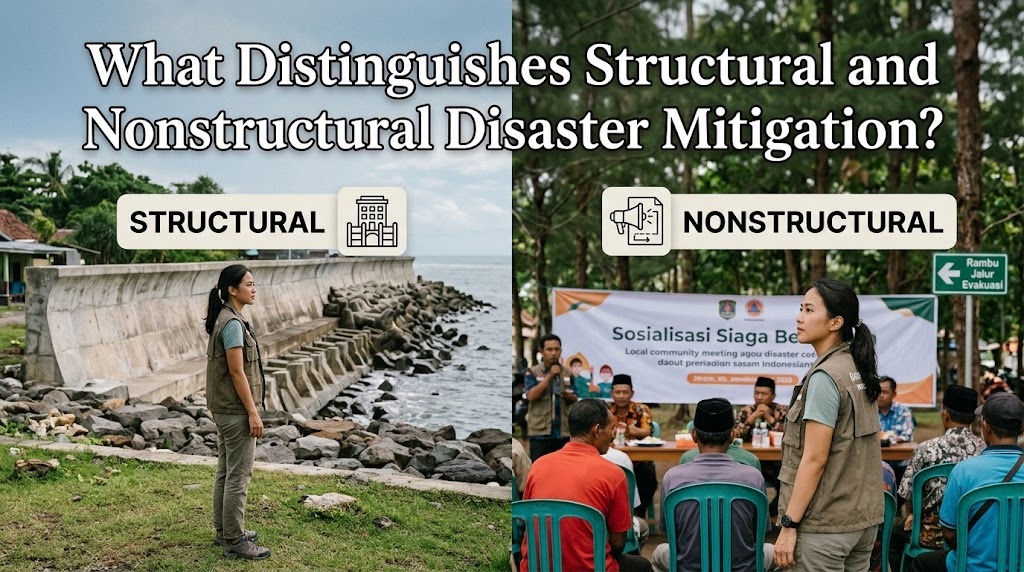
Disaster mitigation refers to efforts made to reduce the risks and impacts of natural or human-made disasters before they occur. These efforts aim to protect lives, property, infrastructure, and the environment. Communities can reduce disaster risks through various approaches, including improving physical infrastructure, establishing safety regulations, and increasing public awareness.
Two major approaches to disaster mitigation are structural and nonstructural mitigation. Both aim to reduce vulnerability, but they use different methods. Structural mitigation focuses on physical construction and engineering solutions, while nonstructural mitigation emphasizes policies, education, planning, and community preparedness.
UNDERSTANDING STRUCTURAL DISASTER MITIGATION
Structural disaster mitigation involves physical measures designed to reduce the impact of hazards on buildings, infrastructure, and surrounding environments. These measures commonly use engineering techniques, construction materials, and specialized designs to improve safety.
Examples include constructing flood barriers, strengthening bridges, building earthquake-resistant structures, and developing proper drainage systems. These projects help prevent physical damage or reduce the severity of disaster impacts. Structural mitigation is particularly important in areas exposed to recurring hazards.
UNDERSTANDING NONSTRUCTURAL DISASTER MITIGATION
Nonstructural disaster mitigation focuses on reducing disaster risks through regulations, planning, education, and social activities rather than physical construction. Its main purpose is to improve how individuals, organizations, and governments prepare for and manage potential hazards.
Examples include developing land-use regulations, creating disaster preparedness programs, preparing evacuation plans, and educating communities about early warning systems. These activities help people understand risks and make safer decisions. Nonstructural measures can also support the effective use and maintenance of physical infrastructure.
DIFFERENCES IN THEIR MAIN APPROACHES
The most important difference between structural and nonstructural mitigation is how each approach reduces disaster risks. Structural mitigation changes the physical environment or strengthens existing structures to withstand hazards. Nonstructural mitigation changes human behavior, policies, and planning practices to reduce exposure and vulnerability.
For example, constructing a flood barrier is a structural measure because it provides physical protection against rising water. Meanwhile, restricting construction in flood-prone areas is a nonstructural measure because it uses land-use regulations to prevent people and buildings from being exposed to danger.
EXAMPLES OF STRUCTURAL MITIGATION MEASURES
Structural mitigation includes several engineering projects that help protect communities from different types of disasters.
- Flood barriers: These structures help control or redirect floodwater to protect vulnerable areas.
- Earthquake-resistant buildings: Special structural designs help buildings withstand seismic forces and reduce the risk of collapse.
- Retaining walls: These structures provide support to slopes and help reduce certain types of slope failure.
- Improved drainage systems: Drainage infrastructure helps move excess rainwater away from residential and commercial areas.
- Coastal protection structures: Seawalls and similar infrastructure can reduce exposure to certain coastal hazards when properly designed.
These measures require technical assessments, suitable materials, construction budgets, and regular maintenance to remain effective.
EXAMPLES OF NONSTRUCTURAL MITIGATION MEASURES
Nonstructural mitigation includes activities that improve disaster awareness, strengthen regulations, and guide safer community development.
- Disaster education: Teaching residents how to recognize hazards and respond to emergency warnings.
- Land-use planning: Restricting development in areas with high disaster risks.
- Building regulations: Establishing construction standards and requiring compliance with safety requirements.
- Early warning systems: Providing timely information about potential hazards so communities can take preventive action.
- Evacuation planning: Identifying safe routes, shelters, and procedures before emergencies occur.
These measures help communities make informed decisions and reduce the consequences of disasters without relying entirely on physical infrastructure.
COMPARING COSTS AND IMPLEMENTATION
Structural mitigation projects often require significant financial investment, specialized equipment, engineering expertise, and long construction periods. For example, building a large flood-control system may involve extensive planning, land preparation, and ongoing maintenance.
Nonstructural mitigation programs may require less physical construction, but they still need funding, trained personnel, public participation, and consistent implementation. Education campaigns, risk assessments, and regulatory enforcement must be maintained over time to produce meaningful results.
The cost of each approach depends on the location, hazard type, project scale, and long-term objectives.
HOW STRUCTURAL MITIGATION PROTECTS INFRASTRUCTURE
Structural mitigation helps reduce physical damage by improving the ability of buildings and infrastructure to withstand hazardous conditions. Strong bridges, reinforced buildings, and effective drainage systems can protect essential facilities and support community activities during disasters.
However, physical structures cannot eliminate every disaster risk. Infrastructure may be overwhelmed by hazards that exceed its design capacity, or it may become damaged without proper maintenance. Therefore, structural protection should be supported by other preparedness measures.
HOW NONSTRUCTURAL MITIGATION STRENGTHENS COMMUNITY PREPAREDNESS
Nonstructural mitigation helps people understand disaster risks and develop safer habits. Through education, evacuation exercises, and community planning, residents can learn how to respond before, during, and after emergencies.
It also helps governments make informed decisions about development and resource allocation. For example, hazard maps can guide decisions about where housing and public facilities should be built. These efforts reduce exposure and strengthen the ability of communities to manage emergencies.
WHY BOTH MITIGATION APPROACHES ARE IMPORTANT
Structural and nonstructural mitigation work best when they are implemented together. Physical infrastructure can provide protection, while regulations and public education help ensure that people use these facilities safely and understand their limitations.
For example, a city may construct flood barriers while also improving drainage maintenance, restricting development in high-risk areas, and establishing flood warning systems. Combining these approaches creates a more comprehensive disaster risk reduction strategy.
CONCLUSION
Structural and nonstructural disaster mitigation differ in their methods but share the same objective of reducing disaster risks. Structural mitigation focuses on physical solutions such as flood barriers, reinforced buildings, and drainage infrastructure. Nonstructural mitigation emphasizes education, regulations, land-use planning, and emergency preparedness.
Neither approach can address every disaster risk independently. Combining physical protection with effective policies and community awareness helps create safer environments and strengthens long-term disaster resilience.
Recent Posts

Bagaimana Sistem SKS pada Program Kuliah... 22.11.2026/37 View

How Does Technology Make Daily Evaluation... 21.11.2026/70 View

Apa Strategi Menghadapi Kesenjangan antara Kompetensi... 21.11.2026/73 View

Mengapa Inventaris Aset Penting bagi Kelancaran... 21.11.2026/68 View

When Should Musicians Join a Record... 21.11.2026/71 View
