

What Documents Should Be Included with a Job Application Letter?
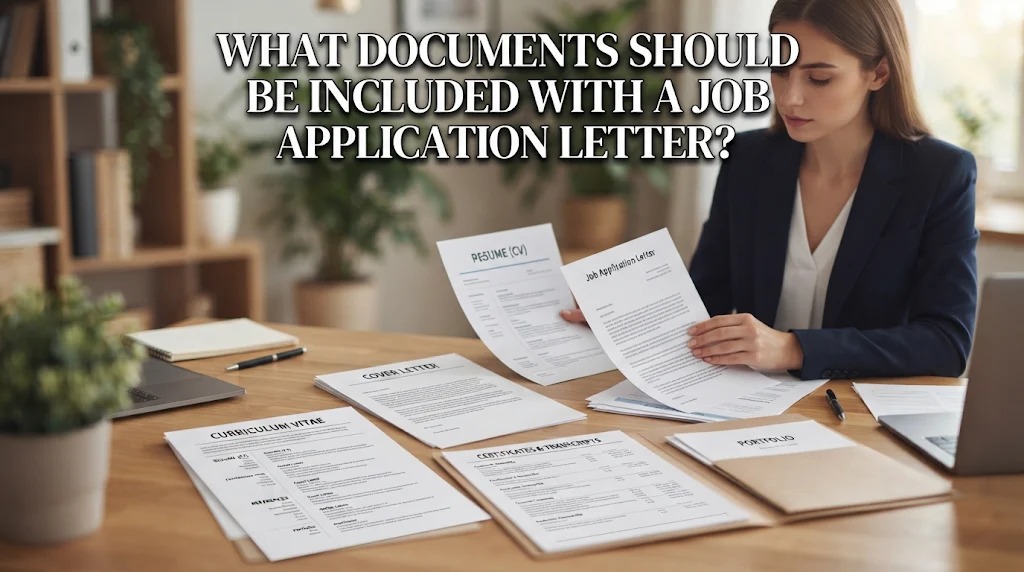
A job application letter is an important document when applying for a position, but it is usually not the only document required by employers. Applicants are often asked to submit several supporting documents to help recruiters evaluate their qualifications, experience, and personal information. These documents provide additional evidence that candidates meet the requirements of the advertised position. The required documents may differ depending on the company, job position, and recruitment process. Therefore, applicants should carefully read the job vacancy announcement to ensure that all necessary documents are prepared correctly.
RESUME OR CURRICULUM VITAE
A resume or curriculum vitae (CV) is one of the most important documents that should accompany a job application letter. It contains detailed information about an applicant's personal profile, educational background, work experience, skills, and professional achievements. This document helps recruiters understand the candidate's qualifications and determine whether they match the requirements of the position. A well-organized CV should present information clearly and use a professional format. Applicants should also ensure that all details are accurate and relevant to the job they are applying for.
In addition, candidates should adjust their CVs based on the specific position they want to obtain. For example, applicants applying for an administrative position can highlight their computer skills, document management experience, and organizational abilities. Fresh graduates can include internships, academic projects, volunteer activities, and relevant organizational experiences. A concise and informative CV makes it easier for recruiters to identify important qualifications. Therefore, applicants should review their CVs before submitting them with their application letters.
EDUCATIONAL CERTIFICATES AND TRANSCRIPTS
Educational certificates and academic transcripts are supporting documents that demonstrate an applicant's educational qualifications. A diploma or graduation certificate provides official evidence that someone has completed a particular level of education. Meanwhile, an academic transcript contains information about courses taken, grades received, and overall academic performance. Employers may request these documents to verify whether candidates meet the educational requirements for a position. They are especially important for jobs that require specific degrees, academic backgrounds, or professional knowledge.
Applicants should prepare clear and readable copies of their educational documents. If the recruitment announcement requires certified copies, candidates must follow the specified verification procedure. Fresh graduates who have not received their diplomas may sometimes submit a temporary graduation certificate or another officially recognized document, depending on the employer's requirements. It is also important to ensure that the information matches the details written in the CV and application letter. Properly prepared academic documents can help recruiters verify an applicant's educational background.
IDENTITY CARD AND PERSONAL INFORMATION
An identity card is commonly requested during recruitment to verify an applicant's personal information. In Indonesia, this document is generally the Kartu Tanda Penduduk (KTP) for eligible citizens. Recruiters may use the information to confirm the applicant's full name, identification details, and other relevant administrative information. Some companies may also request additional personal documents, depending on their recruitment policies. However, applicants should only provide information that is officially requested and relevant to the application process.
Before submitting an identity card copy, candidates should check whether the document is clear and readable. They should also ensure that their personal information is consistent with the details provided in other application documents. For online recruitment, applicants need to upload the file through the company's official recruitment platform or another verified channel. Personal documents should not be sent carelessly to unknown individuals or suspicious websites. Protecting personal information is important to reduce the risk of identity misuse.
CERTIFICATES AND TRAINING DOCUMENTS
Certificates from training programs, workshops, seminars, or professional courses can strengthen a job application. These documents demonstrate that applicants have developed additional knowledge and skills beyond their formal education. For example, a computer training certificate may support an application for an administrative position, while a language certificate can be useful for jobs requiring foreign language communication. Professional certificates may also demonstrate that candidates have completed specific training or assessments related to their field. These qualifications can help applicants show their commitment to continuous learning and professional development.
However, applicants should prioritize certificates that are relevant to the position they want to obtain. Including too many unrelated certificates may make the application unnecessarily lengthy and distract recruiters from the most important qualifications. Candidates should also check that the certificates contain accurate information and are issued by legitimate institutions. If the employer requests specific certifications, those documents should receive priority. Relevant certificates can provide additional evidence of an applicant's abilities and professional readiness.
PORTFOLIO AND WORK EXPERIENCE DOCUMENTS
A portfolio is an important supporting document for positions that require practical skills, creativity, or examples of previous work. It usually contains selected projects, designs, articles, photographs, reports, or other work samples that demonstrate an applicant's abilities. A portfolio allows recruiters to evaluate the quality of someone's work rather than relying only on written descriptions of their skills. It is particularly useful for applicants in graphic design, writing, photography, programming, marketing, and other creative or technical fields. Candidates should select their best and most relevant work to create a professional portfolio.
Besides a portfolio, applicants may also include supporting documents related to their previous work experience. These can include internship certificates, employment certificates, reference letters, or recommendation letters when requested by the employer. Such documents can provide additional information about an applicant's responsibilities, achievements, and professional background. However, candidates should not include confidential company information or work samples that they are not authorized to share. All submitted materials should be relevant, accurate, and professionally organized.
PHOTOGRAPH AND ADDITIONAL REQUIRED DOCUMENTS
Some companies request a recent photograph as part of their recruitment requirements. The photograph is generally used for administrative identification and should follow the format specified in the job vacancy announcement. Applicants should choose a clear, professional photograph with appropriate clothing and a simple background. However, not all employers require photographs, and candidates should not assume that they must include one in every application. Following the company's instructions is more important than adding unnecessary documents.
Other additional documents may include a cover letter, statement of good conduct, health certificate, or other administrative requirements, depending on the position and employer. For example, certain public sector positions or specialized jobs may require specific official certificates. Applicants should check the recruitment announcement to understand which documents are mandatory and which are optional. They should also pay attention to file formats, document sizes, naming conventions, and submission deadlines when applying online. Preparing all required documents carefully can help prevent administrative mistakes during the recruitment process.
CONCLUSION
Supporting documents play an important role in completing a job application letter because they provide evidence of an applicant's identity, education, skills, and work experience. Common documents include a CV, educational certificates, academic transcripts, identity cards, training certificates, portfolios, and work experience records. However, the requirements may vary depending on the company and position being offered. Applicants should carefully review the recruitment announcement, prepare accurate documents, and organize them professionally before submission. By providing complete and relevant supporting documents, candidates can make their applications easier for recruiters to evaluate.
Recent Posts

Mengapa Surat Lamaran Kerja yang Personal... 20.11.2026/37 View

Apa Saja Kesalahan Mahasiswa dalam Membangun... 20.11.2026/37 View

Bagaimana Cara Menunjukkan Kemampuan Diri agar... 20.11.2026/44 View

Apa Saja Kesalahan yang Harus Dihindari... 20.11.2026/42 View

Apa yang Dimaksud dengan Evaluasi Harian... 20.11.2026/44 View
