

What Does a Sample Internal Memo for Government Offices Look Like?
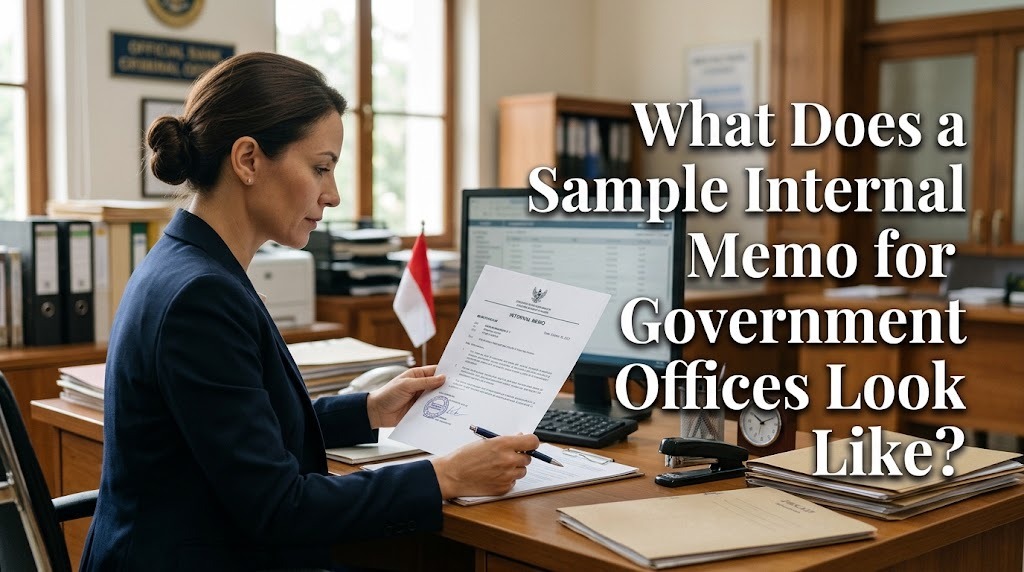
In public sector administration and civil service operations, internal memoranda serve as indispensable legal instruments that drive daily bureaucratic functions. Government agencies rely heavily on structured internal communications to convey administrative directives, announce policy shifts, authorize budget expenditures, and coordinate inter-departmental workflows. Unlike standard commercial corporate notes, an internal memorandum issued within a government office must strictly comply with official state archival codes, legal formatting guidelines, and rigorous chains of command. Understanding the precise architectural breakdown of a government memo ensures that administrative officers maintain institutional compliance, operational transparency, and administrative accountability across all state departments.
Navigating the procedural requirements of public sector correspondence requires a detailed understanding of both legal mandates and official formatting standards. This comprehensive guide details the essential structural components, operational requirements, and drafting strategies necessary to execute authoritative government memoranda.
INSTITUTIONAL HEADERS AND OFFICIAL REGISTRATION PROTOCOLS
The foundational component of any valid government internal memorandum is the institutional header and official administrative registration block located at the top of the document. Government memos must feature the official emblem or seal of the issuing state agency, accompanied by the formal title of the ministry, department, or regional administration. Immediately below the institutional heading, a standard administrative block identifies the document category, official registration tracking number, and specific archival classification codes required for public record preservation.
Accuracy in registering the document tracking number is critical for maintaining an auditable paper trail within public administration systems. This section also explicitly defines the primary recipient, the sending authority, the date of issuance, and a precise subject statement that summarizes the administrative intent. Proper completion of these registration protocols guarantees that the memorandum moves through official civil service channels without facing administrative rejection or processing delays.
LEGAL FOUNDATIONS AND STATUTORY REFERENCES
Public sector administration operates strictly within the boundaries of statutory authority and regulatory frameworks. Consequently, a government internal memorandum must explicitly establish its legal foundation in the opening section before introducing any administrative directives or operational commands. Drafting officers must cite the relevant legislation, executive orders, ministerial decrees, or previous official directives that authorize the action being taken within the memo.
Referencing the applicable statutory framework legitimizes the memorandum and protects the issuing authority from legal challenges or procedural invalidations. This explicit legal grounding provides clear context for department heads and civil servants, establishing that the instructions are issued under valid legal authority. Establishing this legal basis reinforces institutional discipline and upholds public integrity standards across all government operations.
DETAILED STATEMENT OF PURPOSE AND OPERATIONAL MANDATES
Following the establishment of legal authority, the core body of a government memorandum articulates the specific operational mandates, policy adjustments, or administrative requirements being issued. Government correspondence demands an objective, formal, and authoritative tone that avoids vague generalities or ambiguous language. The narrative must clearly define what actions are required, which civil service units are responsible for execution, and the exact timeline for full compliance.
When addressing complex administrative directives, the main text should organize information into coherent thematic paragraphs that logically walk the reader through each operational phase. Clearly defining task allocations and compliance deadlines prevents administrative confusion and ensures uniform execution across subordinate divisions. Comprehensive operational reporting within the memo body ensures complete transparency and simplifies subsequent performance evaluations by oversight bodies.
RESOURCE ALLOCATION AND FINANCIAL COMPLIANCE
When an internal government memorandum involves the expenditure of public funds or the allocation of state resources, it must incorporate strict financial compliance disclosures. The memorandum must reference the specific budgetary line items, approved departmental funds, or legislative appropriations that support the proposed activities. Including these fiscal details ensures that public funds are utilized strictly in accordance with statutory accounting standards and government procurement regulations.
In addition to identifying funding sources, the narrative should outline the required financial documentation and reporting procedures necessary for auditing purposes. Identifying these fiscal parameters within the memo body prevents unauthorized expenditures and simplifies routine financial audits by state oversight agencies. This financial clarity reinforces public trust and upholds the highest standards of fiscal responsibility in civil service administration.
AUTHORIZATION PROTOCOLS AND OFFICIAL VALIDATION
The final section of a government internal memorandum focuses on formal validation, legal authorization, and official distribution procedures. To achieve full legal effect, the memorandum must be executed by an authorized public official possessing the requisite statutory authority or formally delegated signing power. The signature block must clearly display the official's full name, formal civil service rank, employee identification number, and administrative title.
Depending on the governing administrative guidelines, official validation may also require the application of a digital security certificate or an official departmental seal. Below the authorization block, an explicit distribution list (tembusan) identifies all internal and external oversight bodies receiving copies for official record-keeping. Establishing complete authorization and distribution records guarantees that the memorandum remains legally binding, fully traceable, and actionable across the entire public sector hierarchy.
CONCLUSION
A sample internal memo for government offices functions as a legally grounded, highly structured administrative instrument designed to ensure operational transparency and procedural compliance across civil service departments. By incorporating institutional headers, statutory references, detailed operational mandates, financial disclosures, and official authorization protocols, public sector administrators can draft authoritative internal communications that withstand legal scrutiny and drive efficient governance. Mastering these standardized administrative drafting techniques is essential for maintaining institutional integrity and advancing professional public administration.
Recent Posts

Bagaimana Sistem SKS pada Program Kuliah... 22.11.2026/53 View

How Does Technology Make Daily Evaluation... 21.11.2026/82 View

Apa Strategi Menghadapi Kesenjangan antara Kompetensi... 21.11.2026/81 View

Mengapa Inventaris Aset Penting bagi Kelancaran... 21.11.2026/77 View

When Should Musicians Join a Record... 21.11.2026/82 View
