

What Equipment Do You Need to Start an Event Business?
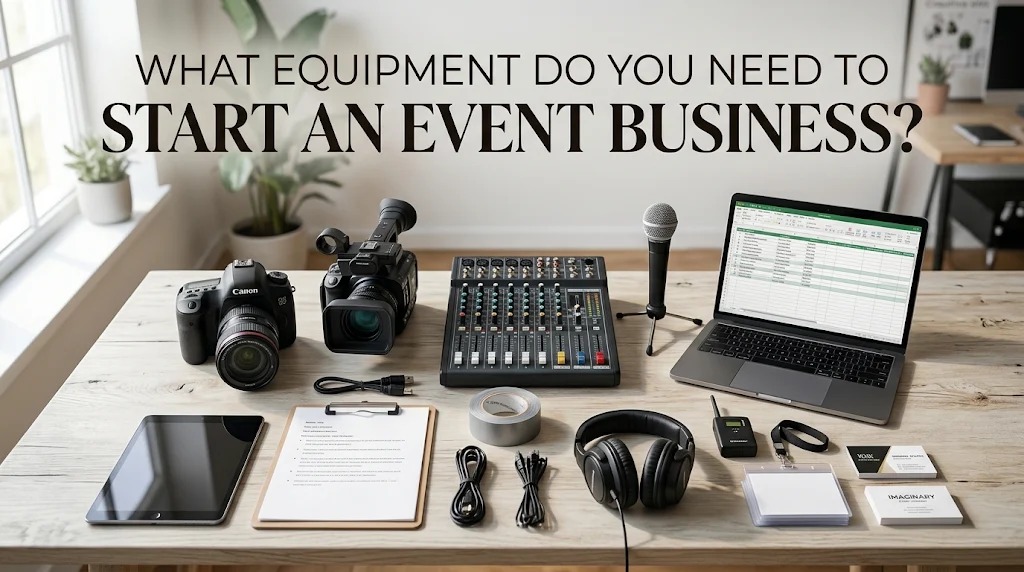
Starting an event business requires more than creativity and organizational skills. Event organizers also need suitable equipment to support planning, preparation, and event operations. The equipment required depends on the types of events a business handles, its service packages, and its available budget. Some businesses provide complete event production services, while others focus on planning and rent specialized equipment when necessary. Understanding the essential equipment can help new business owners prepare their operations, control expenses, and deliver professional event services.
OFFICE AND EVENT PLANNING EQUIPMENT
Office equipment is important for managing the administrative activities of an event business. A laptop or desktop computer helps organizers prepare proposals, create budgets, manage schedules, design presentations, and communicate with clients. A printer and scanner can also be useful for handling contracts, invoices, event documents, and other administrative files. Reliable internet access supports online meetings, research, digital marketing, and communication with vendors. These basic resources help businesses maintain organized operations from the beginning.
Event planning also requires suitable software and digital tools. Project management applications can help teams assign tasks, monitor deadlines, and track project progress. Spreadsheet programs are useful for preparing budgets and recording expenses, while presentation software helps organizers introduce event concepts to clients. Design applications can support the creation of layouts, invitations, promotional materials, and decoration concepts. By combining office equipment with appropriate digital tools, event planners can improve productivity and manage multiple projects more efficiently.
AUDIO AND VISUAL EQUIPMENT
Audio equipment is essential for events that involve speeches, presentations, entertainment, or audience interaction. Common examples include microphones, speakers, audio mixers, amplifiers, and microphone stands. The type and quantity of equipment depend on the venue size, number of participants, and event format. A small meeting may only require a few microphones and speakers, while a large conference or concert may need a more extensive sound system. Reliable audio equipment helps ensure that participants can hear announcements, presentations, and performances clearly.
Visual equipment is equally important for displaying information and creating an engaging event experience. Projectors, screens, LED displays, monitors, and presentation devices are commonly used at conferences, seminars, exhibitions, and product launches. Lighting equipment may also be needed to improve visibility and support the atmosphere of the venue. Before an event begins, technical staff should inspect and test all audio and visual systems. Proper preparation helps reduce technical interruptions and supports smooth event operations.
STAGE, DECORATION, AND FURNITURE EQUIPMENT
Stage and decoration equipment helps transform an event venue into a space that matches the client's concept. Common items include stage platforms, backdrops, banners, decorative structures, lighting stands, and display materials. The specific requirements depend on the event theme, venue conditions, and available budget. For example, a corporate conference may need a simple stage with a branded backdrop, while a product launch may require a more creative presentation area. Organizers should select decorations that support the event's purpose without making the venue feel overcrowded.
Furniture is another important part of event preparation. Tables, chairs, registration desks, podiums, and lounge furniture help create comfortable and functional spaces for guests and participants. The arrangement should consider the number of attendees, event activities, accessibility, and movement around the venue. Event organizers do not always need to purchase every item because furniture can often be rented from professional suppliers. Renting equipment can reduce initial investment costs, especially for businesses that are still developing their customer base.
REGISTRATION, COMMUNICATION, AND OPERATIONAL TOOLS
Registration equipment helps event organizers manage guest attendance and participant information. Depending on the event, this may include laptops, tablets, printers, barcode scanners, badge holders, name tags, and registration desks. Digital registration systems can make the check-in process more efficient and reduce manual paperwork. They also help organizers maintain attendance records and manage participant information. Choosing an appropriate registration system depends on the number of guests and the complexity of the event.
Communication tools are also necessary for coordinating team members during event preparation and execution. Smartphones, headsets, walkie-talkies, and reliable internet connections can help staff exchange information quickly. These tools are particularly useful at large venues where team members work in different areas. Operational supplies such as extension cables, power strips, cable organizers, tool kits, stationery, and first-aid supplies may also be needed. Preparing these resources in advance helps teams respond to practical requirements and maintain organized event operations.
HOW TO CHOOSE EQUIPMENT BASED ON YOUR BUSINESS BUDGET
New event business owners should prioritize equipment according to the services they plan to offer. Purchasing every type of equipment immediately can create unnecessary financial pressure, especially when the business has not secured many clients. A practical approach is to begin with essential office tools, communication devices, and basic operational supplies. Specialized equipment, such as large sound systems, LED screens, and extensive stage structures, can be rented when a project requires them. This approach allows businesses to provide different services without making a large initial investment.
Before purchasing or renting equipment, business owners should compare prices, quality, maintenance requirements, and supplier reliability. They should also consider storage space, transportation costs, and the frequency with which each item will be used. Equipment that is frequently needed may be more economical to purchase, while expensive items used occasionally may be better rented. Regular maintenance and proper storage can extend equipment life and reduce replacement costs. By making careful purchasing decisions, an event planning business can manage its budget while maintaining professional service standards.
CONCLUSION
Starting an event business requires suitable equipment for planning, technical production, decoration, registration, communication, and event operations. The exact requirements depend on the company's services, event types, and available budget. New business owners should prioritize essential tools and consider renting expensive equipment when necessary. Careful equipment selection, regular maintenance, and reliable supplier relationships can improve operational efficiency. With the right resources and proper planning, an event management business can deliver professional services and develop a strong foundation for future growth.
Recent Posts

Bagaimana Sistem SKS pada Program Kuliah... 22.11.2026/34 View

How Does Technology Make Daily Evaluation... 21.11.2026/68 View

Apa Strategi Menghadapi Kesenjangan antara Kompetensi... 21.11.2026/68 View

Mengapa Inventaris Aset Penting bagi Kelancaran... 21.11.2026/66 View

When Should Musicians Join a Record... 21.11.2026/67 View
