

What Equipment Enables Robots to Operate Inside Toxic Fires?
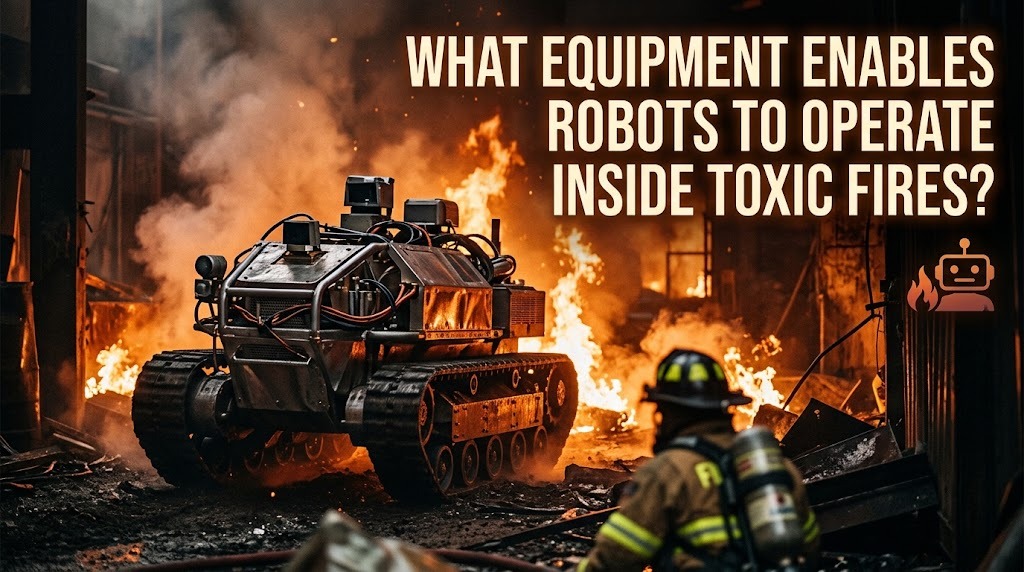
Toxic fires can create extremely dangerous conditions for firefighters and emergency response teams. Burning chemicals, industrial materials, and hazardous waste may release poisonous gases, intense heat, and dense smoke that make direct human intervention difficult. Specialized robots can enter certain hazardous areas to gather information, monitor conditions, and support firefighting operations. Their ability to function in these environments depends on protective materials, environmental sensors, heat-resistant components, and reliable communication systems.
HEAT-RESISTANT PROTECTIVE MATERIALS
Robots operating near intense fires need materials that can tolerate elevated temperatures and thermal radiation. Depending on the application, manufacturers may use heat-resistant metal alloys, ceramic components, thermal insulation, and reflective outer shields. These materials help protect sensitive electronics and mechanical parts from excessive heat. Some robots also use thermal barriers to slow heat transfer into their internal compartments. However, protection has limits, and each robot must operate within its specified temperature and exposure duration.
TOXIC GAS AND CHEMICAL SENSORS
Gas detection equipment helps robots identify hazardous substances in fire environments. Sensors may detect gases such as carbon monoxide, hydrogen sulfide, or other compounds relevant to the incident. Depending on the mission, robots can also carry chemical detectors designed to identify specific industrial hazards. The collected readings help emergency teams assess atmospheric conditions without immediately entering the affected area. Sensor selection is critical because no single detector can identify every toxic substance, and extreme heat or smoke may affect measurement reliability.
THERMAL CAMERAS AND VISUAL IMAGING
Thermal cameras allow robots to detect heat patterns and identify objects that may be difficult to see through smoke. They can help locate hotspots, monitor temperature changes, and support searches for people in suitable conditions. Conventional cameras may provide additional visual information when lighting and visibility permit. Some robotic platforms combine thermal and visual images to give operators a clearer understanding of the surroundings. These systems improve situational awareness, although thick smoke, reflective surfaces, and extreme temperatures can still limit performance.
HEAT-PROTECTED ELECTRONICS AND COOLING SYSTEMS
Electronic controllers, batteries, processors, and communication modules can fail when exposed to excessive heat. Hazardous-fire robots may therefore use insulated compartments, heat shields, thermal barriers, and specialized cooling arrangements. Some designs separate sensitive electronics from the hottest areas of the machine. Other systems use components selected for a wider operating-temperature range. Effective thermal management is essential because protecting the robot's electronics helps maintain control, sensing, and communication during a mission.
ROBUST TRACKS, WHEELS, AND ROBOTIC ARMS
Robots must move across unstable and potentially dangerous surfaces, including debris, wet floors, and uneven industrial terrain. Tracked platforms can provide better traction on some rough surfaces, while specialized wheels may suit smoother environments. Robotic arms and remotely operated tools can manipulate objects, open access points, or position firefighting equipment without requiring personnel to approach directly. Components must be selected according to the expected heat, chemical exposure, and mechanical loads. Mobility and manipulation capabilities also depend on the available space and the robot's overall design.
REMOTE CONTROL AND COMMUNICATION SYSTEMS
Reliable communication enables operators to control robots from a safer location. Some systems use wired connections, which can offer dependable communication in environments where radio signals are obstructed. Others use wireless links when signal propagation and interference conditions permit. Remote-control consoles display camera feeds, sensor measurements, robot status, and navigation information. Communication redundancy and emergency-stop functions can help reduce operational risks if the primary connection becomes unreliable.
FIRE-SUPPRESSION TOOLS AND WATER-DELIVERY SYSTEMS
Certain firefighting robots carry equipment for delivering water, foam, or other approved suppression agents. High-capacity monitors can direct firefighting streams toward selected areas while operators remain farther from the hazard. Some robots are also designed to transport hoses or position equipment near industrial fires. The appropriate suppression method depends on the materials involved, because water may worsen some chemical fires or create additional hazards. Emergency teams must identify the fire type and follow established incident-control procedures before selecting a suppression agent.
POWER SYSTEMS AND OPERATIONAL SAFEGUARDS
Robots require dependable power to operate motors, sensors, cameras, and communication equipment. Battery-powered systems offer mobility but must account for heat exposure, operating time, and battery safety. Some larger platforms may use external power supplies or specialized energy systems suited to their mission. Engineers also incorporate safeguards such as temperature monitoring, automatic shutdown thresholds, protected wiring, and emergency recovery procedures. These measures help reduce the likelihood of equipment failure during hazardous operations.
CONCLUSION
Robots designed for toxic-fire environments rely on heat-resistant materials, gas sensors, thermal cameras, protected electronics, robust mobility systems, and dependable remote-control equipment. Some also carry specialized firefighting tools to help contain hazardous incidents. No robot is completely resistant to every combination of heat, toxic chemicals, and structural danger. Careful equipment selection, environmental assessment, and compliance with operational safety limits are therefore essential for effective deployment.
Recent Posts

Bagaimana Sistem SKS pada Program Kuliah... 22.11.2026/49 View

How Does Technology Make Daily Evaluation... 21.11.2026/76 View

Apa Strategi Menghadapi Kesenjangan antara Kompetensi... 21.11.2026/78 View

Mengapa Inventaris Aset Penting bagi Kelancaran... 21.11.2026/74 View

When Should Musicians Join a Record... 21.11.2026/78 View
