

What Ethical Principles Should Every Radio Announcer Follow?
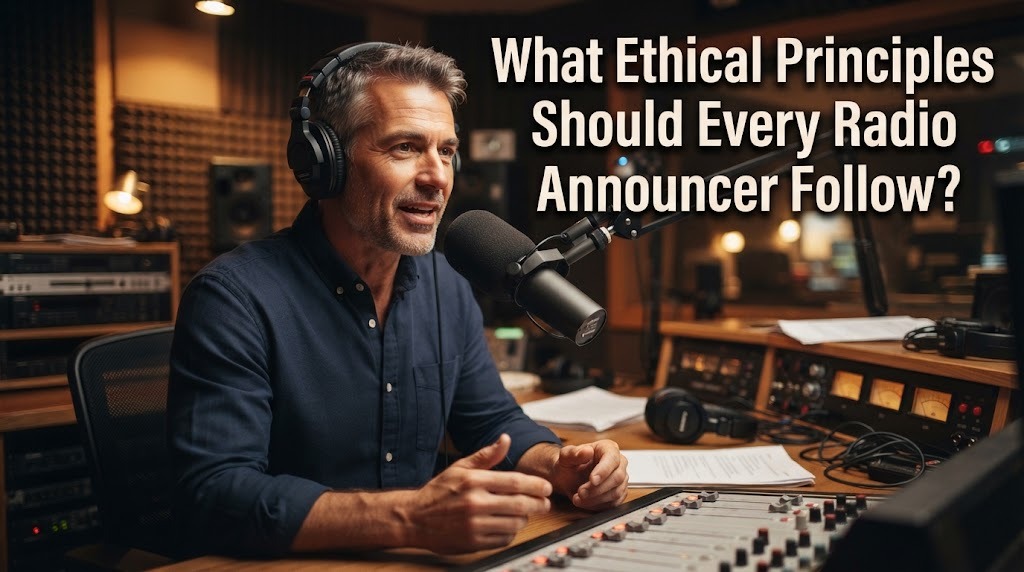
Radio announcers have an important responsibility because their words can influence how audiences understand information, events, and social issues. A professional announcer should not focus only on having a good voice or entertaining listeners. They also need to follow ethical principles when presenting information, interacting with guests, and communicating with the public.
Broadcasting ethics help protect audiences from misleading information and inappropriate content. Ethical behavior also strengthens the credibility of a radio station and helps create a trustworthy relationship with listeners. By applying professional standards consistently, radio announcers can contribute to responsible and reliable broadcasting.
PROVIDE ACCURATE INFORMATION
Accuracy is one of the most important ethical principles for every radio announcer. Information should be checked before it is presented to listeners, particularly when discussing news, public events, statistics, or sensitive issues. An announcer should avoid presenting rumors or unverified claims as established facts. If an error occurs, it should be corrected clearly and promptly.
Accuracy also requires understanding the context of information. Taking a statement out of context can create a misleading impression even when individual words are technically correct. Announcers should therefore review their sources and understand the subject before speaking about it. Careful preparation can reduce the risk of spreading inaccurate information.
AVOID MISLEADING CONTENT
Radio announcers should communicate information honestly and avoid deliberately creating false or misleading impressions. Sensational language can attract attention, but it may also distort the meaning of an event. Headlines, introductions, and descriptions should reflect the actual content of the discussion.
Announcers should also be careful when presenting uncertain information. When facts are still developing, they can explain that the information has not yet been confirmed. This approach allows listeners to distinguish between verified facts, developing reports, and opinions. Clear communication helps protect audience trust.
RESPECT PRIVACY
Respecting personal privacy is another important broadcasting principle. Announcers should think carefully before sharing someone's personal information, especially when the information is not relevant to the public interest. Sensitive personal details should not be discussed simply to attract attention or increase entertainment value.
Privacy is particularly important when interviewing members of the public or discussing personal experiences. Guests and callers should be treated with dignity and consideration. Announcers should also follow applicable laws, station policies, and professional standards concerning privacy and consent. Responsible handling of personal information can prevent unnecessary harm.
USE RESPECTFUL LANGUAGE
Radio announcers should use language that respects different backgrounds, opinions, and experiences. Insults, degrading expressions, and discriminatory language can create an uncomfortable or harmful environment for listeners. Even during humorous programs, announcers should consider how their words may affect individuals or communities.
Respectful language does not mean every broadcast must be formal. Announcers can still be entertaining, humorous, and conversational while maintaining professionalism. They should consider the audience, topic, and broadcasting context before choosing particular expressions. This balance helps create content that is engaging without becoming unnecessarily offensive.
SEPARATE FACTS FROM OPINIONS
Announcers may discuss opinions, commentary, or personal perspectives depending on the format of their programs. However, audiences should be able to recognize the difference between an opinion and verified information. Presenting personal views as objective facts can confuse listeners and reduce the credibility of a broadcast.
When discussing controversial subjects, announcers should provide appropriate context and avoid deliberately misrepresenting different viewpoints. Interview programs require particular care because guests may express opinions that do not represent the station or announcer. Clear framing can help listeners understand who is making a particular claim or statement.
AVOID CONFLICTS OF INTEREST
Professional radio announcers should be aware of situations that could create conflicts of interest. Personal relationships, financial interests, sponsorships, or other connections can potentially influence how a topic is presented. If such relationships are relevant to the broadcast, appropriate disclosure may be necessary according to professional and organizational standards.
Commercial content also requires careful handling. Announcers should distinguish advertisements, sponsored material, and editorial content when necessary. This helps audiences understand the purpose of a message. Maintaining transparency can protect both the announcer's credibility and the reputation of the radio station.
HANDLE INTERVIEWS RESPONSIBLY
Interviewing requires more than asking interesting questions. Announcers should treat guests fairly and avoid deliberately manipulating their answers. Questions can be challenging, but they should remain relevant to the subject and appropriate to the broadcasting context.
Announcers should also listen carefully rather than interrupting unnecessarily. If a guest makes a potentially serious factual claim, the announcer may need to request clarification or provide appropriate context. Good interview ethics create a professional environment where meaningful discussion can take place.
PROTECT VULNERABLE PEOPLE
Extra care should be taken when broadcasting information involving children, victims, people experiencing difficult circumstances, or other vulnerable individuals. Their personal experiences should not be used simply as entertainment. Announcers should consider whether sharing particular details could expose someone to unnecessary embarrassment, harassment, or other harm.
Sensitive topics also require careful language and presentation. Discussions involving violence, tragedy, personal trauma, or serious social problems should avoid unnecessary sensationalism. The goal should be to inform audiences responsibly while treating affected individuals with dignity.
CORRECT MISTAKES RESPONSIBLY
Mistakes can happen during live broadcasting, even when announcers prepare carefully. A professional response is to acknowledge significant errors and provide the correct information as soon as reasonably possible. Ignoring an important mistake can allow incorrect information to continue circulating among listeners.
Corrections should be clear rather than confusing. The announcer can briefly explain what was incorrect and provide the accurate information. Learning from mistakes can also improve future broadcasting practices. Accountability is an important part of maintaining audience trust.
FOLLOW BROADCASTING RULES AND PROFESSIONAL STANDARDS
Radio announcers work within rules established by their broadcasting organizations and relevant authorities. These rules may address areas such as advertising, harmful or inappropriate content, copyright, privacy, defamation, and other broadcasting responsibilities. Announcers should understand the standards that apply to their work and follow them consistently.
Professional standards also involve punctuality, preparation, teamwork, and responsible use of broadcasting equipment. Ethical broadcasting is not limited to what is said on air. The way an announcer works with producers, guests, colleagues, and listeners also reflects professional conduct.
CONCLUSION
Every radio announcer should follow ethical principles that promote accuracy, honesty, respect, privacy, fairness, and accountability. These principles help ensure that broadcasts provide useful information without unnecessarily misleading or harming audiences. Ethical conduct is especially important because listeners may rely on radio programs for information and guidance.
A professional announcer should therefore think carefully before speaking, verify important information, respect guests and listeners, and correct significant mistakes. By combining strong broadcasting skills with ethical responsibility, radio announcers can build audience trust and contribute positively to the media industry.
Recent Posts

Bagaimana Sistem SKS pada Program Kuliah... 22.11.2026/35 View

How Does Technology Make Daily Evaluation... 21.11.2026/69 View

Apa Strategi Menghadapi Kesenjangan antara Kompetensi... 21.11.2026/69 View

Mengapa Inventaris Aset Penting bagi Kelancaran... 21.11.2026/67 View

When Should Musicians Join a Record... 21.11.2026/68 View
