

What Facilities Should Be Available on a Campus Bus?
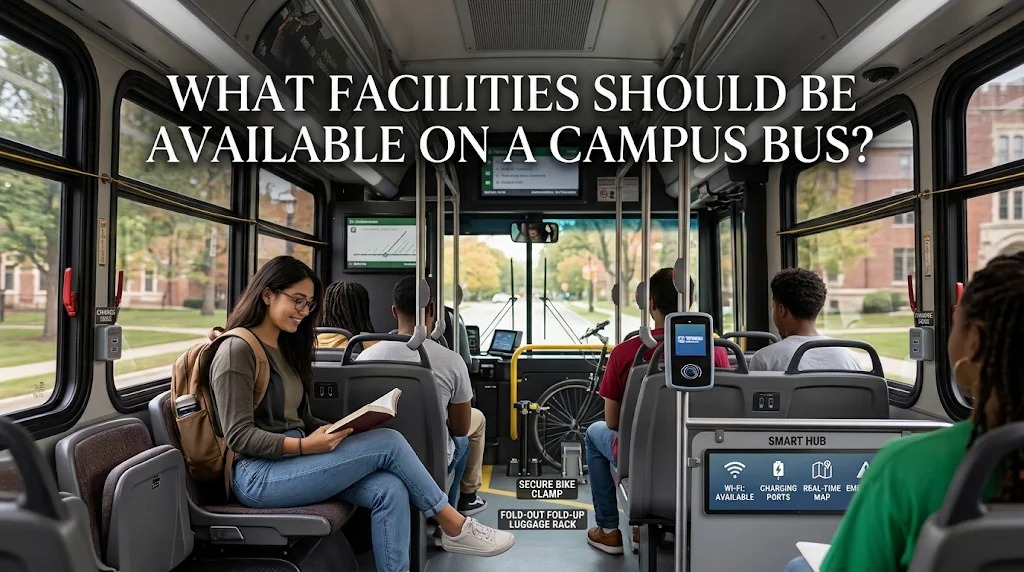
A campus bus is an important transportation facility that helps students travel between different areas of a university conveniently. To provide a comfortable and safe journey, campus buses should be equipped with facilities that support passengers' needs. These facilities are not only related to seating and air circulation but also include safety equipment, accessibility features, and modern technology.
Providing adequate facilities can improve the quality of campus transportation services and encourage more students to use shared transportation. A well-equipped campus bus can also help universities create a more organized, inclusive, and environmentally friendly transportation system. Therefore, understanding the essential facilities available on a campus bus is important for improving students' daily mobility.
COMFORTABLE SEATING AND AIR CONDITIONING
Comfortable seating is one of the most basic facilities that should be available on a campus bus. Students may use the service several times a day, especially when traveling between classrooms, libraries, laboratories, and other campus buildings. Properly designed seats can help passengers feel comfortable during short or relatively long journeys. The seating arrangement should also provide enough space for passengers to enter, exit, and move safely inside the vehicle.
Air conditioning or adequate ventilation is another important facility. A comfortable temperature can make the journey more enjoyable, particularly in areas with hot weather. Clean windows, sufficient lighting, and a tidy interior also contribute to a pleasant travel experience. Regular cleaning and maintenance should be conducted to ensure that these facilities remain in good condition.
SAFETY AND EMERGENCY EQUIPMENT
Safety equipment is essential for protecting passengers during their journeys. Every campus bus should have properly functioning seat belts, emergency exits, fire extinguishers, and first aid kits. These facilities help passengers and drivers respond more effectively when unexpected situations occur. Emergency instructions should also be displayed in visible locations so passengers understand what to do when necessary.
In addition to emergency equipment, campus buses should undergo regular vehicle inspections. Brakes, tires, lights, doors, and other important components must be checked to ensure they operate properly. Security cameras can also be installed to monitor activities inside the vehicle and help prevent inappropriate behavior. Together, these safety measures support a more secure transportation environment for students and other passengers.
ACCESSIBILITY FACILITIES FOR ALL STUDENTS
Campus buses should provide accessible facilities so that students with different physical abilities can use the transportation service. Wheelchair ramps or lifts, designated wheelchair spaces, and suitable handrails can make boarding and traveling easier for passengers with mobility limitations. These facilities are particularly important for creating equal opportunities to access educational buildings and campus activities.
Priority seating should also be available for passengers who need additional assistance, including students with disabilities and those with temporary mobility difficulties. Clear signs and accessible information can help passengers identify designated areas more easily. Universities should consider accessibility when purchasing vehicles and designing transportation routes. An inclusive campus bus service ensures that transportation facilities can accommodate a wider range of student needs.
TECHNOLOGY AND INFORMATION FACILITIES
Modern technology can make campus bus services more efficient and convenient. GPS tracking systems allow universities to monitor vehicle locations and help students estimate bus arrival times. Some institutions may also provide mobile applications that display routes, operating schedules, and service announcements. These features reduce uncertainty and help students plan their journeys more effectively.
Other useful facilities include digital information displays, electronic payment systems, and free Wi-Fi when available. Digital displays can show the next stop, important announcements, and route information. Cashless payment options can make transactions faster and easier for passengers. Although not every campus bus needs all these technologies, selecting suitable systems can improve transportation management and passenger satisfaction.
CONCLUSION
A well-equipped campus bus should provide comfortable seating, proper ventilation, safety equipment, accessibility features, and useful technology. These facilities help students travel more safely, comfortably, and efficiently between different university locations. Universities should regularly evaluate their transportation services to ensure that all equipment remains functional and meets passengers' needs. By providing appropriate facilities, educational institutions can create a reliable, inclusive, and student-friendly campus transportation system.
Recent Posts

Bagaimana Sistem SKS pada Program Kuliah... 22.11.2026/31 View

How Does Technology Make Daily Evaluation... 21.11.2026/67 View

Apa Strategi Menghadapi Kesenjangan antara Kompetensi... 21.11.2026/66 View

Mengapa Inventaris Aset Penting bagi Kelancaran... 21.11.2026/64 View

When Should Musicians Join a Record... 21.11.2026/65 View
