

What Factors Can Affect Color Blindness Test Results?
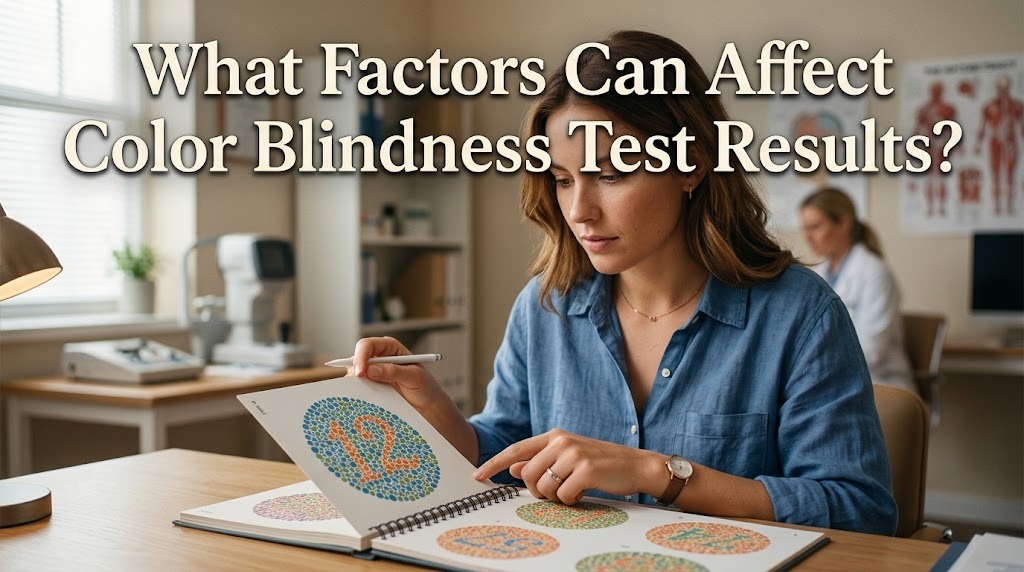
Color blindness tests are commonly used to identify difficulties in distinguishing certain colors, particularly red, green, and blue. These examinations help determine whether someone has a color vision deficiency and whether further eye evaluations are necessary. Although color blindness tests are generally simple and reliable, their results can be influenced by several factors. Lighting conditions, eye health, testing methods, and the quality of examination materials can all affect how accurately a person identifies colors.
Understanding the factors that affect color blindness test results is important for obtaining reliable examination outcomes. Incorrect testing conditions may cause someone to misidentify colors or produce results that do not accurately represent their actual visual abilities. By recognizing these influences, individuals and healthcare professionals can ensure that color vision examinations are performed more appropriately.
LIGHTING CONDITIONS DURING THE EXAMINATION
Lighting is one of the most important factors that can affect color blindness test results. Color vision examinations require appropriate illumination so that the colors displayed on test materials can be recognized accurately. If the examination room is too dark, certain colors may become difficult to distinguish. On the other hand, excessive brightness or direct glare can change how colors appear and make the examination less reliable.
Different lighting sources may also produce different color appearances. For example, fluorescent lighting, natural daylight, and ordinary household lamps can have different color temperatures that influence visual perception. The Ishihara Color Blindness Test should therefore be performed under suitable and standardized lighting conditions. Proper illumination helps reduce unnecessary visual errors and supports more consistent examination results.
QUALITY AND CONDITION OF TEST MATERIALS
The quality of test materials plays an important role in determining the accuracy of color blindness examinations. Tests such as the Ishihara test use specially designed colored plates containing numbers or patterns. These materials must maintain their original colors because even small changes in color intensity can influence how the images are perceived. If the plates become faded, damaged, or discolored, the results may no longer reflect the intended examination standards.
Digital color blindness tests can also be affected by the quality of the screen being used. Different smartphones, computers, and tablets may display colors differently because of variations in screen technology, brightness, and color settings. A low-quality display or an incorrectly calibrated screen can make certain colors appear lighter, darker, or less distinct. For this reason, standardized physical test materials and professionally administered examinations are generally more reliable than casual online tests.
EYE HEALTH AND EXISTING VISION PROBLEMS
A person's eye health can influence their ability to recognize colors during an examination. Conditions affecting the retina, optic nerve, or other visual structures may interfere with the way color information is detected and transmitted to the brain. For example, certain retinal disorders and optic nerve diseases can cause acquired color vision deficiencies. These conditions may make it difficult to distinguish colors even in individuals who previously had normal color vision.
Other vision problems may also interfere with test performance. Blurred vision, cataracts, and reduced visual clarity can make small numbers or patterns on test plates harder to recognize. In addition, some eye conditions may cause changes in color perception that are unrelated to inherited color blindness. Therefore, healthcare professionals may need to evaluate overall eye health before interpreting unusual color blindness test results.
AGE AND VISUAL DEVELOPMENT
Age can influence color vision test performance, particularly in children and older adults. Young children may have difficulty understanding examination instructions or identifying numbers and patterns displayed on test plates. This does not necessarily mean they have color blindness because their responses may be affected by their reading ability, attention, or familiarity with the examination. Age-appropriate testing methods can help improve the reliability of their results.
In older adults, certain age-related changes in the eyes may affect color perception. For example, cataracts can cause the eye's natural lens to become cloudy, sometimes changing the appearance of colors. Other age-related eye conditions may also interfere with the ability to recognize color differences. For this reason, unusual test results in older individuals should be interpreted alongside their overall visual health and medical history.
MEDICATIONS AND MEDICAL CONDITIONS
Certain medications and medical conditions can affect how a person perceives colors. Some medicines may cause changes in color vision as a side effect, depending on the substance, dosage, and individual response. These effects may influence the ability to distinguish specific colors during an examination. However, not everyone who takes these medications will experience changes in color perception.
Medical conditions affecting the retina, optic nerve, or nervous system may also contribute to acquired color vision deficiencies. Diabetes-related eye complications, glaucoma, and certain neurological disorders are examples of conditions that may affect visual function. Unlike inherited color blindness, acquired color vision problems may develop gradually or appear suddenly. Individuals who notice new changes in color perception should consult an eye care professional to identify possible underlying causes.
CONCENTRATION AND UNDERSTANDING OF TEST INSTRUCTIONS
Concentration is another factor that can influence color blindness test results. During an examination, individuals need to focus on the displayed images and identify the numbers, shapes, or patterns correctly. Distractions, fatigue, stress, and a lack of attention may reduce their ability to respond accurately. These factors can lead to incorrect answers even when a person does not have a color vision deficiency.
Understanding the examination instructions is equally important. Some tests require individuals to identify numbers, while others ask them to follow colored lines or recognize specific patterns. If someone misunderstands the instructions, their responses may not accurately represent their color perception. Healthcare professionals should therefore explain the procedure clearly and provide sufficient time for individuals to understand what they need to do.
DISTANCE AND POSITION WHEN VIEWING TEST PLATES
The distance between the individual and the test materials can affect the accuracy of color blindness examinations. Test plates are designed to be viewed from a recommended distance so that their dots, numbers, and patterns appear as intended. If someone sits too close or too far away, the visual details may become harder to recognize. This can lead to incorrect responses and affect the interpretation of the examination.
Viewing angle and positioning are also important, especially when using printed or digital test materials. Reflections, screen glare, and unusual viewing angles can change the appearance of colors. During professional examinations, healthcare providers follow recommended viewing distances and positions to maintain consistent testing conditions. These procedures help minimize avoidable errors and improve the reliability of the results.
CONCLUSION
Color blindness test results can be influenced by several factors, including lighting conditions, test material quality, eye health, age, medications, concentration, and viewing distance. These factors may affect how accurately individuals recognize colors and identify patterns during examinations. Therefore, an incorrect answer does not always indicate that someone has color blindness.
To obtain more reliable results, color vision examinations should be performed using appropriate equipment, standardized lighting, and clear instructions. Professional evaluations are particularly important when someone experiences new or unusual changes in color perception. By understanding these influencing factors, individuals can receive more accurate assessments and appropriate recommendations for maintaining their eye health.
Recent Posts

Bagaimana Sistem SKS pada Program Kuliah... 22.11.2026/40 View

How Does Technology Make Daily Evaluation... 21.11.2026/71 View

Apa Strategi Menghadapi Kesenjangan antara Kompetensi... 21.11.2026/73 View

Mengapa Inventaris Aset Penting bagi Kelancaran... 21.11.2026/69 View

When Should Musicians Join a Record... 21.11.2026/73 View
