

What Factors Encourage Political Bribery in Modern Democratic Systems?
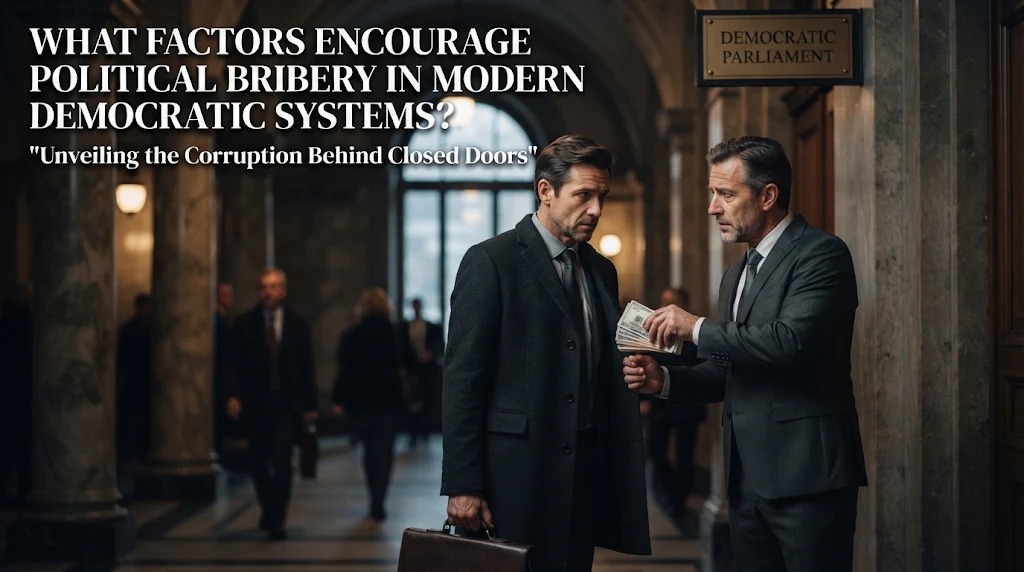
Political bribery is a serious challenge that can weaken democratic systems and damage public trust in government institutions. It occurs when individuals or organizations offer money, gifts, services, or other benefits to influence political decisions for personal or organizational interests. Although democracy is based on fairness, equality, and public participation, bribery can create opportunities for powerful individuals to control political processes. This practice may affect elections, government policies, public procurement, and the distribution of national resources. Understanding the factors that encourage political bribery is important for identifying its causes and developing effective strategies to prevent corruption in modern democratic systems.
WEAK LAW ENFORCEMENT AND INSTITUTIONAL SUPERVISION
Weak law enforcement is one of the main factors that encourage political bribery in modern democratic systems. When regulations are not applied consistently, individuals involved in bribery may believe that they can avoid legal consequences. Investigations that lack independence, limited institutional authority, and slow judicial processes can make corruption more difficult to control. In some situations, public officials may use their political influence to interfere with investigations or protect individuals involved in illegal activities. These conditions create opportunities for bribery to continue within government institutions.
In addition, weak institutional supervision allows government officials to misuse their authority without sufficient monitoring. For example, public procurement processes may become vulnerable to bribery when financial transactions and contract decisions are not properly examined. The absence of independent oversight can also make it difficult to identify suspicious agreements between politicians and business organizations. Therefore, strong legal enforcement, independent investigations, and effective institutional supervision are necessary to reduce opportunities for political bribery.
PERSONAL GREED AND ABUSE OF POLITICAL POWER
Personal greed is another important factor that encourages political bribery. Some individuals enter political positions to obtain financial benefits, expand their business interests, or increase their personal influence. Instead of prioritizing public responsibilities, they may use their authority to receive money, gifts, or special advantages from other parties. This behavior creates conflicts of interest because government decisions are influenced by private benefits rather than the needs of society. When personal interests become more important than public responsibilities, the risk of corruption increases.
The abuse of political power can also make bribery easier to carry out. Officials who control important decisions, such as government contracts, business permits, and public appointments, may misuse their positions to demand or accept illegal payments. For example, an official might provide special treatment to a company in exchange for financial rewards. Such practices create unfair advantages and weaken the principle that everyone should receive equal treatment under the law. Promoting political ethics, enforcing accountability, and monitoring officials' financial interests are important measures to prevent this behavior.
HIGH POLITICAL CAMPAIGN COSTS AND FINANCIAL INTERESTS
High political campaign costs can encourage bribery because candidates and political parties often need substantial financial resources to compete in elections. Campaign activities may involve advertising, public events, transportation, communication, and organizational expenses. When candidates depend heavily on financial support from wealthy individuals or business organizations, they may become vulnerable to improper agreements. Some donors may expect special treatment or favorable government policies in return for their financial contributions. This situation can create a relationship between political funding and private interests.
Furthermore, a lack of campaign finance transparency makes it difficult for citizens and authorities to identify the actual sources of political funding. Hidden donations, unclear financial reports, and unofficial transactions can create opportunities for bribery and other forms of political corruption. For example, a business organization may secretly provide financial support to a political candidate in exchange for future government contracts. To address this problem, political parties should report their campaign income and expenses accurately. Clear financial regulations and independent audits can help ensure that political funding does not become a tool for buying political influence.
LOW PUBLIC AWARENESS AND POLITICAL EDUCATION
Limited public awareness can contribute to the continuation of political bribery in democratic systems. Some citizens may not fully understand how bribery damages public institutions, economic development, and democratic fairness. They may consider money or gifts offered during political campaigns as ordinary political activities rather than practices that can violate election laws. This lack of understanding can make communities more vulnerable to vote buying and other forms of political manipulation. As a result, corrupt political practices may continue without receiving sufficient public criticism.
Political education is important because it helps citizens recognize illegal political activities and understand their democratic rights. Through education, people can learn to evaluate political candidates based on their qualifications, integrity, and proposed policies rather than financial rewards. Schools, universities, community organizations, and public institutions can contribute by providing information about political ethics and anti-corruption efforts. Citizens should also be encouraged to report suspicious activities through appropriate legal channels. Increasing public awareness can strengthen social responsibility and create greater resistance to political bribery.
ECONOMIC INEQUALITY AND LACK OF POLITICAL TRANSPARENCY
Economic inequality can create conditions that encourage political bribery, particularly in communities where many people experience financial difficulties. Individuals with limited income may become more vulnerable to offers of money, basic necessities, or other material benefits during elections. Political actors may take advantage of these circumstances to influence voting decisions and gain electoral support. This situation weakens the principle of free political participation because financial pressure can affect individual choices. Economic inequality can also increase the influence of wealthy groups that have greater access to political decision-makers.
Meanwhile, a lack of political transparency allows bribery to develop through hidden transactions and secret agreements. When government budgets, political donations, procurement activities, and policy-making processes are difficult to access, citizens have fewer opportunities to monitor possible misconduct. Transparent institutions make it easier to identify conflicts of interest and hold public officials accountable. Governments should provide accessible public information, strengthen financial reporting systems, and encourage independent monitoring. Combining transparency with fair economic opportunities can help reduce the conditions that allow political bribery to grow.
CONCLUSION
Political bribery in modern democratic systems is encouraged by several interconnected factors, including weak law enforcement, personal greed, abuse of political power, high campaign costs, low public awareness, economic inequality, and limited transparency. These conditions create opportunities for individuals and organizations to influence government decisions through illegal benefits. If left unaddressed, political bribery can weaken democratic institutions, damage public trust, and create unfair competition in political and economic activities.
Preventing political bribery requires cooperation between governments, political parties, law enforcement agencies, and citizens. Strong regulations, transparent political financing, independent supervision, and effective political education are essential to reducing corruption. Citizens must also participate responsibly by rejecting vote buying and supporting leaders with strong ethical values. Through consistent reforms and public involvement, democratic systems can become more transparent, accountable, and focused on the interests of society.
Recent Posts

How Does Technology Make Daily Evaluation... 21.11.2026/58 View

Apa Strategi Menghadapi Kesenjangan antara Kompetensi... 21.11.2026/60 View

Mengapa Inventaris Aset Penting bagi Kelancaran... 21.11.2026/56 View

When Should Musicians Join a Record... 21.11.2026/55 View

Daily Evaluation or Daily Planning Which... 21.11.2026/63 View
