

What Factors Influence Population Density in a Country?
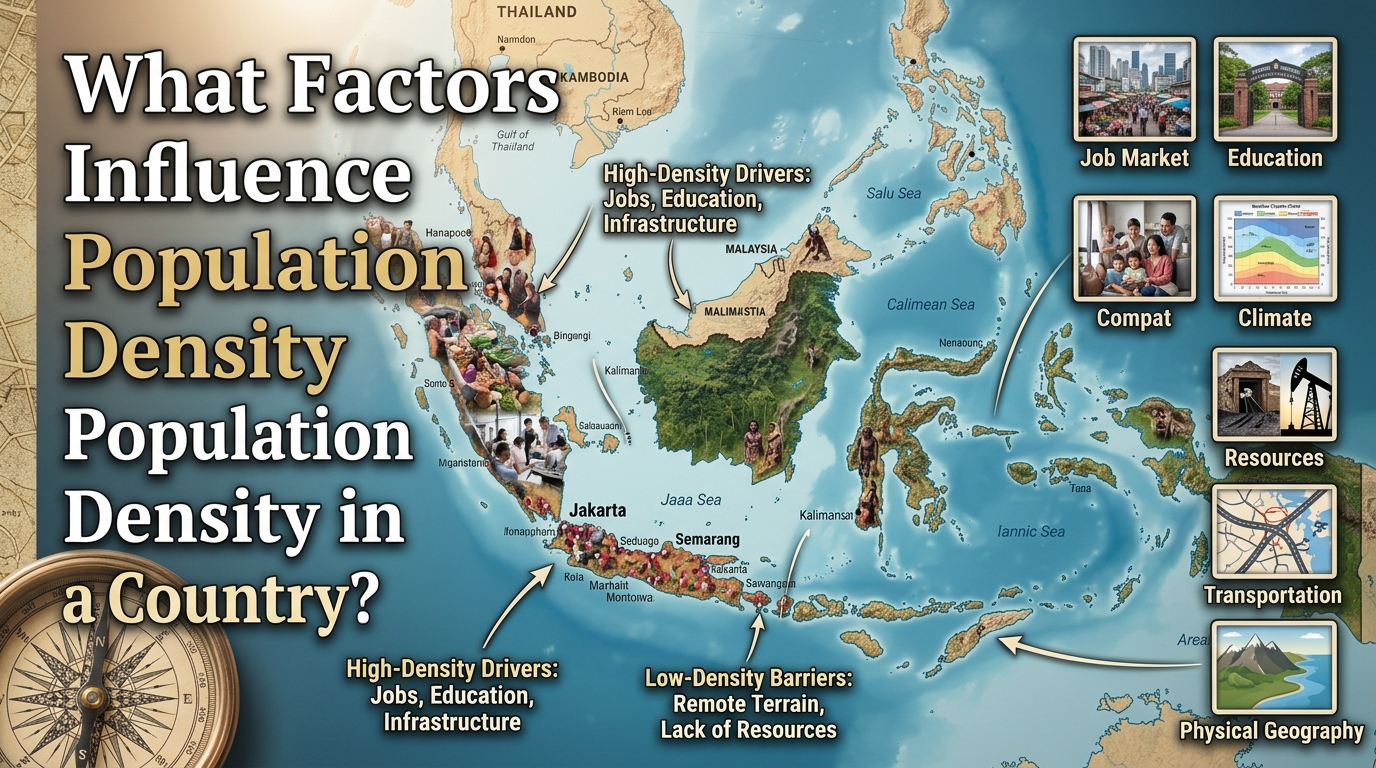
Population density is an important indicator used to understand how people are distributed across a country. Some countries have large populations concentrated in relatively small areas, while others have fewer residents spread across extensive territories. These differences are influenced by various factors, including geographical conditions, economic development, climate, infrastructure, and government policies. For example, countries with developed industries and extensive employment opportunities often attract more people to urban centers. Understanding the factors that influence population density helps governments plan infrastructure, manage natural resources, and improve living conditions for their populations.
WHAT IS POPULATION DENSITY?
Population density refers to the average number of people living within a specific unit of land area. It is commonly measured in people per square kilometer and calculated by dividing the total population by the country's land area. This measurement provides an overview of how concentrated or spread out a population is across a territory. Countries with many residents living in relatively small areas generally have higher population densities.
However, population density does not always show how people are distributed within a country. A country may have a high average population density while containing large areas with very few residents. For this reason, population density should also be considered alongside geographical conditions, settlement patterns, and regional population differences. These details provide a more complete understanding of a country's population distribution.
GEOGRAPHICAL CONDITIONS AND LAND AVAILABILITY
Geographical conditions strongly influence where people choose to establish settlements. Areas with flat land, fertile soil, accessible water sources, and suitable natural environments are generally more attractive for residential and agricultural activities. These conditions make it easier to build houses, develop transportation networks, and support economic activities. As a result, plains, river valleys, and certain coastal regions often have relatively high population concentrations.
In contrast, mountainous regions, deserts, dense forests, and areas with difficult terrain may have fewer residents. These locations can create challenges for transportation, construction, agriculture, and access to public services. The availability of suitable land also affects how settlements expand as populations grow. Therefore, the physical characteristics and size of usable land play an important role in determining population density.
CLIMATE AND NATURAL RESOURCES
Climate is another important factor that influences population density in a country. Regions with moderate temperatures, sufficient rainfall, and relatively stable weather conditions are often more suitable for human settlements. These conditions support agriculture, provide comfortable living environments, and make certain economic activities easier to develop. Consequently, areas with favorable climates may attract larger populations over time.
Natural resources also influence population distribution because people tend to settle near resources that support their daily needs and livelihoods. Access to clean water, fertile agricultural land, forests, minerals, and energy resources can encourage residential and industrial development. However, resource availability alone does not guarantee high population density. Proper infrastructure, economic opportunities, and sustainable resource management are also necessary to support growing communities.
ECONOMIC DEVELOPMENT AND EMPLOYMENT OPPORTUNITIES
Economic development has a significant impact on population density because people often move to places where they can find better employment and income opportunities. Countries with developed industries, businesses, trade centers, and service sectors may attract residents to major economic regions. These locations provide opportunities in manufacturing, technology, education, healthcare, and other professional fields. As more people move into these areas, population concentrations may increase.
In countries with limited economic opportunities, population growth may be concentrated in only a few developed cities. Rural communities may experience migration as residents search for better jobs and living conditions elsewhere. This movement can create differences in population density between urban and rural areas. Therefore, balanced economic development is important for supporting communities across different regions.
INFRASTRUCTURE AND PUBLIC FACILITIES
The availability of infrastructure influences how attractive a region is for residential and economic activities. Roads, bridges, public transportation, electricity, clean water, and internet access make daily life more convenient. Regions with reliable infrastructure are generally better prepared to support businesses and growing communities. These advantages can encourage people to settle in areas with well-developed facilities.
Public services also contribute to population concentration. Schools, universities, hospitals, shopping centers, and government offices attract residents because they provide essential services and opportunities. Areas with limited facilities may experience slower population growth because people need to travel farther to meet their daily needs. Improving infrastructure and public services can therefore support regional development and influence population distribution.
URBANIZATION AND POPULATION MIGRATION
Urbanization is the process through which an increasing proportion of a country's population lives in urban areas. It often occurs when people move from rural communities to cities in search of employment, education, healthcare, and better living conditions. As a result, major cities may experience rapid population growth and higher population density. This process can also encourage the development of new residential and commercial areas.
Population migration can occur within a country or across international borders. Internal migration changes how people are distributed between regions, while international migration affects the population size of countries. Immigration can increase population density in particular destinations, whereas emigration may reduce the number of residents in the countries people leave. These movements are influenced by economic conditions, political stability, family connections, and quality of life.
GOVERNMENT POLICIES AND POLITICAL STABILITY
Government policies can influence population density through decisions about housing, transportation, infrastructure, and regional development. Investments in less developed areas can encourage businesses and residents to expand beyond major cities. Governments may also establish new administrative centers, industrial zones, or economic development programs to distribute economic activities more evenly. These policies can gradually change population distribution within a country.
Political stability and security are equally important because people generally prefer to live in places where they feel safe and can plan their future. Conflict, political uncertainty, and social instability may encourage residents to relocate to safer regions or other countries. In contrast, stable political conditions can attract investment, create employment opportunities, and support long-term settlement. Therefore, effective governance plays an important role in maintaining balanced population development.
BIRTH RATES, DEATH RATES, AND POPULATION GROWTH
Birth rates and death rates influence population density by affecting the number of people living in a country over time. Countries with high birth rates may experience faster population growth, especially when death rates are relatively low. As the population increases, demand for housing, food, education, healthcare, and other essential services may also rise. If the land area remains unchanged, population density will generally increase.
On the other hand, countries with low birth rates and aging populations may experience slower population growth or population decline. Improved healthcare and longer life expectancy can also affect the age structure and total population of a country. Migration must also be considered because population growth is influenced by both natural population change and the movement of people. These demographic factors help explain why population density changes over time.
WHY DO COUNTRIES HAVE DIFFERENT POPULATION DENSITIES?
Countries have different population densities because they have different geographical characteristics, economic conditions, population sizes, and land areas. A small country with a large population may have a much higher population density than a large country with fewer residents. Similarly, countries with extensive deserts, mountains, or forests may have large territories but relatively low population concentrations. These differences demonstrate that total population alone cannot determine population density.
Economic opportunities, infrastructure, migration, and government policies also contribute to these variations. Some countries have highly developed urban centers that attract residents from different regions. Others have populations distributed more evenly because economic activities and public facilities are available across wider areas. Therefore, each country's population density reflects a combination of physical, social, economic, and demographic conditions.
CONCLUSION
Population density in a country is influenced by several interconnected factors, including geographical conditions, climate, natural resources, economic development, infrastructure, urbanization, migration, and government policies. Birth rates, death rates, and population growth also determine how population concentrations change over time. These factors explain why some countries have densely populated territories while others have relatively few residents across large areas.
Understanding these influences is essential for effective national planning and sustainable development. Governments can use population information to improve public services, develop infrastructure, manage natural resources, and reduce regional inequalities. With appropriate planning, countries can create more balanced settlements and improve the quality of life for their populations.
Recent Posts

Bagaimana Sistem SKS pada Program Kuliah... 22.11.2026/33 View

How Does Technology Make Daily Evaluation... 21.11.2026/67 View

Apa Strategi Menghadapi Kesenjangan antara Kompetensi... 21.11.2026/67 View

Mengapa Inventaris Aset Penting bagi Kelancaran... 21.11.2026/65 View

When Should Musicians Join a Record... 21.11.2026/66 View
