

What Features Make Museum Guide Robots More Interactive?
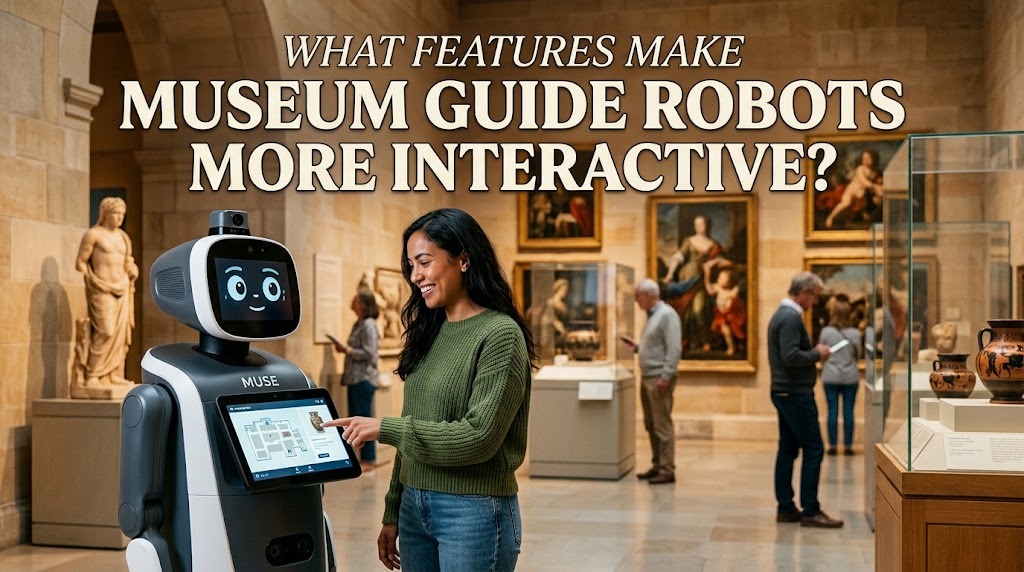
Museum guide robots are designed to help visitors explore exhibitions, discover historical information, and navigate museum spaces. Unlike traditional information displays, these robots can communicate directly with visitors through speech, touchscreens, facial expressions, and interactive activities. Their effectiveness depends on how well they respond to visitor needs and make learning more engaging. By combining artificial intelligence, multimedia content, and navigation technology, museum guide robots can create more personalized and accessible experiences.
NATURAL VOICE INTERACTION
Voice interaction allows visitors to ask questions and receive spoken explanations without needing to operate a touchscreen. Speech recognition technology helps robots identify spoken requests, while text-to-speech systems convert responses into audible explanations. Visitors can ask about historical objects, exhibition themes, or museum facilities. Natural conversational responses can make the experience feel more welcoming and convenient. However, robots must account for background noise, different accents, and visitors who prefer other communication methods.
TOUCHSCREEN AND MULTIMEDIA CONTENT
Touchscreens give visitors another way to interact with museum guide robots. Through an interactive display, users can select exhibitions, browse historical timelines, view photographs, or watch short educational videos. Multimedia content can explain complex subjects through a combination of text, sound, animation, and images. Interactive menus also allow visitors to explore topics at their own pace. Clear navigation and accessible interface design are essential to ensure that people with different levels of technical experience can use the system comfortably.
PERSONALIZED TOUR RECOMMENDATIONS
Personalization can make museum visits more relevant to individual interests. A guide robot may ask visitors which subjects they prefer, how much time they have, or which exhibits they want to see. Based on these preferences, it can recommend a suitable route or highlight related collections. Families, students, and history enthusiasts may therefore receive different suggestions during their visits. Personalization should remain optional and avoid collecting unnecessary personal information.
INTERACTIVE QUIZZES AND EDUCATIONAL GAMES
Quizzes and games can encourage visitors to participate actively instead of simply listening to explanations. Museum guide robots may ask questions about an artifact, provide clues, or invite visitors to complete a themed challenge. Immediate feedback helps visitors understand what they have learned and discover additional facts. These activities can be particularly useful for school groups and families with children. To remain educational, games should connect directly to exhibition content rather than distract visitors from the museum's purpose.
EXPRESSIVE MOVEMENTS AND VISUAL FEEDBACK
A robot's physical behavior can influence how visitors perceive and respond to it. Head movements, gestures, animated displays, and simple facial expressions can help communicate attention and friendliness. For example, a robot may turn toward a speaker, indicate a nearby exhibit, or use a visual animation to emphasize an important fact. These features can make interactions easier to follow, particularly in crowded spaces. Movements should remain appropriate, predictable, and unobtrusive to avoid distracting visitors or creating safety concerns.
SMART NAVIGATION AND REAL-TIME GUIDANCE
Interactive museum guides should help visitors move efficiently between exhibition areas. Navigation systems can combine indoor maps, cameras, distance sensors, and localization technology to estimate the robot's position and avoid obstacles. Visitors may request directions to a particular gallery, restroom, information desk, or accessible entrance. Some robots can accompany visitors along a planned route while explaining exhibits at selected stops. Reliable navigation and regularly updated maps are important because crowded galleries and temporary exhibition changes can affect movement.
MULTILINGUAL AND ACCESSIBLE COMMUNICATION
Museums often welcome visitors who speak different languages or have different accessibility needs. Multilingual interfaces allow guide robots to provide explanations in several languages, helping international visitors understand exhibitions more easily. Adjustable audio volume, captions, readable text, and simplified explanations can improve accessibility. Robots may also offer alternative interaction methods for visitors who cannot comfortably use voice commands or touchscreens. These features make museum information available to a wider audience, although language quality and accessibility should be tested with actual visitors.
INTEGRATION WITH DIGITAL MUSEUM SYSTEMS
Connecting guide robots with museum databases and digital platforms can improve the accuracy and usefulness of their information. A robot may retrieve current exhibition details, event schedules, opening hours, and descriptions of individual artifacts from an approved information system. Integration with ticketing or visitor-management systems may also support selected services when appropriate safeguards are in place. Regular content updates help prevent outdated explanations and incorrect directions. Museums should also protect visitor privacy and ensure that automated answers remain consistent with verified collection information.
CONCLUSION
Museum guide robots become more interactive through natural voice communication, touchscreen content, personalized recommendations, educational games, expressive movements, and smart navigation. Multilingual support and integration with reliable museum information systems further improve the visitor experience. The best systems combine these features with accurate content, accessible design, safe movement, and responsible data handling. By focusing on visitor needs, museums can use interactive robots to make exhibitions more engaging and educational.
Recent Posts

Bagaimana Sistem SKS pada Program Kuliah... 22.11.2026/48 View

How Does Technology Make Daily Evaluation... 21.11.2026/76 View

Apa Strategi Menghadapi Kesenjangan antara Kompetensi... 21.11.2026/78 View

Mengapa Inventaris Aset Penting bagi Kelancaran... 21.11.2026/73 View

When Should Musicians Join a Record... 21.11.2026/78 View
