

What Features Should an Effective Digital Library Provide?
ACCESSIBLE AND USER FRIENDLY DESIGN
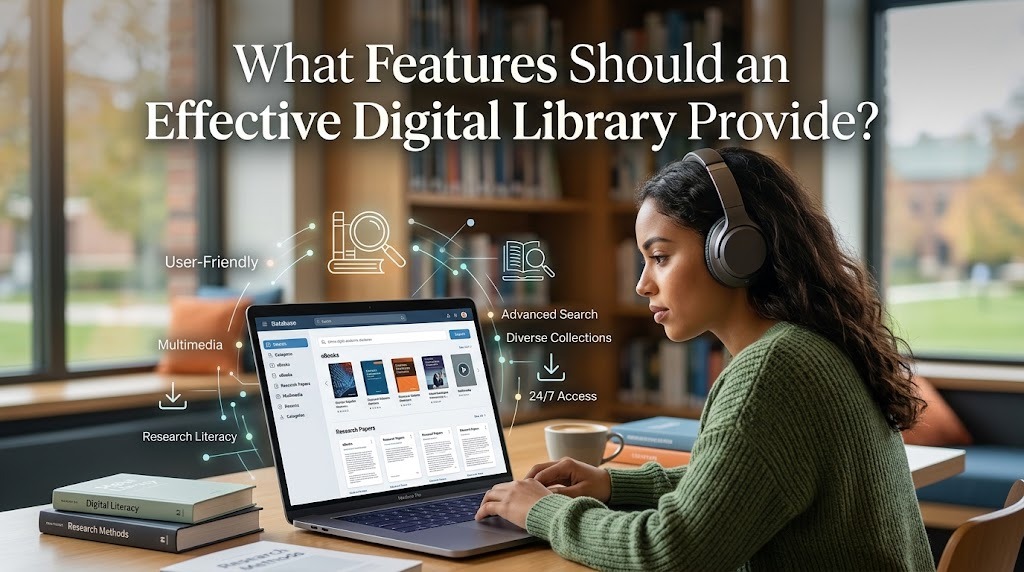
An effective digital library should have a simple and user friendly design so that students, lecturers, researchers, and other users can access resources without unnecessary difficulty. The main menus should be easy to understand, while important functions such as search, login, and resource categories should be clearly displayed. A complicated interface can discourage users from exploring available materials. Therefore, accessibility should be considered one of the most important elements of a modern digital library.
The platform should also work properly across different devices, including computers, tablets, and smartphones. Responsive design allows users to access educational materials in different learning environments. Clear text, logical navigation, and readable layouts can further improve the user experience. A well designed interface makes it easier for users to focus on finding and understanding information.
POWERFUL SEARCH AND FILTER FEATURES
A strong search system is essential because digital libraries can contain thousands or even millions of resources. Users should be able to search by title, author, subject, keyword, or publication information. Search results should be relevant and organized so users can quickly identify potentially useful materials. An effective search engine can significantly reduce the time needed to find academic information.
Filtering tools are also important when a search produces many results. Users should ideally be able to filter materials by publication date, document type, subject, language, or other relevant categories. Sorting options can help users prioritize newer or more relevant resources. These features make the research process more efficient and improve the overall usefulness of the digital library.
HIGH QUALITY AND RELIABLE RESOURCES
An effective digital library needs a collection of high quality and reliable resources. These may include electronic books, scholarly journals, research papers, conference proceedings, reports, and other academic publications. The quality of the collection directly affects the value of the platform for students and researchers. Resources should therefore be selected and managed according to appropriate academic and institutional standards.
Users should also receive enough information to evaluate each resource. Details such as the author, publisher, publication date, edition, and subject can help users determine whether a source is appropriate. Metadata should be accurate and consistently presented across the collection. Reliable information and clear bibliographic details can support better academic research.
EASY RESOURCE ACCESS AND MANAGEMENT
A useful digital library should make it easy for users to read and manage available materials. Depending on copyright and licensing conditions, users may be able to read online, download, bookmark, or save resources for later use. These functions can be particularly helpful for students who are collecting references for assignments and research projects. Clear instructions should explain what users are permitted to do with each resource.
Resource management features can also help users organize their academic materials. Personal accounts may allow users to create reading lists, save searches, or keep track of previously accessed resources. Such functions can reduce the difficulty of managing multiple references. A well organized system can make academic work more efficient and less time consuming.
SECURITY ACCESSIBILITY AND TECHNICAL RELIABILITY
An effective digital library should protect user accounts, personal information, and institutional data. Secure authentication and appropriate data protection measures can help reduce unauthorized access. The platform should also have reliable technical infrastructure to minimize downtime and service interruptions. Users are more likely to trust a digital library when the system consistently works as expected.
Accessibility should also be considered for users with different abilities and technological needs. Features such as readable text, keyboard navigation, appropriate document formats, and compatibility with assistive technologies can make digital resources more inclusive. Regular maintenance and technical updates are equally important. These measures help ensure that the digital library remains dependable as technology and user expectations change.
CONCLUSION
An effective digital library should provide user friendly navigation, powerful search tools, reliable resources, convenient resource management, strong security, and technical accessibility. These features allow students and researchers to find and use academic information more efficiently. A good digital library should not simply store digital materials but should make those materials easy to discover and use. The overall experience should support learning, research, and information access.
Universities and educational institutions should regularly evaluate their digital library services based on user needs and technological developments. Training can also help students and lecturers understand how to use advanced features effectively. When technology, high quality collections, and user centered design work together, a digital library can become a valuable academic resource. This makes it possible to provide a more efficient, accessible, and reliable learning environment.
Recent Posts

Bagaimana Sistem SKS pada Program Kuliah... 22.11.2026/35 View

How Does Technology Make Daily Evaluation... 21.11.2026/69 View

Apa Strategi Menghadapi Kesenjangan antara Kompetensi... 21.11.2026/70 View

Mengapa Inventaris Aset Penting bagi Kelancaran... 21.11.2026/67 View

When Should Musicians Join a Record... 21.11.2026/69 View
