

What Happens If You Enter the Wrong ATM PIN Repeatedly?
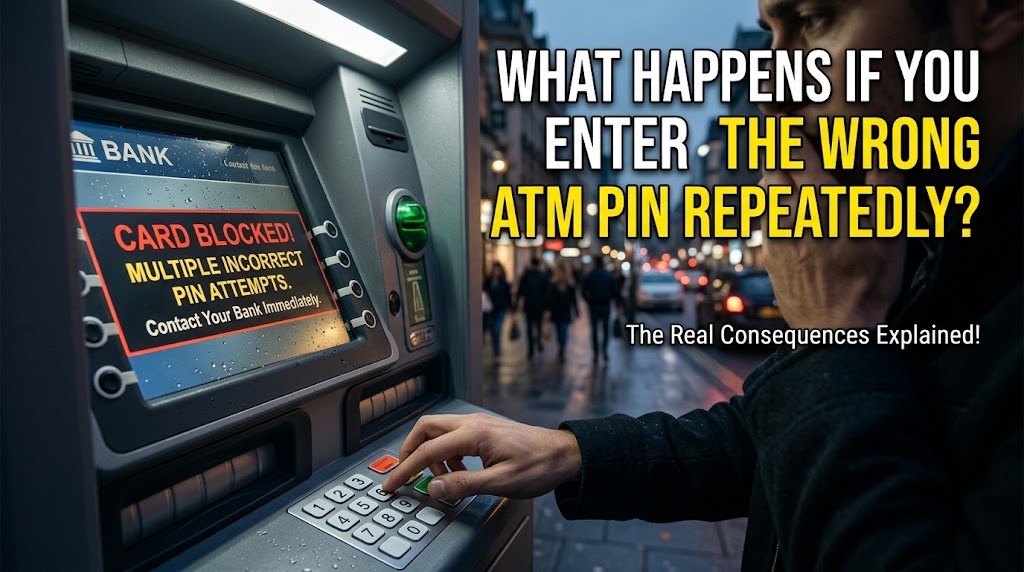
Entering the wrong ATM PIN once may happen accidentally, especially when a customer forgets the correct number or makes a typing mistake. However, repeatedly entering an incorrect PIN can trigger security restrictions designed to protect the account from unauthorized access.
The exact consequences depend on the bank's policies and the type of card or account being used. Understanding what can happen after repeated wrong PIN attempts can help customers avoid unnecessary problems when using an ATM.
THE ATM MAY REJECT THE TRANSACTION
When an incorrect ATM PIN is entered, the machine will normally reject the authentication attempt. The requested transaction cannot continue unless the correct PIN is entered.
A single incorrect attempt does not necessarily mean that the card or PIN will immediately be blocked. However, customers should avoid repeatedly entering different numbers if they are unsure of the correct PIN.
Stopping before reaching the bank's security limit is a safer approach to protecting ATM access.
THE PIN OR CARD MAY BE TEMPORARILY BLOCKED
Repeated wrong ATM PIN attempts may cause the bank to restrict the PIN or card. This security measure is intended to make it more difficult for an unauthorized person to repeatedly guess the correct number.
The number of attempts allowed before a restriction is applied can vary between banks. Some institutions may have different limits depending on their security policies and card types.
If the PIN becomes blocked, follow the bank's official recovery procedure rather than continuing to enter different combinations.
YOU MAY NEED TO CONTACT YOUR BANK
If repeated incorrect attempts result in a blocked ATM PIN, you may need to take additional steps before using certain banking services again. Depending on the bank, this may involve an official PIN reset, customer service assistance, or a branch visit.
Check your bank's official website, mobile application, or customer service channel for the correct procedure. Do not rely on instructions from strangers or unofficial sources.
During the process, continue protecting your banking information and never disclose your actual PIN to anyone.
REPEATED GUESSING CAN CREATE UNNECESSARY SECURITY RISKS
Continuing to guess a PIN after several failed attempts is not a good security practice. If you are unsure of the number, additional guesses may increase the possibility of reaching the bank's PIN attempt limit.
Instead, stop the transaction and use an official method to recover or reset the PIN if available. This can help prevent unnecessary restrictions.
Customers should also avoid asking other people to try different PIN combinations. The ATM PIN should remain confidential and under the control of the authorized account holder.
HOW CAN YOU AVOID THE PROBLEM?
The easiest way to reduce the risk of repeated incorrect attempts is to make sure you can remember your ATM PIN without storing it in an insecure location. Do not write the PIN directly on your bank card or keep it somewhere that can easily be accessed by others.
When entering the PIN, take your time and check the keypad carefully before confirming the transaction. If you are unsure of the number, stop instead of guessing repeatedly.
Following good PIN security habits can help prevent accidental blocks and reduce the risk of unauthorized access to your account.
CONCLUSION
If you enter the wrong ATM PIN repeatedly, the ATM may continue rejecting transactions and the bank may eventually block the PIN or card as a security measure. The exact number of attempts allowed depends on the bank's policy.
If you are unsure of your PIN, stop making repeated guesses and follow the bank's official recovery or reset procedure. Protecting your PIN and banking information can help prevent unnecessary restrictions and improve account security.
Recent Posts

Bagaimana Sistem SKS pada Program Kuliah... 22.11.2026/35 View

How Does Technology Make Daily Evaluation... 21.11.2026/69 View

Apa Strategi Menghadapi Kesenjangan antara Kompetensi... 21.11.2026/69 View

Mengapa Inventaris Aset Penting bagi Kelancaran... 21.11.2026/67 View

When Should Musicians Join a Record... 21.11.2026/68 View
