

What Happens When Government Subsidies Are Not Properly Distributed?
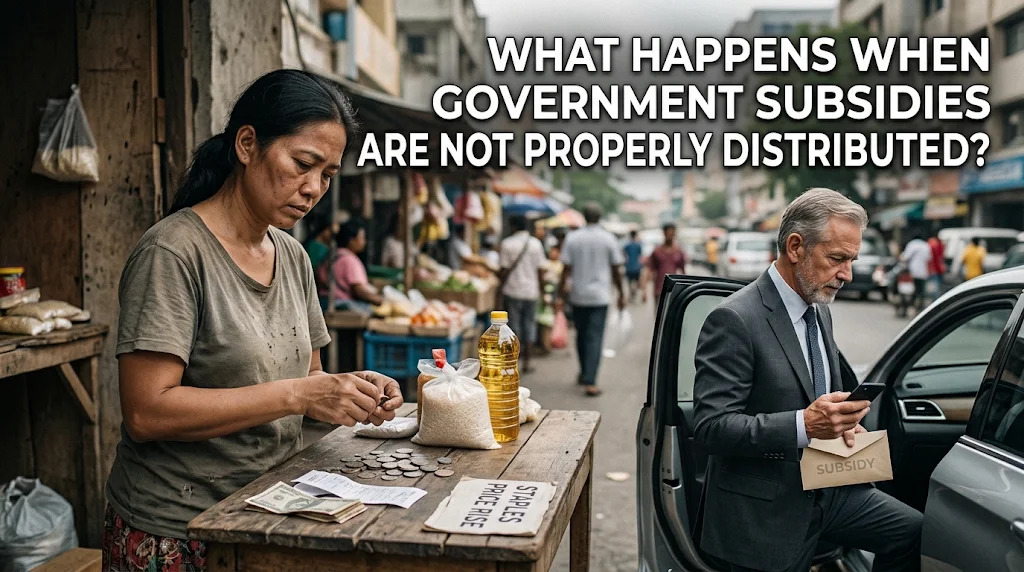
Government subsidies are designed to reduce financial pressure, support essential economic activities, and improve public welfare. These programs help eligible communities access important goods and services at more affordable prices. However, subsidy distribution does not always work as intended. When government assistance is delivered to the wrong beneficiaries, delayed, or misused, the intended economic and social benefits may not be achieved.
Improper subsidy distribution can create serious problems for households, businesses, government finances, and the wider economy. People who genuinely need support may struggle to access available assistance, while public funds may be spent inefficiently. Understanding these consequences is important because it highlights the need for accurate beneficiary data, transparent procedures, and effective government supervision.
ELIGIBLE BENEFICIARIES MAY NOT RECEIVE ASSISTANCE
One of the most immediate consequences of improper subsidy distribution is that eligible individuals or households may fail to receive the support they need. This can happen when beneficiary records are inaccurate, registration procedures are unclear, or verification systems do not reflect actual economic conditions. As a result, people who meet the requirements may be excluded from government programs. This situation can increase financial pressure, especially for households with limited incomes.
The problem becomes more serious when assistance is essential for meeting everyday needs. For example, households that depend on affordable energy or food-related support may experience additional expenses when they cannot access eligible subsidies. Farmers may also face difficulties if agricultural assistance does not reach them at the appropriate time. These conditions can reduce the effectiveness of government programs and weaken public confidence in social and economic policies.
PUBLIC FUNDS MAY BE WASTED OR MISUSED
Improper distribution can cause government funds to be used inefficiently. Subsidies are financed through public budgets, meaning that their implementation involves money collected and managed for the benefit of society. If assistance reaches people who do not meet the eligibility requirements, the government may spend resources without achieving the intended objectives. This reduces the amount of funding available for eligible beneficiaries and other public priorities.
Misuse can also occur when subsidized products are diverted, resold, or obtained through unauthorized practices. For example, goods intended for eligible consumers may be distributed through channels that do not follow established regulations. Such activities can create unfair advantages and increase the risk of financial losses for the government. Strong supervision, accurate records, and appropriate enforcement are therefore necessary to protect public resources.
ECONOMIC INEQUALITY MAY BECOME MORE SERIOUS
Government subsidies are often intended to reduce economic pressure and support communities with specific financial needs. When distribution is inaccurate, these objectives may not be achieved. People with greater financial resources may receive benefits that were intended for more vulnerable groups, while eligible low-income households remain unsupported. This can weaken the government's efforts to reduce economic inequality.
Unequal distribution can also create differences in access to essential goods and services. Households that receive appropriate assistance may be better able to manage their expenses, while excluded families may experience greater financial difficulties. Over time, these differences can affect opportunities to access education, healthcare, transportation, and other important services. Therefore, accurate targeting is essential to ensure that subsidies contribute to more inclusive economic development.
MARKET PRICES AND ECONOMIC ACTIVITIES MAY BE DISTORTED
Subsidies can influence market conditions by changing the prices consumers pay or the costs businesses face. When distribution is not properly controlled, subsidized products may be purchased by ineligible groups or used for purposes outside the program's objectives. This can create unfair competition between businesses or consumers who receive different levels of support. It may also interfere with the intended supply and distribution system.
For example, if subsidized fuel or agricultural inputs are diverted to unauthorized markets, eligible users may experience shortages or difficulty obtaining the products they need. These conditions can increase distribution costs and reduce the effectiveness of price support policies. In some situations, market distortions may also discourage investment in more efficient production and distribution systems. Proper regulation and monitoring are important to minimize these negative effects.
PUBLIC TRUST IN GOVERNMENT MAY DECLINE
The effectiveness of subsidy programs is closely connected to public trust. When people repeatedly experience unfair distribution, unclear procedures, or a lack of accountability, they may begin to question the government's ability to manage public resources. Complaints about inaccurate beneficiary lists or suspected misuse can create dissatisfaction within communities. This can weaken public confidence in government institutions and economic policies.
Maintaining public trust requires transparent information, accessible complaint channels, and consistent supervision. Government agencies should explain eligibility requirements, distribution procedures, and the steps taken to address reported problems. They must also evaluate distribution systems and correct administrative errors when they are identified. By demonstrating accountability, the government can improve public confidence and strengthen the credibility of subsidy programs.
CONCLUSION
When government subsidies are not properly distributed, eligible beneficiaries may lose access to essential support, public funds may be wasted, and economic inequality can become more difficult to address. Improper distribution can also create market distortions and reduce public trust in government institutions. These problems demonstrate why accurate data, transparent procedures, effective monitoring, and strong accountability are essential. With better management, government subsidies can achieve their intended objectives and provide meaningful benefits to society.
Recent Posts

Bagaimana Sistem SKS pada Program Kuliah... 22.11.2026/25 View

How Does Technology Make Daily Evaluation... 21.11.2026/64 View

Apa Strategi Menghadapi Kesenjangan antara Kompetensi... 21.11.2026/65 View

Mengapa Inventaris Aset Penting bagi Kelancaran... 21.11.2026/62 View

When Should Musicians Join a Record... 21.11.2026/61 View
