

What Impact Did Wars Have on City Development?
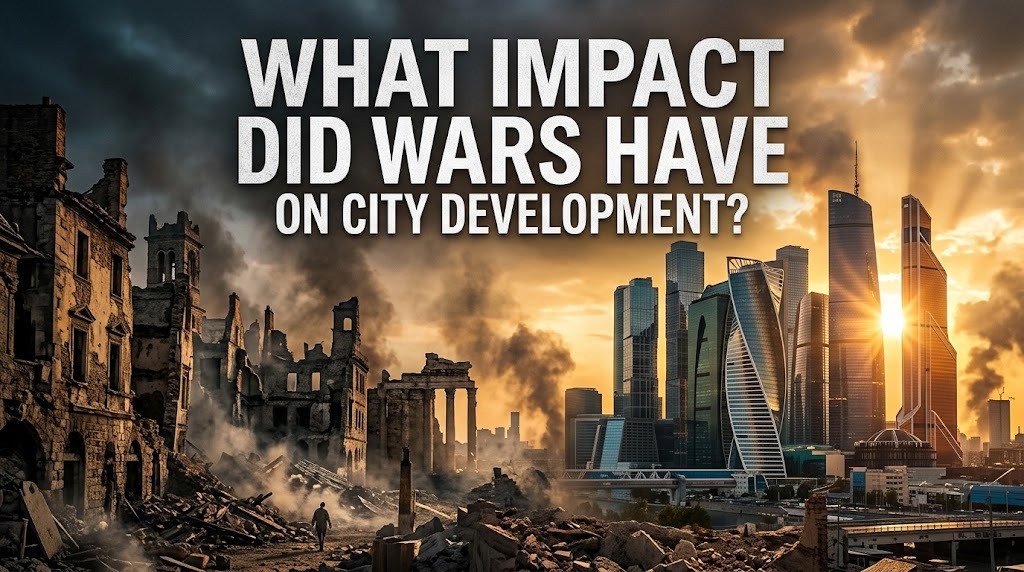
Wars have significantly influenced city development throughout history, transforming urban landscapes, population patterns, infrastructure, and political systems. Conflicts have destroyed buildings, damaged transportation networks, and forced residents to leave their homes. At the same time, periods of war have sometimes encouraged the construction of defensive structures, military facilities, and strategic transportation routes. After conflicts ended, reconstruction efforts often changed how cities were planned and organized. Understanding these effects helps explain why many cities contain both historical traces of conflict and evidence of recovery.
WAR AND THE DESTRUCTION OF URBAN INFRASTRUCTURE
One of the most immediate effects of war on cities is the destruction of buildings and essential infrastructure. Bombing, fires, ground battles, and deliberate demolition can damage homes, hospitals, schools, roads, bridges, and public utilities. When these facilities become unusable, residents may lose access to basic services and economic opportunities. Damaged transportation networks can also interrupt trade and prevent emergency assistance from reaching affected communities. The extent of destruction often determines how long a city needs to recover and whether major reconstruction is necessary.
DEFENSIVE STRUCTURES SHAPED HISTORIC CITIES
Throughout history, the threat of military attacks influenced the physical design of many cities. Rulers and local authorities constructed defensive walls, fortresses, watchtowers, moats, and guarded gates to protect residents and valuable resources. Settlements were sometimes established on hills, near rivers, or in other locations that offered strategic advantages. These structures influenced where roads, residential areas, and public buildings developed. Although many defensive systems eventually lost their military purpose, their remains continue to provide evidence of how cities responded to conflict.
WARS CAUSED POPULATION MOVEMENT AND DISPLACEMENT
Wars frequently forced people to leave their homes in search of safety. Some residents moved to nearby towns, while others relocated to distant cities or different countries. These movements changed population sizes and placed pressure on housing, healthcare, education, and public services in receiving communities. In some cases, displaced populations established temporary settlements that later developed into permanent neighborhoods. Population changes caused by conflict could therefore reshape the social and physical structure of cities for generations.
MILITARY NEEDS INFLUENCED TRANSPORTATION SYSTEMS
Military operations often required reliable transportation networks for moving soldiers, equipment, food, and other supplies. Governments sometimes developed roads, railways, bridges, ports, and airfields to support strategic objectives. These facilities could later contribute to civilian transportation and economic activity. However, infrastructure built primarily for military purposes did not always meet the everyday needs of local communities. The long-term influence of such projects depended on whether they were maintained, adapted, and integrated into broader urban development.
WARS TRANSFORMED ECONOMIC ACTIVITIES
Conflict can disrupt the economic foundations of cities by damaging factories, closing businesses, interrupting trade, and reducing employment opportunities. Markets and commercial districts may become inactive when transportation routes are blocked or consumer demand declines. In other circumstances, military production increases demand for manufacturing, construction, logistics, and related services. After a war, reconstruction can create new employment opportunities and stimulate investment in housing and public facilities. Nevertheless, economic recovery often takes time and may be uneven across different neighborhoods.
POSTWAR RECONSTRUCTION CHANGED URBAN PLANNING
After major conflicts, governments and communities often rebuild cities to address both immediate damage and long-standing urban problems. Reconstruction may include replacing destroyed housing, repairing roads, restoring public utilities, and improving access to essential services. Some cities preserve their previous street layouts, while others redesign entire districts to accommodate modern transportation and construction standards. New building regulations may also be introduced to improve structural safety and emergency preparedness. These decisions can permanently change the appearance and organization of urban areas.
WARS AFFECTED CULTURAL HERITAGE AND HISTORIC BUILDINGS
Historic buildings, museums, libraries, monuments, and religious sites can suffer severe damage during armed conflicts. Their destruction may result in the loss of architectural features, historical documents, and cultural objects that cannot easily be replaced. When important landmarks disappear, communities may also lose places associated with collective memory and cultural identity. Restoration projects can help preserve surviving structures and document damaged heritage sites. Protecting cultural heritage during and after conflict is therefore an important part of long-term urban recovery.
THE IMPACT OF WAR ON INDONESIAN CITIES
The history of Indonesia demonstrates how wars and political conflicts have influenced urban development. During the struggle for independence, several cities experienced fighting, displacement, and damage to buildings and infrastructure. The Battle of Surabaya in November 1945, for example, became a major event in Indonesia's independence struggle and left a lasting mark on the city's historical identity. Other conflicts and periods of political change also influenced administrative centers, transportation networks, and public spaces. Memorials, museums, historic buildings, and commemorative sites help preserve these experiences within Indonesia's urban landscape.
MODERN CITIES AND CONFLICT RECOVERY
Modern cities affected by war face complex challenges involving housing, infrastructure, public safety, and economic recovery. Reconstruction requires financial resources, technical expertise, effective governance, and cooperation among local communities and public institutions. Urban planners must also consider the needs of displaced residents and ensure that rebuilding does not exclude vulnerable groups. In some cases, reconstruction offers opportunities to improve drainage, transportation, housing quality, and public facilities. Long-term recovery is most effective when physical rebuilding is accompanied by social and economic support.
CONCLUSION
Wars have influenced city development through destruction, displacement, military infrastructure, economic disruption, and postwar reconstruction. They have changed how cities are defended, organized, populated, and rebuilt. Although conflict can cause lasting damage to urban communities, recovery efforts may also introduce new planning approaches and infrastructure. Preserving historical evidence while rebuilding essential services helps cities understand their past and prepare for future challenges.
Recent Posts

Bagaimana Sistem SKS pada Program Kuliah... 22.11.2026/50 View

How Does Technology Make Daily Evaluation... 21.11.2026/80 View

Apa Strategi Menghadapi Kesenjangan antara Kompetensi... 21.11.2026/79 View

Mengapa Inventaris Aset Penting bagi Kelancaran... 21.11.2026/75 View

When Should Musicians Join a Record... 21.11.2026/80 View
