

What Is a Closing Commission and How Is It Calculated?
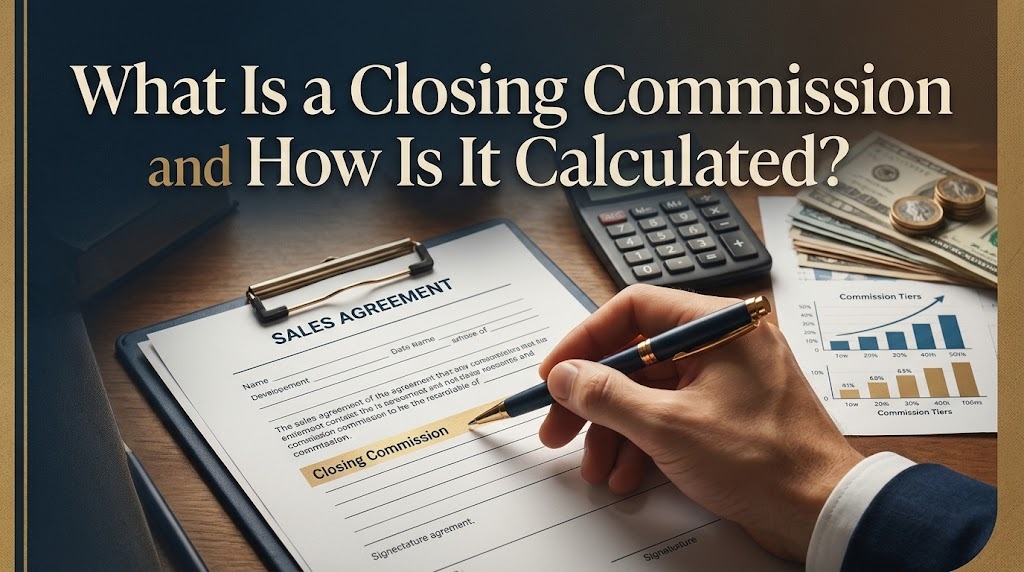
Closing commission is a financial incentive awarded to sales professionals after successfully finalizing a business transaction. This reward serves as a formal recognition of the team's dedication and performance in driving revenue for the company. The percentage rate received typically varies depending on the industry sector, product type, and agreed employment contract.
The calculation process is generally based on a percentage of the total sales value that has been realized. For example, if a salesperson successfully closes a deal worth hundreds of millions with a 5% commission rate, they are entitled to receive a specific amount calculated from that figure. In addition to flat percentages, some companies implement a tiered commission system where bonus percentages increase alongside higher sales target achievements.
UNDERSTANDING THE BASIC CONCEPT OF CLOSING COMMISSION
Closing commission represents additional funds outside the base salary earned when a commercial transaction is officially completed or legally recognized. This concept serves as a foundational pillar in commerce to drive efficiency and effectiveness within sales teams. Without a clear commission system, marketing motivation often declines due to the absence of direct rewards for extra achievement.
In business operations, commission payments are usually linked directly to Key Performance Indicators (KPIs). Every team member who exceeds minimum performance standards receives a fair share of the transaction's net revenue. This creates a transparent working ecosystem where financial outcomes linearly align with the effort invested.
The mechanism acts as a performance catalyst for both junior and senior sales executives across different industries. It aligns personal financial goals with overarching corporate revenue targets in a direct and measurable way. When salespeople realize that every closed deal increases their paycheck, their focus naturally shifts toward high-value opportunities.
Furthermore, this financial model encourages sales reps to thoroughly understand the products and services they represent. In-depth product knowledge allows them to address client concerns effectively and close complex deals faster. As a result, the time required to complete sales cycles is significantly reduced across the board.
From an organizational standpoint, variable compensation keeps operational risks manageable during slow economic periods. When revenues drop, total commission expenses decrease automatically without requiring sudden cost-cutting measures. This inherent flexibility protects company cash flow while preserving core workforce talent.
Modern companies often combine closing commissions with gamified sales benchmarks to boost engagement. Recognition programs paired with financial rewards create healthy internal competition among team members. This dynamic fosters a culture of continuous improvement and continuous learning within the department.
Ultimately, understanding the basic concept of closing commissions empowers employees to take full ownership of their income potential. It transforms traditional employment into an entrepreneurial endeavor where effort directly dictates earning capability. Clear expectations and well-defined rules form the backbone of this mutual arrangement.
PRIMARY METHODS FOR CALCULATING CLOSING COMMISSION
The most common calculation method used is the flat rate percentage based on the gross value of the transaction. Under this approach, the formula used is relatively straightforward, which involves multiplying the total selling price by the predetermined commission percentage. This method is highly favored because it offers certainty and transparency for both parties.
Another popular approach is the profit-based commission scheme, where bonus values are calculated from the company's net profit. This method ensures that the business maintains its profitability standards before distributing sales bonuses. Furthermore, there are tiered commission systems that offer higher incentives whenever a salesperson successfully passes specific monthly sales quotas.
A third widely adopted model is the draw against commission system, which provides sales reps with an advance payment. This advance acts as a safety net during months with low sales volume or extended deal cycles. Once new deals close, the advance amount is deducted from the gross earnings accrued by the employee.
Gross margin commission models focus specifically on the profitability of each individual product sold by the sales team. Reps are incentivized to sell high-margin items rather than heavily discounted products that lower overall revenue. This strategy aligns the sales team's efforts with the company's long-term financial health and gross profit objectives.
Residual commission structures are commonly utilized in subscription-based industries and recurring software services. Under this system, reps continue receiving a percentage of customer payments as long as the client maintains their subscription. This encourages salespeople to prioritize long-term client retention alongside initial deal acquisition.
Territory or team-based commission structures distribute rewards evenly among all members of a specific sales region. This approach minimizes internal friction and promotes collaborative selling for complex enterprise-level accounts. It ensures that supporting staff members are fairly compensated for their contributions to large account wins.
Selecting the right calculation method depends entirely on company goals, industry standards, and product complexity. Management must periodically review calculation formulas to ensure they remain competitive and relevant. A well-designed formula balances company profitability with attractive earning potential for top performers.
FACTORS INFLUENCING THE AMOUNT OF CLOSING COMMISSION
Several key elements determine the total commission amount a salesperson can earn during a given performance period. One primary factor is the level of product complexity or difficulty in the market, where high-value or high-risk products usually offer larger incentive margins. Additionally, dynamic market conditions and the competitive landscape play significant roles in shaping company bonus policies.
Organizational structures and employment contracts also hold a critical position in establishing these incentive rates. Companies offering lower base salaries generally provide higher commission percentages to balance total employee earnings. Conversely, if a company provides a substantial base salary, the closing commission rate is typically fixed at a more moderate level.
Market demand and economic trends heavily influence how easily products can be sold in specific target sectors. During economic downturns, companies may adjust commission structures to maintain sales momentum and support staff. Conversely, high demand during peak seasons can lead to temporary adjustments in bonus payouts.
The length of the sales cycle also plays a decisive role in determining commission percentages. Long enterprise sales cycles requiring months of negotiation usually command significantly higher commission rates. This accounts for the time, effort, and strategic planning invested before a contract is finally signed.
Individual experience levels and proven track records frequently influence the base commission tier assigned to sales professionals. Senior reps with established client networks often negotiate higher rates during their initial job offer discussions. Their ability to consistently close large deals justifies a higher commission percentage.
Company profit margins directly dictate how much compensation can be shared with the sales force. High-margin industries like software and financial services offer generous commission structures compared to retail or wholesale. Businesses must maintain a healthy balance between incentive payouts and operational sustainability.
Finally, geographic location and regional cost of living standards play subtle roles in compensation structuring. Sales representatives working in major metropolitan markets may receive different incentive structures than those in smaller regions. These adjustments ensure that total earning potential remains fair and regionally competitive.
PRACTICAL STEPS TO CALCULATE SALES COMMISSION
The initial step in performing this calculation is recording the final total deal value fully paid by the customer. Once transaction data is validated, multiply that figure by the commission ratio designated for the salesperson. Make sure to account for any discounts or product returns so the base calculation remains accurate and objective.
After obtaining the gross figure, the next step involves calculating income tax deductions in accordance with applicable tax regulations. Companies are obligated to maintain transparency by providing clear commission statements to employees on a regular basis. This open verification process aims to prevent misunderstandings or disputes regarding employee financial rights.
Sales managers must first establish a centralized tracking system to record all completed transactions in real time. Utilizing reliable sales tracking software helps automate calculations and reduces human error significantly. Clear records ensure that every eligible deal is processed without administrative delays or missing documentation.
The second step requires verifying that all conditions precedent in the sales agreement have been fully satisfied. This includes confirming client signatures, initial payment verification, and contract approval from legal teams. Commission calculations should only proceed once the deal is officially recognized as fully closed.
Next, administrators must apply any relevant accelerators or decelerators based on quota achievement levels. If a sales representative has crossed their annual target threshold, higher commission rates apply immediately. Accurate application of these rules rewards top performers while maintaining financial integrity.
Double-checking for potential chargebacks or returned merchandise is another critical phase in the calculation process. If a customer cancels their subscription within a trial window, previously awarded commissions may be clawed back. Transparent communication regarding chargeback rules prevents frustration among sales personnel.
Lastly, the calculated figures should be compiled into a detailed breakdown sheet for the finance department. The statement must clearly display total revenue closed, applicable commission rates, bonuses, and tax withholdings. Delivering these statements on schedule builds trust between management and the entire sales department.
DIFFERENCE BETWEEN CLOSING COMMISSION AND BASE SALARY
A base salary is a guaranteed fixed amount paid to employees regardless of their daily sales performance. It provides financial stability and covers basic operational living expenses for workers. In contrast, a closing commission is entirely variable and directly tied to closing successful business deals.
Combining both income models creates a balanced compensation structure for sales teams. The base salary offers security during slower business periods, while the commission acts as an engine for high performance. This combination encourages reps to consistently exceed minimum monthly performance expectations.
Fixed salaries represent a predictable cost for employers, making financial budgeting and cash flow planning much simpler. However, relying solely on fixed salaries can sometimes lead to complacency among sales staff. Without performance-driven incentives, reps may lack the drive to actively pursue challenging lead prospects.
Variable commission income, on the other hand, shifts financial risk from the employer to the employee. During booming market conditions, salespeople can earn income that far exceeds standard corporate salaries. During slow market phases, however, income can drop significantly, requiring careful personal financial management.
From a recruitment perspective, offering a competitive base salary helps attract experienced professionals seeking security. Adding an uncapped commission structure appeals directly to high achievers looking for unlimited income potential. The ideal ratio between salary and commission depends on industry norms and business strategy.
Tax handling for base salaries and commission earnings also differs depending on local employment regulations. Base salaries follow predictable tax withholding schedules every single pay cycle throughout the fiscal year. Commissions are often taxed as supplemental income, which may result in different withholding rates on bonus paychecks.
Understanding the structural differences between these two compensation components helps employees manage their finances wisely. Salespeople should rely on their base salary for essential living expenses while treating commissions as growth capital. This approach ensures long-term personal financial security while striving for professional excellence.
STRATEGIES TO INCREASE YOUR CLOSING COMMISSION EARNINGS
To maximize overall earnings, sales professionals must focus on improving their deal closing success rates. Developing deep product knowledge and refining negotiation techniques allows reps to handle client objections more efficiently. Closing higher-value transactions naturally results in significantly larger individual commission payouts.
Another effective strategy involves aiming for higher tiers within a tiered commission structure. By consistently exceeding base monthly quotas, sales reps unlock higher percentage tiers on all additional sales. This focused approach drastically boosts overall annual earnings through strategic effort.
Effective pipeline management is crucial for maintaining a steady flow of closed deals throughout the year. Reps should consistently qualify leads to avoid spending time on prospects with low conversion potential. Prioritizing high-probability opportunities ensures that energy is directed where returns are highest.
Upselling and cross-selling existing clients represents one of the fastest paths to growing commission checks. Selling add-on features or premium packages to satisfied customers requires less effort than acquiring new accounts. Existing relationships provide a solid foundation for increasing total deal sizes over time.
Building strong referral networks dramatically shortens sales cycles and improves closing rates for new prospects. Satisfied clients are often eager to recommend reliable sales reps to their professional networks. Warm referrals convert at much higher rates than cold outreach efforts, boosting overall efficiency.
Continuous professional development through sales training, workshops, and coaching keeps skills sharp and up-to-date. Mastering modern social selling tools and consultative sales frameworks offers a distinct competitive advantage. Staying ahead of industry trends allows reps to position solutions effectively in changing markets.
Time management and daily discipline separate average salespeople from top earners in any competitive field. Setting aside dedicated hours for prospecting, follow-ups, and deal closing creates consistent momentum. Maintaining rigorous daily routines ensures steady sales production and growing commission returns.
CONCLUSION
Closing commission is a crucial instrument in the business world that serves as a performance driver for sales teams while measuring transaction success. Calculations can be carried out through various schemes, ranging from fixed percentages to tiered systems based on profit margins. By applying transparency and accurate calculations, companies can boost cash flow while effectively maintaining sales team motivation and loyalty.
Recent Posts

Bagaimana Sistem SKS pada Program Kuliah... 22.11.2026/54 View

How Does Technology Make Daily Evaluation... 21.11.2026/83 View

Apa Strategi Menghadapi Kesenjangan antara Kompetensi... 21.11.2026/82 View

Mengapa Inventaris Aset Penting bagi Kelancaran... 21.11.2026/78 View

When Should Musicians Join a Record... 21.11.2026/84 View
