

What Is a Color Blindness Test and Why Is It Important for Eye Health?
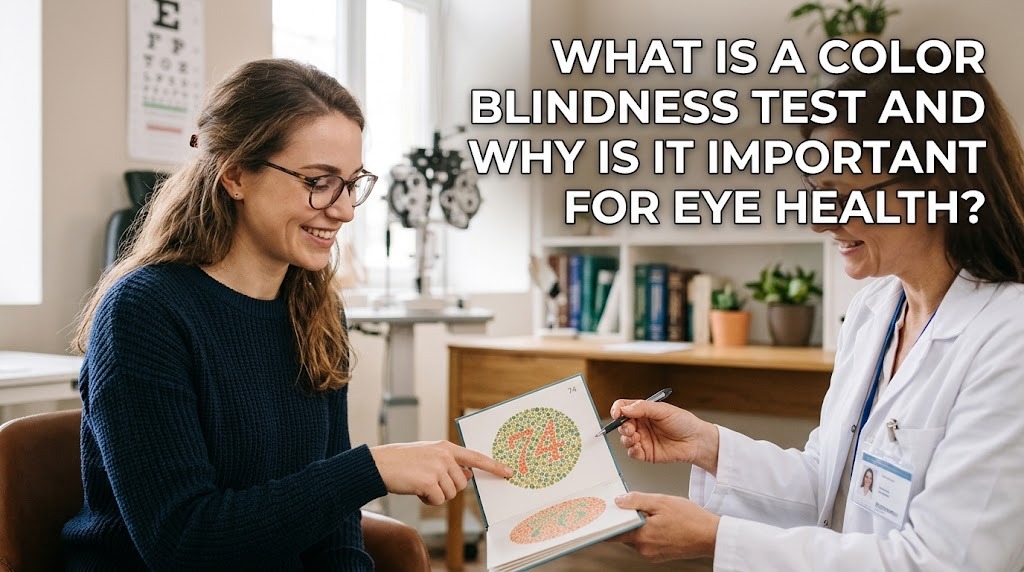
A color blindness test is an eye examination used to determine whether someone has difficulty identifying or distinguishing certain colors. This test is important because color vision plays a significant role in everyday activities, including reading information, recognizing warning signs, choosing objects, and understanding visual signals. Although color blindness does not always interfere with daily life, identifying the condition early can help people understand their visual abilities and make appropriate adjustments.
Color blindness is a condition in which a person cannot distinguish certain colors as easily as someone with normal color vision. The condition is commonly associated with difficulties distinguishing red and green, although some people also experience problems identifying blue and yellow. Through a color blindness test, eye care professionals can evaluate how well a person recognizes different colors and determine whether further examination is necessary.
WHAT IS A COLOR BLINDNESS TEST?
A color blindness test is a medical examination designed to evaluate a person's ability to recognize and distinguish different colors. The examination helps identify color vision deficiencies that may affect how someone sees particular shades or combinations of colors. It is commonly performed during eye examinations, school health assessments, medical screenings, and certain employment evaluations. The test can help determine whether a person has normal color vision or experiences partial or more severe color blindness.
One of the most widely recognized methods is the Ishihara test, which uses specially designed plates containing colored dots that form numbers or patterns. People with normal color vision can generally identify the displayed numbers, while individuals with certain color vision deficiencies may see different numbers or have difficulty recognizing them. Other examination methods can evaluate specific color differences more precisely. The results help eye care professionals understand the type and severity of a person's color vision deficiency.
WHY IS A COLOR BLINDNESS TEST IMPORTANT FOR EYE HEALTH?
A color blindness test is important because it helps identify color vision deficiencies that may otherwise go unnoticed. Some people have lived with color blindness since childhood without realizing that their color perception is different from that of others. Early identification allows them to understand their visual condition and recognize situations where distinguishing colors may become challenging. This information can also help eye care professionals provide appropriate advice and recommend further examinations when necessary.
Another important benefit is that color vision testing can help identify certain acquired vision problems. Although many cases of color blindness are inherited, changes in color perception can sometimes develop because of eye diseases, optic nerve disorders, medication effects, or other health conditions. Sudden changes in the ability to recognize colors should not be ignored because they may indicate an underlying medical problem. Regular eye examinations can help detect these changes and support appropriate medical treatment.
WHAT TYPES OF COLOR BLINDNESS CAN BE DETECTED?
A color blindness test can help identify several types of color vision deficiencies. The most common type is red-green color blindness, which makes it difficult to distinguish certain shades of red and green. People with this condition may confuse colors that appear clearly different to individuals with normal color vision. Red-green deficiencies include protan-type and deutan-type color vision problems, which affect the perception of red or green light.
Another type is blue-yellow color blindness, which affects the ability to distinguish certain shades of blue and yellow. This condition is less common than red-green color blindness and may involve difficulty recognizing differences between blue, green, yellow, and purple shades. There is also a rare condition called achromatopsia, in which a person has little or no color vision and may see the world mainly in shades of gray. The examination results can help determine which type of color vision deficiency a person may have and whether additional testing is required.
WHO SHOULD TAKE A COLOR BLINDNESS TEST?
A color blindness test can be beneficial for children, teenagers, and adults. Children are particularly important candidates because color vision deficiencies can affect learning activities that involve identifying colors, reading charts, drawing, and understanding classroom materials. Testing during childhood can help parents and teachers understand a child's visual needs. This information allows them to provide suitable learning support without making the child feel limited or different.
Adults may also benefit from color vision testing, especially when they experience difficulty distinguishing colors during everyday activities. People applying for certain occupations may need to undergo color vision examinations because some jobs require accurate color recognition. Examples include aviation, transportation, electrical work, and other professions involving color-coded signals or safety indicators. Individuals who suddenly notice changes in color perception should also seek an eye examination to identify possible underlying causes.
HOW IS A COLOR BLINDNESS TEST PERFORMED?
A color blindness test is generally simple, painless, and does not require complicated medical procedures. During an examination, an eye care professional may ask the individual to look at specially designed color plates, identify numbers, recognize patterns, or compare different colored objects. The person is usually asked to complete the examination under appropriate lighting conditions to help ensure reliable results. Depending on the testing method, the examination may take only a few minutes.
The Ishihara test is commonly used to identify red-green color vision deficiencies. Other methods, such as the Farnsworth D-15 test, use colored objects that must be arranged according to their similarities. More advanced examinations, including the anomaloscope test, can provide additional information about color perception. If the results suggest an acquired color vision problem, the eye care professional may recommend further examinations to investigate the underlying cause.
CAN A COLOR BLINDNESS TEST HELP PREVENT EYE PROBLEMS?
A color blindness test cannot directly prevent eye diseases or cure inherited color vision deficiencies. However, it can support early identification and help people understand changes in their visual abilities. This is particularly important when color vision problems develop later in life because they may be associated with certain eye conditions or other medical issues. Recognizing unusual changes allows individuals to seek professional evaluation before the underlying problem becomes more serious.
The test can also help people develop safer habits when performing activities that depend on color recognition. For example, individuals with color vision deficiencies can use labels, symbols, patterns, or brightness differences instead of relying entirely on color. In workplaces and educational environments, suitable visual adjustments can make information easier to understand. These measures help improve independence, safety, and quality of life.
CONCLUSION
A color blindness test is an important examination for understanding a person's ability to recognize and distinguish different colors. It helps identify various types of color vision deficiencies, including red-green and blue-yellow color blindness. The examination is generally simple, painless, and useful for children as well as adults.
Although inherited color blindness cannot currently be cured, identifying the condition can help individuals understand their visual limitations and adjust their daily activities. Color vision testing can also help detect changes that may be associated with certain eye or health conditions. Therefore, taking a color blindness test when necessary is a useful step toward maintaining eye health and improving overall visual awareness.
Recent Posts

Bagaimana Sistem SKS pada Program Kuliah... 22.11.2026/42 View

How Does Technology Make Daily Evaluation... 21.11.2026/72 View

Apa Strategi Menghadapi Kesenjangan antara Kompetensi... 21.11.2026/74 View

Mengapa Inventaris Aset Penting bagi Kelancaran... 21.11.2026/70 View

When Should Musicians Join a Record... 21.11.2026/74 View
