

What Is a Designer and What Are Their Main Responsibilities?
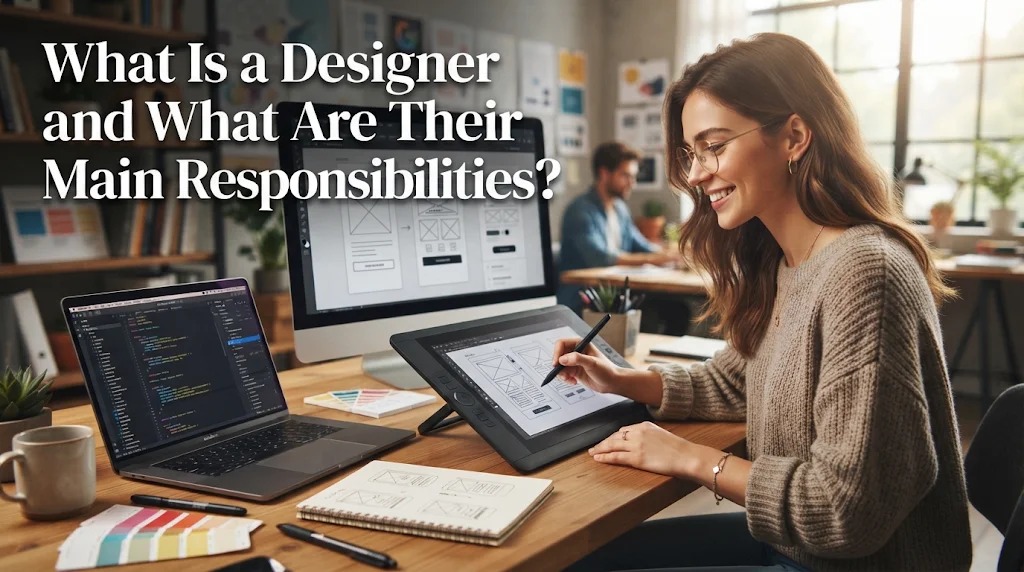
A designer is a professional who creates visual concepts, products, or solutions to communicate ideas and meet specific needs. Designers play an important role in many industries, including technology, fashion, advertising, architecture, and business. Their work is not limited to making something look attractive but also involves ensuring that a design is functional, useful, and appropriate for its intended audience. As digital technology continues to develop, the demand for skilled designers is growing across different fields. Understanding what a designer does and their main responsibilities can help people recognize the importance of this profession and explore its career opportunities.
WHAT IS A DESIGNER?
A designer is someone who plans, develops, and creates concepts to solve problems or communicate messages through visual or functional elements. Their work can involve creating logos, websites, advertisements, clothing, furniture, buildings, and various digital products. Each design is developed by considering its purpose, target audience, appearance, and usability. Designers combine creativity with technical knowledge to produce results that meet specific requirements.
The designer profession covers many specializations, depending on the industry and type of project. Some designers focus on visual communication, while others concentrate on product development, digital experiences, or interior spaces. Although their responsibilities may differ, they share the same goal of turning ideas into practical and meaningful designs. This makes designers important contributors to businesses, organizations, and everyday life.
WHAT ARE THE MAIN RESPONSIBILITIES OF A DESIGNER?
A designer has several responsibilities throughout the creative process, starting with understanding project requirements and developing suitable concepts. They need to identify the client's goals, target audience, preferred style, and expected results before beginning the design. This information helps them create solutions that match the project's purpose. Designers also conduct research to understand current trends, audience preferences, and competitors.
Another important responsibility is developing design concepts and turning them into finished work. They select appropriate colors, typography, layouts, images, materials, or other elements based on the project's needs. Designers must also review their work, make improvements, and ensure that the final result meets quality standards. In addition, they often communicate with clients, managers, and other team members to receive feedback and complete projects according to agreed deadlines.
WHAT SKILLS DOES A PROFESSIONAL DESIGNER NEED?
A professional designer needs a combination of creative, technical, and communication skills. Creativity helps them develop original ideas and find different ways to solve design problems. Technical skills are also important because designers must understand how to use relevant software, tools, and production methods. Depending on their specialization, they may need to master applications for graphic design, illustration, three-dimensional modeling, or website development.
Communication and problem-solving skills are equally valuable in this profession. Designers must be able to explain their ideas, understand feedback, and work effectively with people from different backgrounds. Time management helps them organize tasks and complete projects within established deadlines. They also need attention to detail to ensure that every design element works properly and supports the overall concept. Continuous learning is essential because design tools, technology, and industry trends frequently change.
WHAT TOOLS AND SOFTWARE DO DESIGNERS USE?
Designers use different tools and software depending on their specialization and project requirements. Graphic designers commonly use applications such as Adobe Photoshop, Adobe Illustrator, and CorelDRAW to create visual content, illustrations, and branding materials. UI and UX designers often work with Figma to develop website layouts, application interfaces, and interactive prototypes. These tools help designers work more efficiently and turn creative concepts into professional results.
Some designers also use three-dimensional modeling software, video editing applications, and digital drawing tools. For example, architects and interior designers may use AutoCAD and SketchUp to develop technical drawings and spatial models. Fashion designers can use specialized applications to create clothing patterns and digital garment concepts. However, mastering software alone does not guarantee good design results. Designers must understand fundamental principles such as composition, balance, color, typography, and usability to produce effective work.
WHY IS THE DESIGNER PROFESSION IMPORTANT IN MODERN INDUSTRIES?
Designers have an important role in helping businesses communicate their identities and connect with customers. Attractive and consistent visual designs can make products, services, and brands easier to recognize. In digital industries, designers help create websites and applications that are accessible, understandable, and comfortable to use. Their work can influence how people interact with products and how they perceive a company.
Beyond business needs, designers also contribute to solving problems in everyday life. They develop products that improve convenience, create public information materials, and help make digital services easier to access. As technology advances, designers increasingly collaborate with developers, marketers, engineers, and other professionals. Artificial intelligence also introduces new tools that can support the creative process, although human judgment and an understanding of user needs remain essential. These developments make design an important profession in many modern industries.
CONCLUSION
A designer is a professional who transforms ideas into visual or functional solutions that serve specific purposes. Their main responsibilities include understanding project requirements, developing creative concepts, creating designs, evaluating results, and communicating with clients or team members. To succeed in this profession, designers need creativity, technical knowledge, communication skills, and the ability to adapt to changing technology. As industries continue to develop, the role of designers remains important in creating products, services, and experiences that are useful, attractive, and meaningful.
Recent Posts

How Does Technology Make Daily Evaluation... 21.11.2026/58 View

Apa Strategi Menghadapi Kesenjangan antara Kompetensi... 21.11.2026/60 View

Mengapa Inventaris Aset Penting bagi Kelancaran... 21.11.2026/56 View

When Should Musicians Join a Record... 21.11.2026/55 View

Daily Evaluation or Daily Planning Which... 21.11.2026/63 View
