

What Is a Language Competition and What Are Its Main Goals?
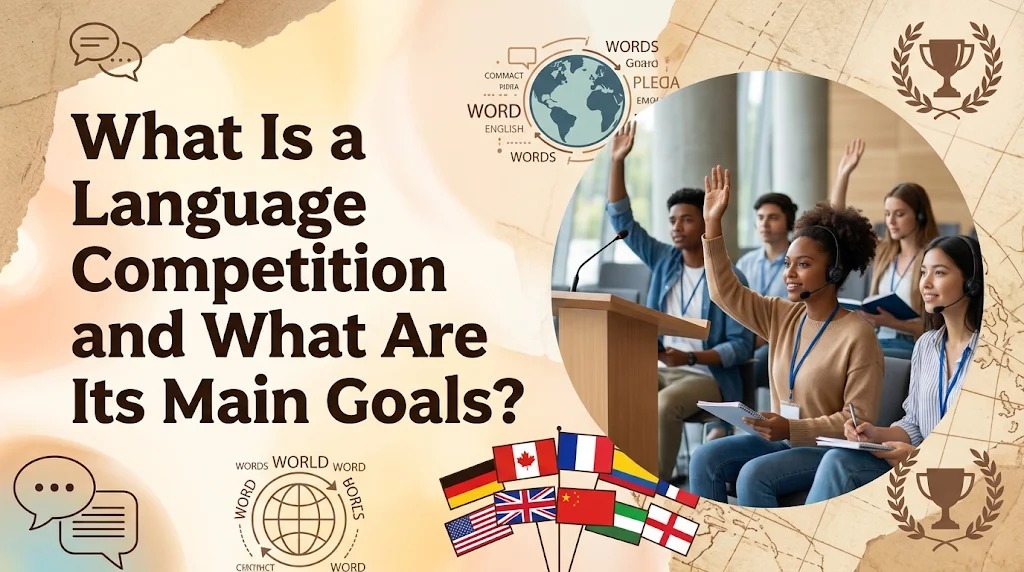
A language competition is an educational activity that allows participants to demonstrate and develop their language skills through various challenges. These competitions usually involve the use of spoken or written language, including vocabulary, grammar, pronunciation, reading, listening, and communication abilities. They can be organized in schools, universities, educational institutions, and other organizations. Participants may compete individually or in teams, depending on the type and rules of the event.
Language competitions are available in different languages, such as English, Indonesian, and other foreign languages. Some events focus on public speaking, storytelling, poetry reading, debates, spelling bees, and essay writing. Each competition has different requirements, but they share a common purpose: encouraging participants to improve their language abilities while gaining valuable learning experiences.
THE MAIN GOALS OF LANGUAGE COMPETITIONS
One of the main goals of a language competition is to improve participants' language proficiency. Through preparation and practice, participants can expand their vocabulary, understand grammar more effectively, and communicate more clearly. These activities also encourage participants to use language in practical situations rather than only learning theories from textbooks.
Another important goal is to build confidence. Many participants feel nervous when speaking in front of an audience or expressing their opinions in another language. By participating in competitions, they can gradually overcome their fears and become more comfortable communicating with others.
Language competitions also aim to develop creativity, critical thinking, discipline, and sportsmanship. Participants learn to prepare carefully, understand different perspectives, and respect other competitors. These abilities are useful not only in education but also in future academic and professional environments.
TYPES OF LANGUAGE COMPETITIONS
Language competitions come in various forms, allowing participants to choose activities based on their interests and abilities. Each type focuses on different language skills and provides unique learning experiences.
Some common types include spelling bees, speech contests, storytelling competitions, debate competitions, poetry reading, essay writing, and reading comprehension contests. Spelling bees test participants' knowledge of word spelling, while speech competitions evaluate their ability to organize ideas and communicate confidently. Storytelling focuses on pronunciation, expression, and creativity, whereas debates encourage logical thinking and the ability to defend opinions with clear arguments.
Other competitions emphasize written communication, such as essay writing and creative writing contests. These activities help participants organize information, develop arguments, and express ideas through well-structured sentences. By exploring different competition formats, students can identify their strengths and improve areas that need more practice.
BENEFITS OF PARTICIPATING IN LANGUAGE COMPETITIONS
Participating in language competitions offers several educational benefits. One of the most important is the opportunity to improve communication skills. Participants practice expressing their thoughts clearly, choosing appropriate vocabulary, and responding to questions effectively. Regular practice can also help them become more fluent and confident when using a language.
Another benefit is the development of critical thinking and problem-solving skills. Certain competitions require participants to analyze information, understand questions, and make decisions within a limited amount of time. These challenges train students to think carefully and respond appropriately.
Language competitions can also create opportunities to meet new people and build friendships. Participants can exchange knowledge, learn from other competitors, and discover different ways of using language. Furthermore, receiving feedback from judges and teachers helps them recognize their weaknesses and understand how to improve their performance.
HOW TO PREPARE FOR A LANGUAGE COMPETITION
Preparing for a language competition requires consistent practice and good planning. Participants should first understand the competition rules, assessment criteria, and specific skills being tested. Knowing these requirements helps them choose suitable learning materials and focus on the most important areas.
Building vocabulary is another essential preparation step. Participants should learn new words, understand their meanings, and practice using them in sentences. They should also improve their grammar, pronunciation, reading, and listening skills according to the competition format. For speaking competitions, practicing in front of a mirror or recording one's voice can help improve confidence and delivery.
In addition, participants should manage their preparation time effectively. Creating a realistic study schedule allows them to practice regularly without feeling overwhelmed. Asking teachers, friends, or experienced speakers for feedback can also help identify mistakes and improve performance before the competition begins.
CONCLUSION
A language competition is an educational activity that helps participants develop language proficiency, communication skills, confidence, and creativity. Its main goals include improving language abilities, encouraging healthy competition, strengthening critical thinking, and providing valuable learning experiences. Through different activities such as debates, speeches, spelling bees, and essay writing, participants can explore their abilities and discover new interests.
More importantly, success in a language competition should not be measured only by winning a prize. The knowledge, experience, confidence, and friendships gained throughout the process are equally valuable. By preparing consistently and maintaining a positive attitude, participants can use language competitions as an effective opportunity to support their academic and personal development.
Recent Posts

How Does Technology Make Daily Evaluation... 21.11.2026/62 View

Apa Strategi Menghadapi Kesenjangan antara Kompetensi... 21.11.2026/63 View

Mengapa Inventaris Aset Penting bagi Kelancaran... 21.11.2026/59 View

When Should Musicians Join a Record... 21.11.2026/58 View

Daily Evaluation or Daily Planning Which... 21.11.2026/66 View
