

What Is a Lecturer Seminar and What Are Its Main Objectives?
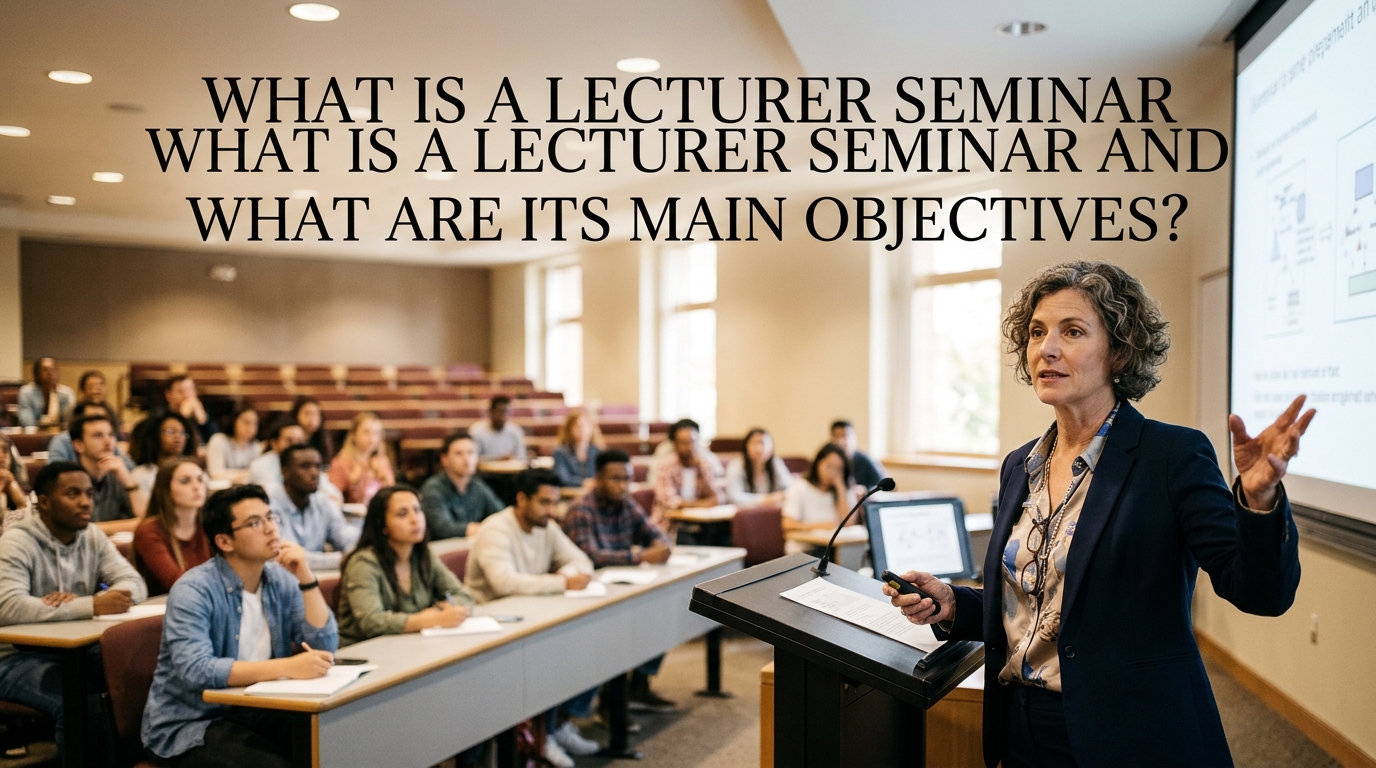
A lecturer seminar is an academic activity that brings lecturers, researchers, and sometimes students together to share knowledge, discuss research findings, and explore developments in higher education. These seminars provide opportunities for academic professionals to exchange ideas, improve their teaching methods, and strengthen their research skills. They can be organized by universities, faculties, academic departments, or professional associations. Understanding the meaning and objectives of a lecturer seminar helps educational institutions plan activities that support academic growth and improve the quality of higher education.
WHAT IS A LECTURER SEMINAR?
A lecturer seminar is a structured academic meeting where lecturers discuss specific topics related to education, research, professional development, or developments in their fields of expertise. The event usually features one or more speakers who present information, followed by discussions, questions, and feedback from participants. Unlike ordinary meetings, seminars focus on knowledge sharing, critical discussion, and academic learning.
Lecturer seminars can take place in person, online, or in a hybrid format, depending on the needs of the institution. The topics may include innovative teaching strategies, research publications, educational technology, curriculum development, and the latest findings in particular disciplines. By participating in these activities, lecturers can gain new perspectives and apply relevant knowledge to their teaching and research responsibilities.
WHAT ARE THE MAIN OBJECTIVES OF A LECTURER SEMINAR?
One of the main objectives of a lecturer seminar is to improve lecturers' knowledge and professional competencies. Higher education continues to evolve as new research, teaching methods, and technologies emerge. Seminars help lecturers stay informed about these developments and understand how to apply them in academic settings. They also encourage participants to evaluate existing practices and identify opportunities for improvement.
Another important objective is to encourage academic collaboration and research development. Through discussions and presentations, lecturers can exchange research ideas, receive constructive feedback, and identify potential partners for future projects. Seminars may also help institutions strengthen academic networks and promote a culture of continuous learning. These outcomes can contribute to better teaching quality, stronger research activities, and more effective academic cooperation.
WHAT ARE THE BENEFITS OF LECTURER SEMINARS?
Lecturer seminars offer several benefits for both individual educators and higher education institutions. For lecturers, these activities provide opportunities to develop communication skills, expand professional networks, and discover new approaches to teaching and research. Participants can also learn from the experiences of colleagues who have addressed similar academic challenges. This exchange of knowledge can inspire lecturers to improve their classroom activities and research practices.
For universities, lecturer seminars can support teaching quality, research productivity, and institutional development. They encourage lecturers to share successful practices and discuss solutions to common educational problems. Seminars can also help institutions identify professional development needs and strengthen cooperation between departments. When organized regularly and evaluated carefully, these activities can become an important part of a university's academic improvement strategy.
WHAT TOPICS ARE COMMONLY DISCUSSED IN LECTURER SEMINARS?
The topics discussed in lecturer seminars depend on the academic goals and interests of the participants. Common subjects include innovative teaching methods, curriculum development, research methodology, academic writing, and educational technology. Some seminars focus on specific disciplines, while others address broader issues such as student engagement, academic integrity, and quality assurance in higher education.
Lecturers may also discuss research publication strategies, grant opportunities, interdisciplinary collaboration, and the use of digital tools in learning. For example, a seminar on educational technology might explore how digital platforms can support interactive learning. Meanwhile, a research seminar may focus on developing research proposals or improving the quality of academic publications. Selecting relevant topics helps ensure that each seminar provides practical value for its participants.
HOW CAN A LECTURER SEMINAR BE ORGANIZED EFFECTIVELY?
Organizing an effective lecturer seminar begins with setting clear objectives and identifying participants' needs. The organizing team should choose a relevant topic, select qualified speakers, determine the appropriate format, and prepare a realistic schedule. Invitations and supporting materials should be distributed in advance so participants have enough time to prepare. Adequate facilities, reliable internet access for online events, and sufficient time for discussion are also important.
During the seminar, organizers should encourage active participation through questions, discussions, and collaborative activities. After the event, feedback can be collected through surveys or short evaluations to measure participant satisfaction and identify areas for improvement. Organizers should also assess whether the seminar achieved its intended learning outcomes. Careful planning, meaningful interaction, and follow-up evaluation help make lecturer seminars more productive and relevant to academic development.
HOW TO MEASURE THE SUCCESS OF A LECTURER SEMINAR
The success of a lecturer seminar should be measured by more than the number of participants who attend. Organizers can evaluate participant engagement, achievement of learning objectives, relevance of the material, and quality of discussions. Feedback forms can help identify whether the speakers delivered useful information and whether participants gained knowledge that supports their professional responsibilities.
Longer-term evaluation is also valuable. For example, institutions can examine whether lecturers apply new teaching strategies, develop research collaborations, or improve their academic practices after attending the seminar. The results can guide future planning and help universities use their professional development resources more effectively. A successful seminar is one that creates meaningful learning opportunities and contributes to continuous improvement in higher education.
CONCLUSION
A lecturer seminar is an important academic activity that supports professional development, knowledge exchange, and research collaboration. Its main objectives include improving lecturers' competencies, introducing new ideas, strengthening academic networks, and enhancing the quality of teaching and research. Through relevant topics, effective organization, and proper evaluation, seminars can provide lasting benefits for lecturers and universities. Therefore, higher education institutions should treat lecturer seminars as a valuable investment in academic excellence and continuous professional growth.
Recent Posts

Bagaimana Sistem SKS pada Program Kuliah... 22.11.2026/49 View

How Does Technology Make Daily Evaluation... 21.11.2026/77 View

Apa Strategi Menghadapi Kesenjangan antara Kompetensi... 21.11.2026/78 View

Mengapa Inventaris Aset Penting bagi Kelancaran... 21.11.2026/74 View

When Should Musicians Join a Record... 21.11.2026/79 View
