

What Is a Verbal Reasoning Test and Why Is It Important?
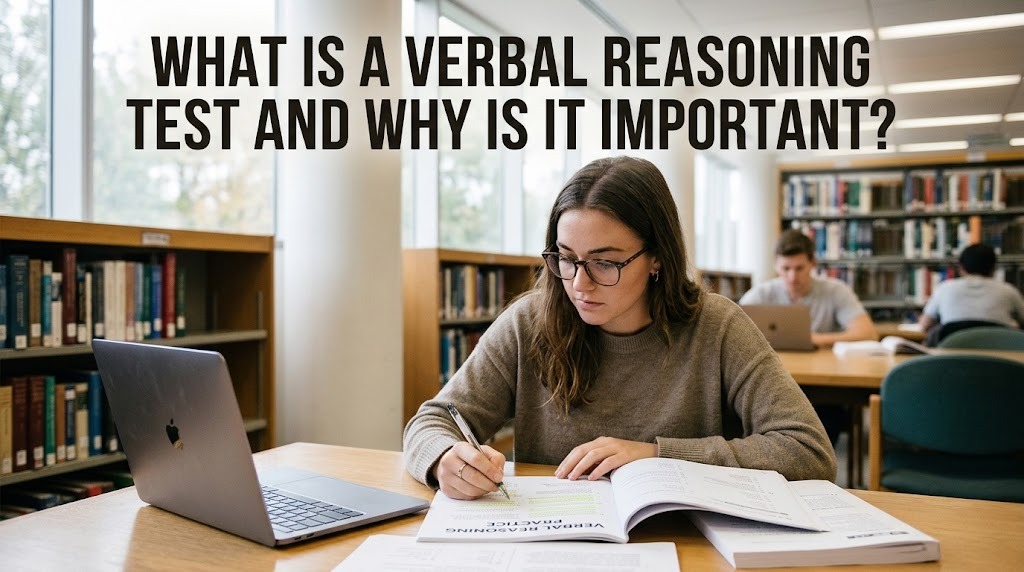
A Verbal Reasoning Test is a type of assessment designed to measure a person's ability to understand information, analyze written statements, interpret meanings, and draw logical conclusions from language. This test is commonly used in job recruitment, university admissions, scholarship selections, and academic assessments to evaluate how well individuals process information presented in written form. Unlike ordinary language tests that focus mainly on grammar or vocabulary, verbal reasoning tests examine how effectively someone understands and uses information to make logical decisions.
In today's competitive academic and professional environments, verbal reasoning skills have become increasingly important. People are expected to understand instructions, evaluate information, communicate ideas, and solve problems accurately. Therefore, understanding what a verbal reasoning test is and why it matters can help students, job applicants, and other candidates prepare more effectively.
UNDERSTANDING WHAT A VERBAL REASONING TEST IS
A verbal reasoning test is an assessment that measures a person's ability to understand, interpret, and analyze information presented through words or written passages. The questions usually require candidates to identify important details, recognize relationships between words, understand statements, and determine whether a conclusion is supported by the available information. These assessments focus on logical thinking and language comprehension rather than simply testing how many words someone knows.
In general, candidates are given short passages, sentences, or groups of words followed by several questions. They must carefully examine the information before selecting the most appropriate answer. Some questions may involve identifying synonyms and antonyms, completing word analogies, or determining whether a statement is true, false, or cannot be concluded from the passage.
The main purpose of this assessment is to evaluate how accurately someone processes verbal information. A person with strong verbal reasoning abilities can usually recognize important details, distinguish relevant information from unnecessary details, and understand the meaning of complex statements. These abilities are useful in both academic activities and professional responsibilities.
THE MAIN SKILLS MEASURED IN VERBAL REASONING TESTS
Verbal reasoning tests evaluate several skills related to language and logical thinking. One important skill is reading comprehension, which involves understanding the main idea, identifying supporting details, and recognizing the purpose of a written passage. Candidates must also be able to interpret information without making assumptions that are not supported by the text.
Another important skill is vocabulary knowledge. Understanding the meanings of different words helps candidates answer synonym, antonym, and word relationship questions more accurately. However, vocabulary alone is not enough because some questions require candidates to understand how words are connected within a particular context.
These assessments also measure critical thinking and analytical skills. Candidates may need to compare statements, identify logical relationships, evaluate arguments, and determine whether a conclusion follows from the information provided. The ability to think carefully before choosing an answer is essential, especially when several options appear reasonable.
In addition, verbal reasoning tests can evaluate attention to detail and decision-making abilities. Small differences in wording can change the meaning of a statement, so candidates must read each question carefully. These combined skills help demonstrate how effectively someone understands and responds to written information.
WHY VERBAL REASONING TESTS ARE IMPORTANT IN EDUCATION
Verbal reasoning tests play an important role in education because they help institutions evaluate students' abilities to understand information and think logically. Universities and educational organizations may use these assessments as part of their selection processes to identify candidates who can handle academic challenges. Strong verbal reasoning skills can also support students when reading textbooks, understanding lectures, and completing written assignments.
Students with good verbal reasoning abilities are generally better prepared to analyze academic materials and recognize connections between different ideas. These skills are particularly useful when studying subjects that require interpretation, discussion, research, and argument development. They also help students distinguish between facts, opinions, and conclusions when evaluating information.
Furthermore, verbal reasoning encourages students to develop independent thinking habits. Instead of accepting information without examination, they learn to consider evidence, understand different perspectives, and form reasonable conclusions. This ability supports more effective learning and helps students participate actively in academic discussions.
THE ROLE OF VERBAL REASONING IN JOB RECRUITMENT
Many companies use verbal reasoning tests during recruitment to evaluate whether candidates can understand workplace information and respond to different situations logically. Employees frequently need to read instructions, interpret reports, understand policies, and communicate with colleagues or customers. Therefore, employers consider verbal reasoning an important skill when assessing a candidate's readiness for professional responsibilities.
A candidate who performs well in a verbal reasoning assessment may demonstrate an ability to understand written information accurately and identify relevant details. These qualities are valuable in positions that involve administration, customer service, management, communication, education, and other fields requiring regular interaction with information.
However, verbal reasoning test results should not be considered the only measure of someone's professional potential. Work experience, technical knowledge, communication skills, adaptability, and personal qualities also contribute to job performance. The assessment simply provides employers with additional information that can support a broader recruitment evaluation.
HOW TO PREPARE FOR A VERBAL REASONING TEST
Preparing for a verbal reasoning test requires consistent practice and an understanding of the question formats. One effective approach is to practice reading comprehension questions regularly. Candidates can read short articles, identify their main ideas, and summarize important information using their own words. This activity helps improve reading accuracy and the ability to recognize essential details.
Expanding vocabulary is another useful preparation strategy. Learning new words, understanding their meanings, and recognizing synonyms and antonyms can make it easier to answer different types of questions. Candidates should also practice word analogies to understand how relationships between words are formed.
In addition, taking practice verbal reasoning tests can help candidates become familiar with common question patterns and time limitations. Reviewing incorrect answers is equally important because it allows candidates to identify weaknesses and understand why certain choices are incorrect.
Time management should also receive attention during preparation. Candidates need to learn how to divide their available time between questions without spending too long on difficult problems. With regular practice, careful evaluation, and consistent improvement, candidates can develop greater confidence when facing the actual assessment.
TIPS FOR ACHIEVING BETTER RESULTS IN VERBAL REASONING TESTS
Achieving good results in verbal reasoning tests requires more than memorizing vocabulary or answering questions quickly. Candidates should develop a balanced approach that combines reading comprehension, logical analysis, and effective time management. The following strategies can help improve test performance.
- Read Every Question Carefully: Understand what the question asks before choosing an answer, especially when statements contain similar words or meanings.
- Focus on the Available Information: Use the passage or statement provided instead of relying on personal opinions or outside assumptions.
- Identify Important Keywords: Pay attention to words that influence meaning, such as always, never, some, and most.
- Practice Different Question Types: Become familiar with reading comprehension, synonyms, antonyms, word analogies, and logical statements.
- Improve Vocabulary Regularly: Learn new words and understand how their meanings change depending on context.
- Manage Your Time Effectively: Avoid spending too much time on one difficult question and maintain a steady answering pace.
- Review Your Mistakes: Analyze incorrect answers to understand the reasoning behind the correct options.
Applying these strategies consistently can help candidates improve their accuracy and confidence. It is also important to maintain concentration throughout the assessment because even small reading mistakes can lead to incorrect answers.
CONCLUSION
A Verbal Reasoning Test is an assessment that measures a person's ability to understand written information, analyze language, and draw logical conclusions. It is important because these abilities support academic achievement, professional development, and effective communication in everyday situations. Educational institutions and employers use verbal reasoning assessments to gain a better understanding of candidates' analytical and comprehension skills.
Preparing for this test involves improving vocabulary, practicing reading comprehension, developing critical thinking, and managing time effectively. With consistent preparation and an understanding of common question types, candidates can improve their performance and approach verbal reasoning assessments with greater confidence.
Recent Posts

Bagaimana Sistem SKS pada Program Kuliah... 22.11.2026/45 View

How Does Technology Make Daily Evaluation... 21.11.2026/73 View

Apa Strategi Menghadapi Kesenjangan antara Kompetensi... 21.11.2026/75 View

Mengapa Inventaris Aset Penting bagi Kelancaran... 21.11.2026/71 View

When Should Musicians Join a Record... 21.11.2026/75 View
