

What Is an Extended Family and What Are Its Main Characteristics?
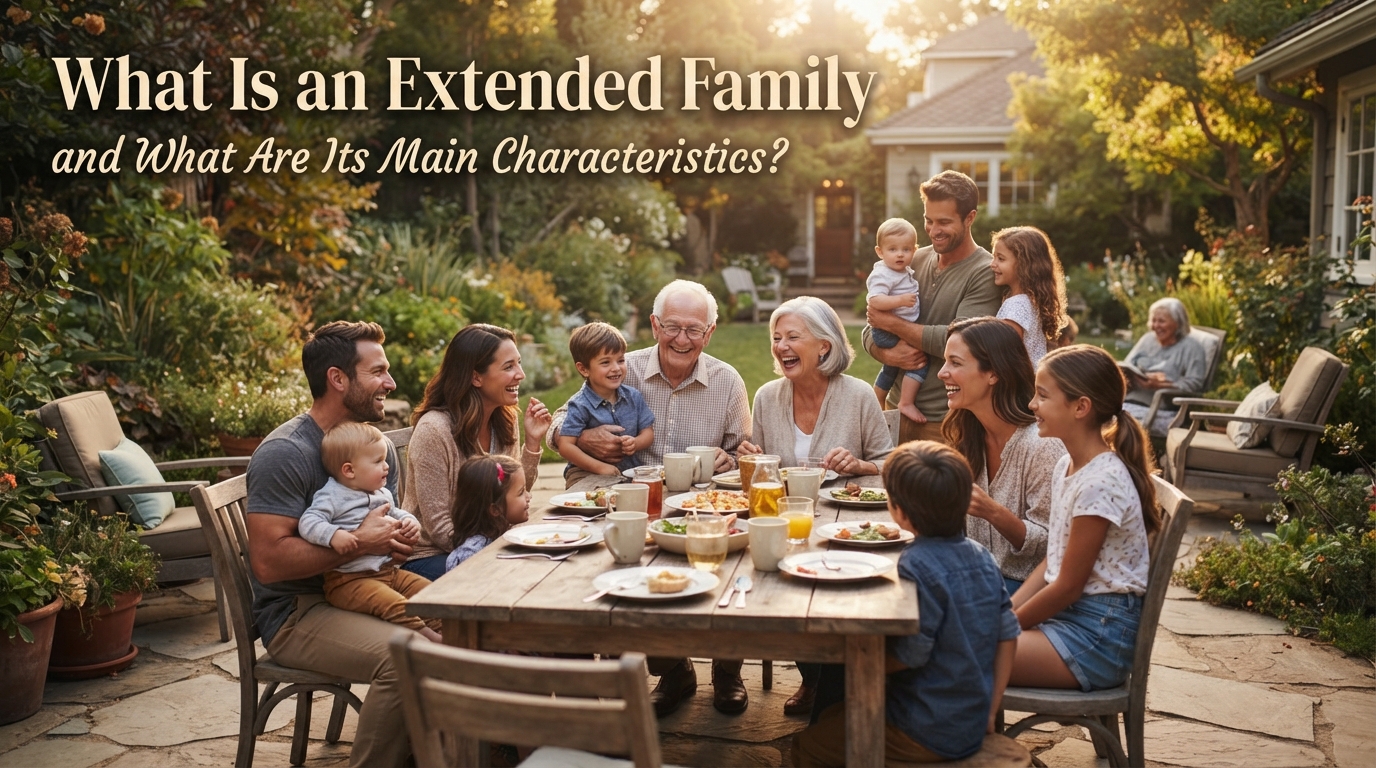
An extended family is a family structure that consists of parents, children, and other relatives who are connected through blood relationships, marriage, or adoption. Unlike a nuclear family, which generally includes only parents and their children, an extended family involves several generations or relatives living together or maintaining close relationships. These relatives may include grandparents, uncles, aunts, cousins, nieces, nephews, and other family members.
The extended family structure is common in many cultures around the world, particularly in societies that emphasize family relationships, mutual support, and shared responsibilities. Although family members may live in the same house or different locations, they often maintain strong connections through regular communication and shared activities. Understanding the meaning and characteristics of an extended family helps people recognize its importance in building strong family relationships and maintaining social values.
UNDERSTANDING THE MEANING OF AN EXTENDED FAMILY
An extended family refers to a family group that includes more than just parents and their children. It involves other relatives who have close family connections through birth, marriage, or adoption. This family structure often brings together different generations, allowing grandparents, parents, children, and other relatives to maintain meaningful relationships.
In some households, extended family members live under one roof and share daily activities, responsibilities, and expenses. In other situations, relatives live separately but remain closely connected through family gatherings, visits, and communication. The main purpose of this family structure is to maintain family relationships, provide mutual support, and create a strong sense of belonging among relatives.
MAIN CHARACTERISTICS OF AN EXTENDED FAMILY
One of the most recognizable characteristics of an extended family is the presence of multiple generations within one family network. Grandparents, parents, children, and other relatives can interact regularly and share their experiences. This connection allows younger family members to learn important values, traditions, and life lessons from older generations.
Another important characteristic is mutual support and shared responsibility. Family members often help one another with childcare, household activities, financial needs, and emotional challenges. Extended families also tend to maintain strong communication and participate in family traditions or celebrations. These relationships create a supportive environment where relatives can depend on one another during difficult situations.
DIFFERENCES BETWEEN EXTENDED FAMILY AND NUCLEAR FAMILY
An extended family differs from a nuclear family in terms of its structure and the number of relatives involved. A nuclear family generally consists of two parents and their children, while an extended family includes additional relatives such as grandparents, aunts, uncles, and cousins. This difference influences how family members interact and organize their daily responsibilities.
In a nuclear family, important household decisions are generally managed by parents or guardians. Meanwhile, an extended family may involve more relatives in discussions, childcare, and family activities. However, both family structures can provide love, protection, education, and emotional support. The quality of family relationships depends more on communication, respect, and responsibility than on the size of the family.
THE ROLE OF GRANDPARENTS AND OTHER RELATIVES
Grandparents play an important role in many extended families because they can provide guidance, experience, and emotional support. They often help parents take care of children while sharing stories, cultural knowledge, and family traditions. Their presence can strengthen relationships between different generations and help children understand their family background.
Other relatives, including aunts, uncles, and cousins, also contribute to family life. They can provide companionship, practical assistance, advice, and support during important moments. Through regular interactions, children develop social skills, learn how to respect different personalities, and understand the importance of cooperation. These relationships help create a wider support network beyond the immediate household.
ADVANTAGES OF LIVING IN AN EXTENDED FAMILY
One major advantage of an extended family is the availability of emotional and practical support. Family members can help one another when facing personal difficulties, financial challenges, or childcare responsibilities. Having several trusted relatives can also reduce the pressure on individual family members and create a stronger sense of security.
Another benefit is the opportunity to preserve family traditions and cultural values. Older relatives can introduce younger generations to traditional celebrations, customs, and important family stories. Children can also develop a stronger sense of identity because they understand their family history and cultural background. Furthermore, sharing responsibilities and resources may help families manage household needs more effectively.
CHALLENGES OF MAINTAINING AN EXTENDED FAMILY
Although an extended family provides many benefits, maintaining relationships among numerous relatives can create challenges. Differences in opinions, lifestyles, parenting approaches, and personal expectations may lead to disagreements. When several generations live together, conflicts can also arise because each person may have different habits and preferences.
Another challenge involves privacy and personal boundaries. Living with many relatives may limit individual space and make it difficult for some family members to maintain independence. Financial responsibilities can also become complicated when household expenses are shared without clear agreements. Therefore, open communication, mutual respect, and fair distribution of responsibilities are essential for maintaining a healthy extended family relationship.
HOW TO MAINTAIN HARMONIOUS EXTENDED FAMILY RELATIONSHIPS
Maintaining harmony in an extended family requires effective communication and a willingness to understand different perspectives. Every family member should have the opportunity to express opinions without feeling ignored or judged. When disagreements occur, relatives should discuss problems calmly and focus on finding solutions rather than blaming one another.
Families can also strengthen their relationships by organizing regular gatherings, celebrating special occasions, and helping relatives when needed. Respecting privacy and establishing clear boundaries are equally important, especially when several generations share the same household. By practicing empathy, cooperation, and shared responsibility, extended families can maintain strong relationships despite differences in age, personality, and lifestyle.
THE IMPORTANCE OF EXTENDED FAMILY IN MODERN SOCIETY
Extended families continue to play an important role in modern society, even as urbanization, technology, and changing lifestyles influence how people live. Many relatives no longer live in the same household because of education, employment, or migration. However, communication technology allows family members to stay connected through video calls, messaging applications, and social media.
Beyond providing personal support, extended families can help preserve cultural identity and strengthen social relationships. They create opportunities for younger generations to learn responsibility, cooperation, and respect for older people. With healthy communication and mutual understanding, extended families can remain an important source of emotional stability, social support, and family unity in modern life.
CONCLUSION
An extended family is a family structure that includes parents, children, and other relatives from different generations. Its main characteristics include strong family relationships, shared responsibilities, mutual support, and the preservation of cultural traditions. Although this structure may involve challenges related to privacy, financial responsibilities, and differences of opinion, these issues can be managed through effective communication and mutual respect.
Ultimately, an extended family is valuable because it provides a wider support system and strengthens relationships between generations. By maintaining cooperation, understanding, and family traditions, relatives can build a harmonious environment that benefits every family member.
Recent Posts

How Does Technology Make Daily Evaluation... 21.11.2026/57 View

Apa Strategi Menghadapi Kesenjangan antara Kompetensi... 21.11.2026/59 View

Mengapa Inventaris Aset Penting bagi Kelancaran... 21.11.2026/55 View

When Should Musicians Join a Record... 21.11.2026/54 View

Daily Evaluation or Daily Planning Which... 21.11.2026/61 View
