

What Is an Official Memo and Why Does It Matter in the Workplace?
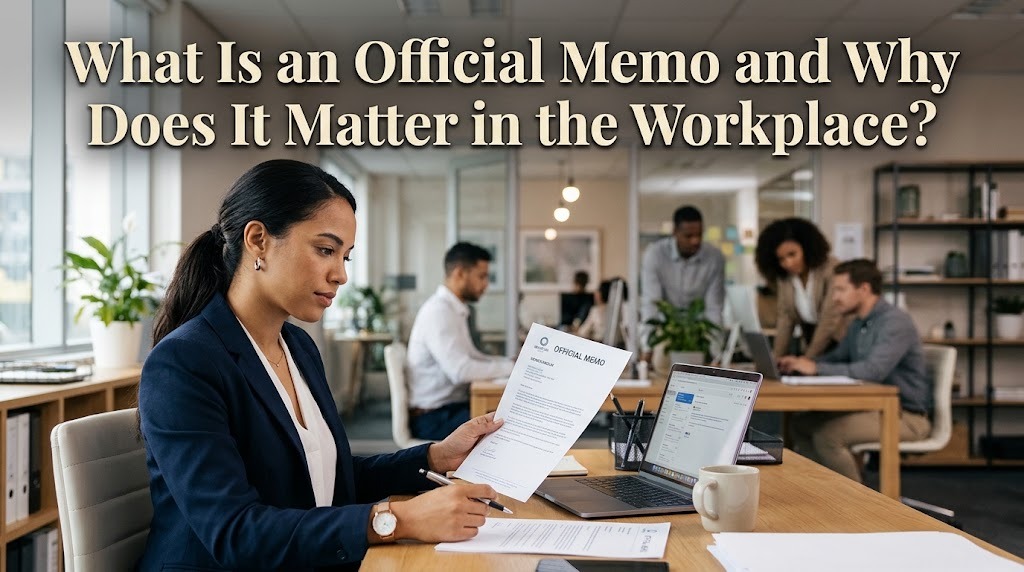
In the fast paced environment of modern workplaces clear and direct communication is essential for daily operations. Whether you work in a bustling government agency or a large corporate office sharing information quickly prevents costly misunderstandings. One of the most effective tools used for internal communication is the official memo. It serves as a formal written notice sent between employees or departments within the same organization. Understanding how this document works helps improve overall workplace productivity and efficiency.
Many people confuse memos with long external business letters or informal chat messages. However an official memo is uniquely designed to be concise and focused on a single topic. It eliminates unnecessary polite openings and gets straight to the point. This makes it an ideal instrument for sharing policy updates or announcing important internal decisions. Every professional can benefit greatly from mastering the proper use and structure of an official memo.
DEFINITION AND CORE PURPOSE OF AN OFFICIAL MEMO
An official memo is a concise written document used by staff members to share important updates within an organization. Its primary purpose is to inform decision makers or team members about specific operational matters quickly. Unlike public letters meant for external clients a memo stays entirely inside the company. This internal focus allows senders to use a direct and professional tone without formal pleasantries.
The document bridges the gap between verbal chats and lengthy formal reports. When leaders need to issue new guidelines they rely on this structured format for clarity. It ensures that every recipient receives the exact same message without any alteration. Consequently misunderstandings across different departments drop significantly when memos are used properly.
KEY STRUCTURAL COMPONENTS OF A MEMO
Every professional memo follows a standardized layout that makes reading and filing very easy. The top section clearly displays the header containing the recipient and sender details. Including the date and a specific subject line helps readers grasp the main topic instantly. This structured format saves valuable time for busy managers who review dozens of documents daily.
The body of the document contains the core message broken down into logical paragraphs. It starts with a brief background explaining why the message is being sent. The middle section delivers the main details or instructions clearly and objectively. Finally the closing part outlines the expected action or next steps required from the reader.
WHY MEMOS MATTER FOR WORKPLACE COMMUNICATION
Clear internal communication forms the backbone of any successful and productive business organization. Without proper documentation team members often miss crucial updates regarding new company policies. An official memo prevents this chaos by establishing a permanent written record of instructions. Employees can always refer back to the document whenever doubts arise about specific tasks.
Furthermore memos promote transparency and accountability across all departments and management levels. When instructions are put in writing everyone knows who is responsible for specific actions. This accountability reduces mistakes and ensures smooth coordination between different teams. Ultimately strong internal messaging creates a more harmonious and efficient working environment.
BEST PRACTICES FOR WRITING EFFECTIVE MEMOS
Writing a successful workplace memo requires a careful balance of brevity and professional clarity. Senders should always start with a strong and specific subject line that captures attention. Vague titles like update or meeting often cause recipients to ignore important documents. Keeping sentences short and straightforward helps readers digest the information without confusion.
Reviewing the draft before sending is another critical step to eliminate grammar and spelling errors. Ensuring that all facts and figures are accurate builds trust between management and staff. Writers must also focus on the target audience and use an appropriate tone. Following these simple practices guarantees that your message achieves its intended purpose successfully.
THE EVOLUTION OF DIGITAL MEMOS IN MODERN OFFICES
Traditional paper memos have largely transformed into digital messages sent through email or internal collaboration software. This shift has dramatically accelerated the speed of information sharing across global corporate networks. Despite the digital format the core principles of professional memo writing remain unchanged and vital. Clear headings and concise body paragraphs continue to guide digital readers effectively.
Digital archiving systems also make it much easier to search and retrieve past memos instantly. Organizations now store thousands of internal memos in secure cloud databases for future audits. This technological advancement improves organizational memory and ensures long term compliance with company regulations. Employees must adapt their writing styles to suit both printed and digital communication channels seamlessly.
AVOIDING COMMON MISTAKES IN MEMO WRITING
Many professionals fail to write effective memos because they include too much irrelevant information. An official memo should focus strictly on one main topic to avoid confusing the reader. Another common mistake is using an overly emotional or casual tone that lacks professional authority. Maintaining objectivity guarantees that the message is taken seriously by all recipients.
Failing to proofread the final document often leads to embarrassing grammatical errors and miscommunication. Senders must always verify names titles and dates before releasing any official internal notice. Taking these precautions protects the sender's professional reputation and ensures smooth workplace operations.
CONCLUSION
An official memo is much more than a simple piece of paper used in daily office routines. It functions as a vital communication channel that keeps every department aligned and informed. By maintaining a clear structure and focusing on direct messages organizations can boost overall productivity. Learning how to write and use memos effectively is a valuable skill for every modern professional. Mastering this tool ensures better collaboration and lasting success in your workplace career.
Recent Posts

Bagaimana Sistem SKS pada Program Kuliah... 22.11.2026/54 View

How Does Technology Make Daily Evaluation... 21.11.2026/83 View

Apa Strategi Menghadapi Kesenjangan antara Kompetensi... 21.11.2026/81 View

Mengapa Inventaris Aset Penting bagi Kelancaran... 21.11.2026/78 View

When Should Musicians Join a Record... 21.11.2026/82 View
