

What Is Bodily Kinesthetic Intelligence And What Are Its Characteristics?
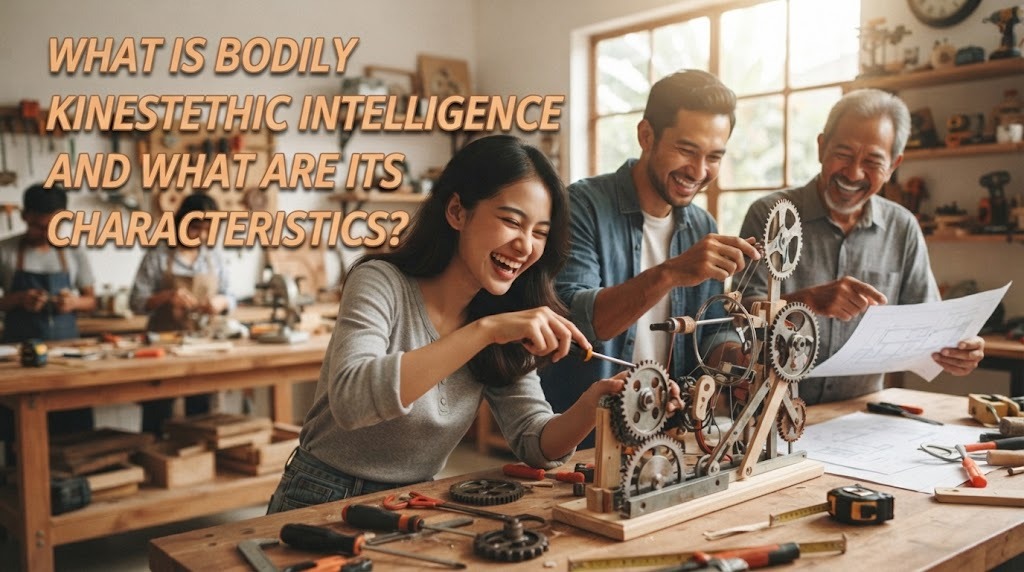
Bodily kinesthetic intelligence is the ability to use the body effectively to express ideas, solve problems, create things, and perform physical activities. This type of intelligence is part of the Multiple Intelligences Theory introduced by psychologist Howard Gardner. People with strong bodily kinesthetic intelligence often learn better through movement, practice, and direct experience. They may feel more comfortable doing something than simply reading or listening to an explanation. This intelligence can be useful in education, sports, arts, work, and everyday activities.
WHAT IS BODILY KINESTHETIC INTELLIGENCE?
Bodily kinesthetic intelligence refers to a person's ability to control body movements and use physical skills effectively. It involves coordination, balance, flexibility, strength, timing, and body awareness. People with this intelligence can often understand physical activities by practicing them directly. They may also be good at using their hands to create, repair, or manipulate objects. However, having this intelligence does not mean a person must become an athlete or professional performer.
This intelligence can appear in many different situations. For example, a person may demonstrate it when playing sports, dancing, acting, cooking, crafting, or learning how to use equipment. Hands-on learning can help people with strong bodily kinesthetic abilities understand information more easily. Their strengths can also develop through regular practice and experience. Therefore, bodily kinesthetic intelligence is not limited to physical exercise but can also support learning and creative activities.
WHAT ARE THE CHARACTERISTICS OF BODILY KINESTHETIC INTELLIGENCE?
People with strong bodily kinesthetic intelligence often show several noticeable characteristics. They usually have good body coordination and can control their movements with accuracy. They may enjoy activities that involve movement instead of sitting still for long periods. They can also learn physical skills relatively well when they receive enough practice. In addition, they may have strong awareness of how their body moves and responds to different situations.
Another characteristic is an interest in hands-on activities. These people may enjoy building, creating, repairing, demonstrating, or practicing something directly. They can also use gestures and body movements effectively when communicating with others. Some may remember information better when they connect it with physical actions. These characteristics can be different from one person to another because everyone has a unique combination of abilities.
HOW DOES BODILY KINESTHETIC INTELLIGENCE DEVELOP?
Bodily kinesthetic intelligence can develop through regular practice and physical experience. Children and adults can strengthen this ability by participating in sports, dancing, theater, crafts, cooking, or other activities that require body coordination. Repeating movements helps the brain and body work together more efficiently. Feedback from teachers, coaches, or other experienced people can also help improve physical skills. Consistent practice is usually more useful than relying only on natural ability.
Learning environments can also influence the development of this intelligence. Activities that allow students to move, experiment, and practice can make learning more engaging. For example, teachers can use role playing, demonstrations, experiments, and educational games in the classroom. These methods give students opportunities to connect information with real actions. As a result, bodily kinesthetic intelligence can support both physical development and learning.
WHAT ACTIVITIES ARE SUITABLE FOR PEOPLE WITH THIS INTELLIGENCE?
Many activities can help people use and develop their bodily kinesthetic intelligence. Sports and physical exercises are common examples because they require coordination, movement, balance, and body control. Dancing, martial arts, gymnastics, swimming, and athletics can also provide opportunities to improve physical abilities. Creative activities such as pottery, painting, woodworking, and crafting can involve similar skills. These activities allow people to learn by doing rather than only receiving theoretical information.
People with this intelligence may also enjoy activities related to performance and practical work. Acting, theater, public demonstrations, cooking, gardening, and certain technical tasks can involve strong body awareness. Practical activities can make it easier for them to understand how things work. However, people do not need to choose a career based only on one type of intelligence. Their interests, skills, experiences, and other abilities should also be considered.
WHY IS BODILY KINESTHETIC INTELLIGENCE IMPORTANT?
Bodily kinesthetic intelligence is important because the ability to use the body effectively is useful in many parts of life. It can support physical coordination, practical problem solving, creativity, and communication. People use these abilities when they walk, drive, cook, exercise, work with tools, or perform other daily activities. Strong body awareness can also help a person perform physical tasks more safely and efficiently. In education, movement-based activities can provide another way to understand and remember information.
This intelligence is also valuable in many professional fields. Athletes, dancers, actors, surgeons, physical therapists, craftspeople, chefs, and mechanics may rely heavily on physical coordination and practical skills. However, bodily kinesthetic intelligence can also complement other forms of intelligence. Combining different abilities can help people solve problems and adapt to different situations. For this reason, recognizing bodily kinesthetic strengths can encourage people to develop their potential in meaningful ways.
HOW CAN BODILY KINESTHETIC INTELLIGENCE SUPPORT LEARNING?
Bodily kinesthetic intelligence can support learning through movement and direct practice. Students may understand certain concepts more easily when they can demonstrate or experience them instead of only reading about them. For example, science experiments can allow students to learn through observation and action. Role playing can help students understand social situations, language, or historical events. Physical demonstrations can also make abstract information easier to remember.
Teachers can provide different learning opportunities to accommodate students with different strengths. Students can be encouraged to practice, demonstrate, build, organize, or create something related to the lesson. This does not mean that every student with bodily kinesthetic intelligence must always move while learning. A balanced learning approach can combine movement, visual materials, discussion, reading, and other methods. The goal is to provide meaningful ways for students to connect knowledge with real experiences.
CONCLUSION
Bodily kinesthetic intelligence is the ability to use the body effectively for movement, expression, practical tasks, and problem solving. Its characteristics can include good coordination, body awareness, physical control, interest in hands-on activities, and an ability to learn through practice. This intelligence can be developed through regular physical and practical activities. It can also support learning by connecting information with direct experience. Understanding this type of intelligence can help people recognize their strengths and find effective ways to develop their abilities.
Recent Posts

Bagaimana Sistem SKS pada Program Kuliah... 22.11.2026/25 View

How Does Technology Make Daily Evaluation... 21.11.2026/64 View

Apa Strategi Menghadapi Kesenjangan antara Kompetensi... 21.11.2026/65 View

Mengapa Inventaris Aset Penting bagi Kelancaran... 21.11.2026/62 View

When Should Musicians Join a Record... 21.11.2026/61 View
