

What Is Concentration Disorder and What Causes It?
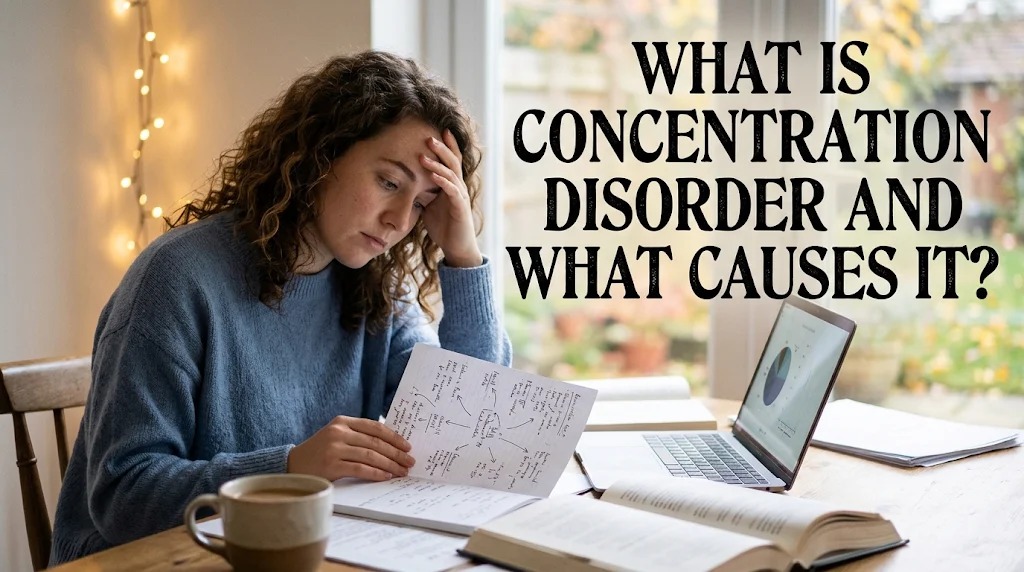
Concentration disorder is a condition in which a person has difficulty maintaining attention while studying, working, or performing daily activities. People experiencing this problem may find it hard to focus on one task, follow instructions, or complete activities without becoming distracted. Although losing focus occasionally is normal, frequent concentration difficulties can interfere with productivity, learning, and daily responsibilities.
Concentration problems can affect children, teenagers, and adults. They may be caused by various factors, including poor sleep, stress, mental health conditions, certain medical problems, and excessive digital distractions. Understanding the meaning and causes of concentration disorder is an important first step toward finding appropriate solutions.
WHAT IS CONCENTRATION DISORDER?
Concentration disorder refers to persistent difficulties in directing and maintaining attention on a particular activity. Someone experiencing this problem may struggle to stay focused even when performing simple tasks. For example, a student may have difficulty understanding a lesson because their attention frequently shifts to other things. An employee may also struggle to finish assignments because they easily lose track of what they are doing.
Concentration difficulties can vary in severity and duration. Some people experience temporary problems when they are tired or under pressure, while others have more persistent difficulties that affect several areas of life. It is important to understand that concentration problems are not always a medical disorder on their own. They can also be symptoms of other conditions, so a proper assessment may be necessary when the problem continues.
COMMON SYMPTOMS OF CONCENTRATION DISORDER
People with concentration difficulties may show several signs in their daily activities. One common symptom is being easily distracted by surrounding noises, conversations, notifications, or unrelated thoughts. They may also find it difficult to listen carefully when someone is speaking or follow instructions that contain several steps. Another sign is frequently forgetting tasks, losing personal belongings, or making careless mistakes because of poor attention.
Some individuals may take longer than usual to complete their work because they repeatedly lose focus. They might start several activities but struggle to finish them. Concentration problems can also make reading, studying, and remembering information more challenging. However, experiencing one or two of these symptoms occasionally does not automatically mean someone has a concentration disorder.
MAIN CAUSES OF CONCENTRATION DISORDER
Concentration difficulties can develop because of different physical, psychological, and environmental factors. Lack of sleep is one common cause because the brain needs sufficient rest to process information and maintain attention. When someone regularly sleeps too little, they may feel tired, become less alert, and have difficulty remembering things. Poor nutrition and insufficient physical activity may also affect energy levels and mental performance.
Stress, anxiety, and depression can also interfere with concentration. Excessive worries may occupy someone's thoughts, making it difficult to focus on the task in front of them. In addition, certain medical conditions, medication side effects, and hormonal changes may contribute to attention problems. Attention-deficit/hyperactivity disorder, commonly known as ADHD, is another condition associated with persistent difficulties in attention and self-regulation.
THE EFFECTS OF CONCENTRATION PROBLEMS ON DAILY LIFE
Concentration problems can affect many aspects of everyday life, especially when they happen frequently. In education, students may struggle to understand lessons, remember information, and complete assignments on time. These difficulties can influence their academic performance if they do not receive appropriate support. In the workplace, employees may find it harder to manage responsibilities, meet deadlines, and maintain consistent productivity.
Concentration difficulties may also affect relationships and personal activities. Someone who frequently loses focus during conversations may have trouble understanding other people or responding appropriately. Daily responsibilities, such as organizing schedules and managing household tasks, can also become more challenging. If these problems continue, they may lead to frustration, reduced confidence, and additional stress.
HOW TO RECOGNIZE AND ADDRESS CONCENTRATION DISORDER
Recognizing concentration problems early can help someone understand what is affecting their ability to focus. Pay attention to how often the difficulties occur, how long they last, and whether they interfere with school, work, or personal activities. It is also useful to identify possible triggers, such as insufficient sleep, stressful situations, excessive screen time, or an irregular daily routine. Keeping a simple record of these patterns can help identify factors that may contribute to the problem.
Basic lifestyle improvements may help when concentration difficulties are related to everyday habits. Getting enough sleep, eating balanced meals, exercising regularly, and reducing unnecessary digital distractions can support better attention. However, persistent or severe concentration problems should be discussed with a qualified healthcare professional. A professional can evaluate possible underlying causes and recommend appropriate treatment or support based on individual needs.
CONCLUSION
Concentration disorder involves difficulties in maintaining attention and completing activities effectively. It can be influenced by several factors, including poor sleep, stress, anxiety, medical conditions, and environmental distractions. These problems may affect education, work performance, relationships, and everyday responsibilities. Understanding the symptoms and possible causes can help people recognize when they need support. If concentration difficulties persist or significantly interfere with daily life, seeking professional advice is an important step toward finding the right solution.
Recent Posts

Bagaimana Sistem SKS pada Program Kuliah... 22.11.2026/7 View

How Does Technology Make Daily Evaluation... 21.11.2026/63 View

Apa Strategi Menghadapi Kesenjangan antara Kompetensi... 21.11.2026/64 View

Mengapa Inventaris Aset Penting bagi Kelancaran... 21.11.2026/61 View

When Should Musicians Join a Record... 21.11.2026/59 View
