

What Is Event Business and How Can You Start One?
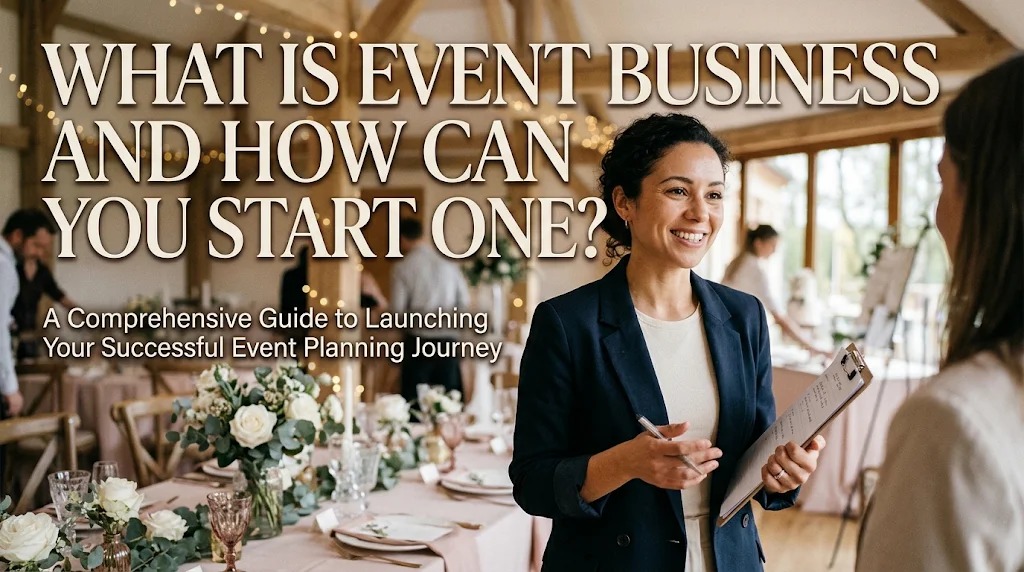
The event industry has become an important part of modern business because people and organizations regularly need professional services to plan and organize different occasions. From weddings and birthday parties to corporate meetings, exhibitions, and music festivals, events require careful preparation and coordination. This creates opportunities for entrepreneurs who are interested in turning their creativity and organizational skills into a business. However, starting an event business requires more than simply arranging decorations or choosing a venue. It involves understanding customer needs, managing budgets, coordinating vendors, and delivering memorable experiences. So, what is an event business, and how can you start one successfully?
UNDERSTANDING WHAT AN EVENT BUSINESS IS
An event business is a company or service that helps individuals, organizations, and companies plan, organize, and manage events. Its services can include event planning, venue selection, decoration, catering coordination, entertainment, equipment rental, and on-site management. The type of service depends on the business model and the needs of its customers. Some event businesses handle every stage of an event, while others specialize in specific services.
Event businesses can serve different markets, including private celebrations, corporate functions, educational activities, and public entertainment. For example, a business may focus on organizing weddings, while another may specialize in conferences, product launches, or music events. Each type requires different skills, resources, and planning strategies. Understanding these differences helps entrepreneurs decide which services they want to offer and which customers they want to reach.
CHOOSING THE RIGHT EVENT BUSINESS NICHE
Before starting an event business, entrepreneurs should identify the type of events they want to handle. Choosing a specific niche makes it easier to develop a clear business identity and understand customer expectations. Some popular options include wedding planning, birthday parties, corporate events, exhibitions, seminars, and community festivals. Each niche has different requirements, budgets, and levels of competition.
Market research can help determine whether a particular service has sufficient demand. Entrepreneurs can observe local event trends, study competitors, and identify services that customers frequently need. They should also consider their interests, experience, available resources, and professional abilities. By selecting a suitable niche, a new event planning business can focus its marketing efforts and build a reputation in a specific market.
PREPARING A BUSINESS PLAN AND STARTUP BUDGET
A business plan provides direction for establishing and developing an event business. It should explain the services offered, target customers, pricing strategy, marketing approach, and business goals. A clear plan also helps entrepreneurs understand how their operations will work and what resources they need. Without proper preparation, it can be difficult to manage expenses and maintain consistent service quality.
Startup costs depend on the business model and the scale of services being offered. Some entrepreneurs begin with a small planning service that requires basic equipment, communication tools, transportation, and promotional materials. Others may need additional funds for storage, event equipment, staff, and operational facilities. It is important to separate personal and business finances, estimate regular expenses, and prepare an emergency budget. Careful financial planning helps the business operate more responsibly during its early stages.
BUILDING A RELIABLE TEAM AND VENDOR NETWORK
An event business often requires cooperation with different professionals to deliver successful events. Depending on the project, the team may include event planners, decorators, photographers, caterers, sound technicians, hosts, and administrative staff. Each person contributes specific skills that support the overall event process. Entrepreneurs do not necessarily need to hire every professional as a permanent employee, especially when starting with limited resources.
Building relationships with reliable vendors is equally important. A dependable network can help entrepreneurs find suitable venues, equipment, catering services, and entertainment providers. Before working with a vendor, it is useful to review their previous work, service quality, pricing, and reliability. Clear agreements about responsibilities, schedules, and payment terms can also prevent misunderstandings. Strong professional relationships help an event management business deliver consistent results and build customer trust.
PROMOTING THE BUSINESS AND GETTING THE FIRST CLIENTS
Marketing is essential for introducing an event business to potential customers. A professional brand identity, attractive portfolio, and clear service information can help create a positive first impression. Entrepreneurs can use social media platforms to share event documentation, decoration concepts, customer testimonials, and examples of previous work. These materials allow potential clients to understand the quality and style of the services being offered.
Networking is another effective way to find initial customers. Entrepreneurs can connect with wedding vendors, local businesses, community organizations, and professionals who frequently organize events. Offering a clear service package and responding professionally to inquiries can also improve the chances of securing the first project. After completing an event, requesting feedback and permission to use selected documentation can help strengthen the portfolio. Consistent promotion and good customer experiences can gradually support business growth.
CONCLUSION
An event business provides professional services for planning and managing different occasions, ranging from private celebrations to corporate events. Starting one requires careful niche selection, a realistic business plan, financial preparation, reliable vendor relationships, and effective marketing. Entrepreneurs should begin with services that match their skills and available resources before expanding their operations. Delivering quality service and maintaining good relationships with customers are also essential for long-term development. With proper preparation, creativity, and consistent management, an event business can become a promising entrepreneurial opportunity.
Recent Posts

Bagaimana Sistem SKS pada Program Kuliah... 22.11.2026/35 View

How Does Technology Make Daily Evaluation... 21.11.2026/69 View

Apa Strategi Menghadapi Kesenjangan antara Kompetensi... 21.11.2026/69 View

Mengapa Inventaris Aset Penting bagi Kelancaran... 21.11.2026/67 View

When Should Musicians Join a Record... 21.11.2026/68 View
