

What Is Global Warming and What Causes It?
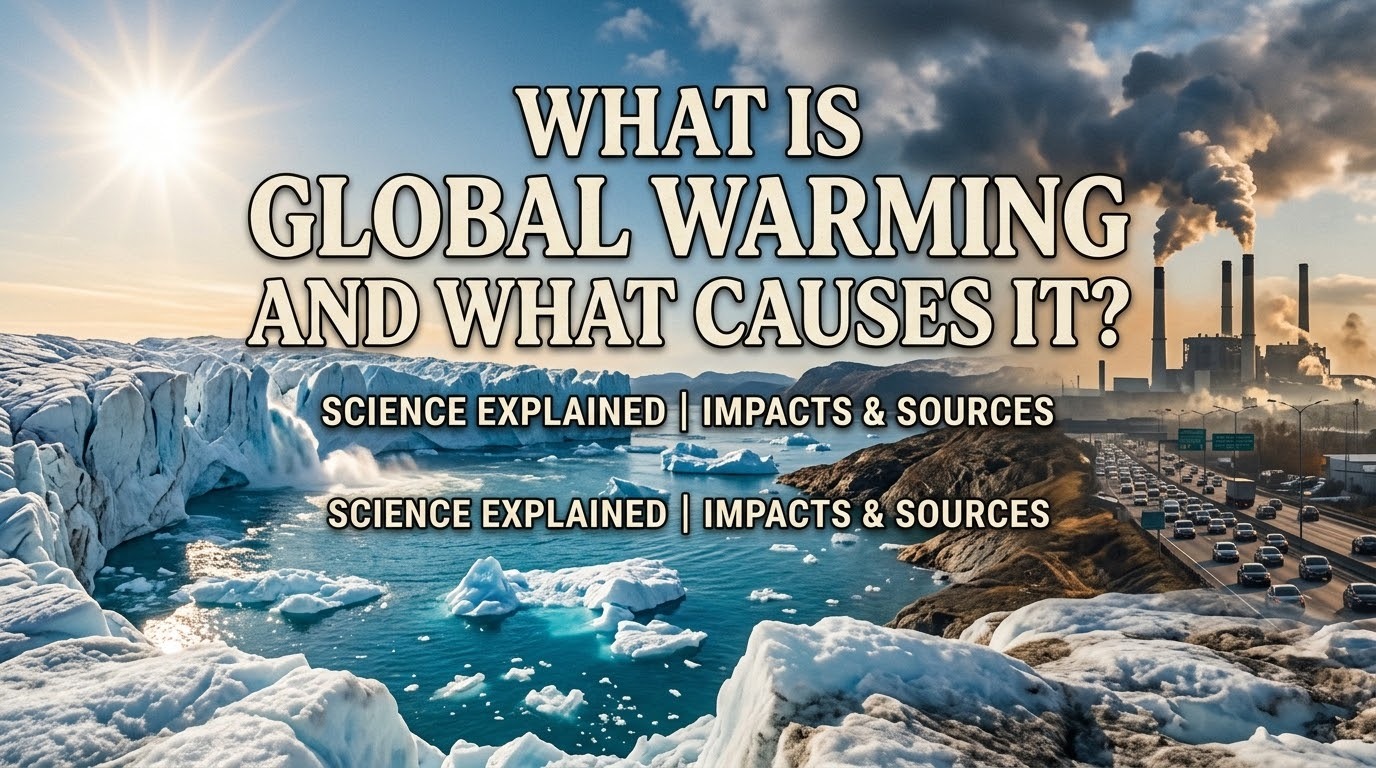
Global warming is one of the most important environmental issues affecting the planet today. It refers to the long-term increase in Earth's average surface temperature, mainly caused by human activities that release greenhouse gases into the atmosphere. This temperature increase affects weather patterns, ecosystems, oceans, and human communities around the world.
Understanding what global warming is and what causes it is an important step toward protecting the environment. Activities such as burning fossil fuels, cutting down forests, and producing waste can contribute to greenhouse gas emissions. By learning about these causes, people can better understand why global warming occurs and how collective action can help reduce its effects.
UNDERSTANDING THE MEANING OF GLOBAL WARMING
Global warming is the gradual rise in Earth's average surface temperature over an extended period. It occurs when the climate system retains more energy than it releases into space, causing the planet to become warmer. Although Earth's temperature naturally changes over time, the rapid warming observed since the Industrial Revolution is primarily linked to human activities.
Global warming is closely connected to the greenhouse effect, a natural process that helps keep Earth warm enough to support life. Greenhouse gases in the atmosphere absorb and re-emit some of the heat released by Earth's surface. However, human activities have increased the concentration of these gases, strengthening the greenhouse effect and causing additional warming. This distinction is important because the natural greenhouse effect supports life, while its human-driven intensification contributes to the current global warming trend.
BURNING FOSSIL FUELS AND INCREASING CARBON DIOXIDE
One of the main causes of global warming is the burning of fossil fuels, including coal, oil, and natural gas. These energy sources are widely used for electricity generation, transportation, industrial production, and heating. When fossil fuels are burned, they release carbon dioxide (CO₂) into the atmosphere, where it can remain for a long time and contribute to warming.
As the demand for energy increases, emissions can rise when fossil fuels remain the primary energy source. Cars, trucks, airplanes, power plants, and factories all contribute to these emissions in different ways. Reducing unnecessary energy consumption, improving energy efficiency, and expanding low-emission energy sources can help limit the amount of carbon dioxide released. These measures are important for addressing carbon emissions and global warming over the long term.
DEFORESTATION AND THE LOSS OF NATURAL CARBON ABSORPTION
Forests play an important role in regulating Earth's climate because trees absorb carbon dioxide during photosynthesis. The carbon is stored in their trunks, branches, roots, and surrounding soil. When forests are cleared or damaged, this natural ability to absorb carbon dioxide decreases, making it harder for the environment to balance human emissions.
Deforestation can also release stored carbon when trees are burned or decompose after being cut down. Forests are often cleared to create agricultural land, expand settlements, extract resources, or develop infrastructure. Protecting existing forests, restoring degraded areas, and managing land sustainably can help preserve important carbon stores. These actions also protect biodiversity, reduce soil erosion, and support communities that depend on forest ecosystems.
AGRICULTURE, INDUSTRY, AND OTHER GREENHOUSE GAS SOURCES
In addition to carbon dioxide, several other greenhouse gases contribute to global warming. Methane is released through activities such as livestock farming, waste management, fossil fuel production, and the decomposition of organic matter under certain conditions. Nitrous oxide can come from agricultural soils, especially when nitrogen fertilizers are used, as well as from some industrial processes.
Industrial production can also generate greenhouse gas emissions through energy use and chemical reactions. Landfills may release methane as organic waste decomposes, while some manufacturing processes produce gases with a strong warming effect. The amount of emissions varies depending on the activity, technology, and management practices involved. Improving waste management, using resources efficiently, and adopting lower-emission agricultural and industrial methods can help reduce these sources of greenhouse gas emissions.
THE ROLE OF HUMAN ACTIVITIES IN GLOBAL WARMING
Human activities are the main driver of the global warming observed since the mid-20th century. The widespread use of fossil fuels, deforestation, industrial development, and certain agricultural practices have increased greenhouse gas concentrations in the atmosphere. These changes affect the Earth's energy balance and contribute to rising average temperatures.
Addressing human-caused global warming requires action at different levels. Governments can establish policies that support clean energy, protect forests, improve public transportation, and reduce emissions from major industries. Businesses can adopt more efficient technologies and improve their production processes, while individuals can reduce unnecessary energy use and make informed consumption choices. Individual actions alone cannot solve the problem, but they can contribute to broader efforts when supported by effective policies and changes across society.
CONCLUSION
Global warming is the long-term increase in Earth's average surface temperature, mainly caused by the growing concentration of greenhouse gases in the atmosphere. Burning fossil fuels, deforestation, agriculture, industrial activities, and waste management all contribute to this problem in different ways. These activities strengthen the greenhouse effect and disrupt the planet's natural climate balance.
Understanding what causes global warming helps people recognize the importance of reducing emissions and protecting natural ecosystems. Expanding cleaner energy sources, improving energy efficiency, managing forests sustainably, and reducing waste are important parts of the solution. Through coordinated action by governments, businesses, communities, and individuals, it is possible to limit future warming and reduce the risks associated with a changing climate.
Recent Posts

Bagaimana Sistem SKS pada Program Kuliah... 22.11.2026/47 View

How Does Technology Make Daily Evaluation... 21.11.2026/75 View

Apa Strategi Menghadapi Kesenjangan antara Kompetensi... 21.11.2026/77 View

Mengapa Inventaris Aset Penting bagi Kelancaran... 21.11.2026/73 View

When Should Musicians Join a Record... 21.11.2026/77 View
